
Author: GeoParrot Team
-
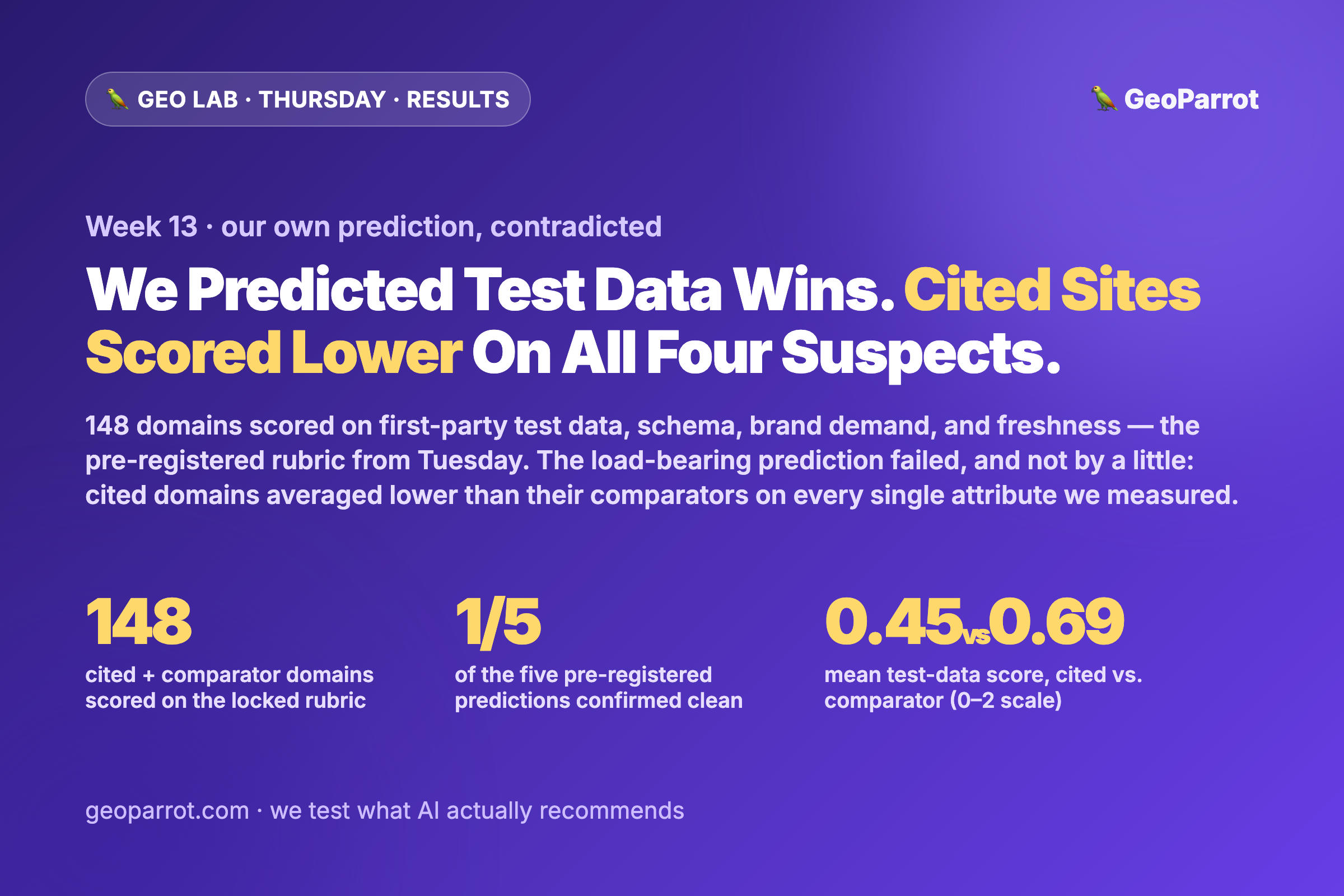
We Predicted Test Data Wins the Citation. Cited Sites Scored Lower On All Four Suspects.
Tuesday we locked five predictions: first-party test data would be the biggest lever separating AI-cited domains from matched comparators. We scored 148 domains — cited and not-cited — on test data, schema, brand demand, and freshness. The load-bearing prediction failed, and not narrowly: cited domains averaged lower than their comparators on all four attributes. Full…
-
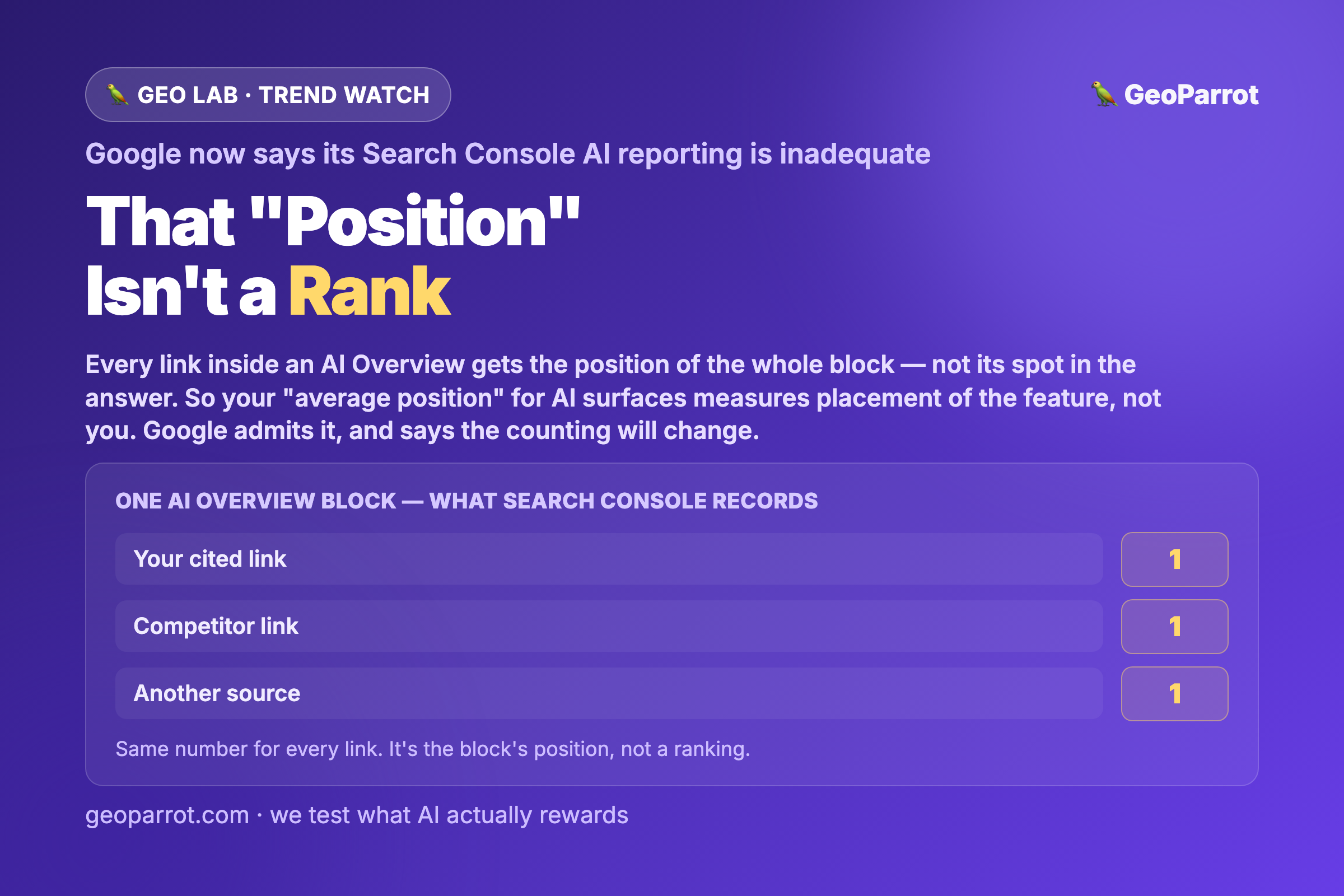
Google Admits Search Console’s AI “Position” Isn’t a Rank — What That Means for GEO Measurement
John Mueller confirmed this week that every link inside an AI Overview gets the position of the whole block, not its spot in the answer — and that the counting “will evolve over time.” So your Search Console “average position” for AI surfaces measures the feature’s placement, not you. Here’s what to stop reporting and…
-
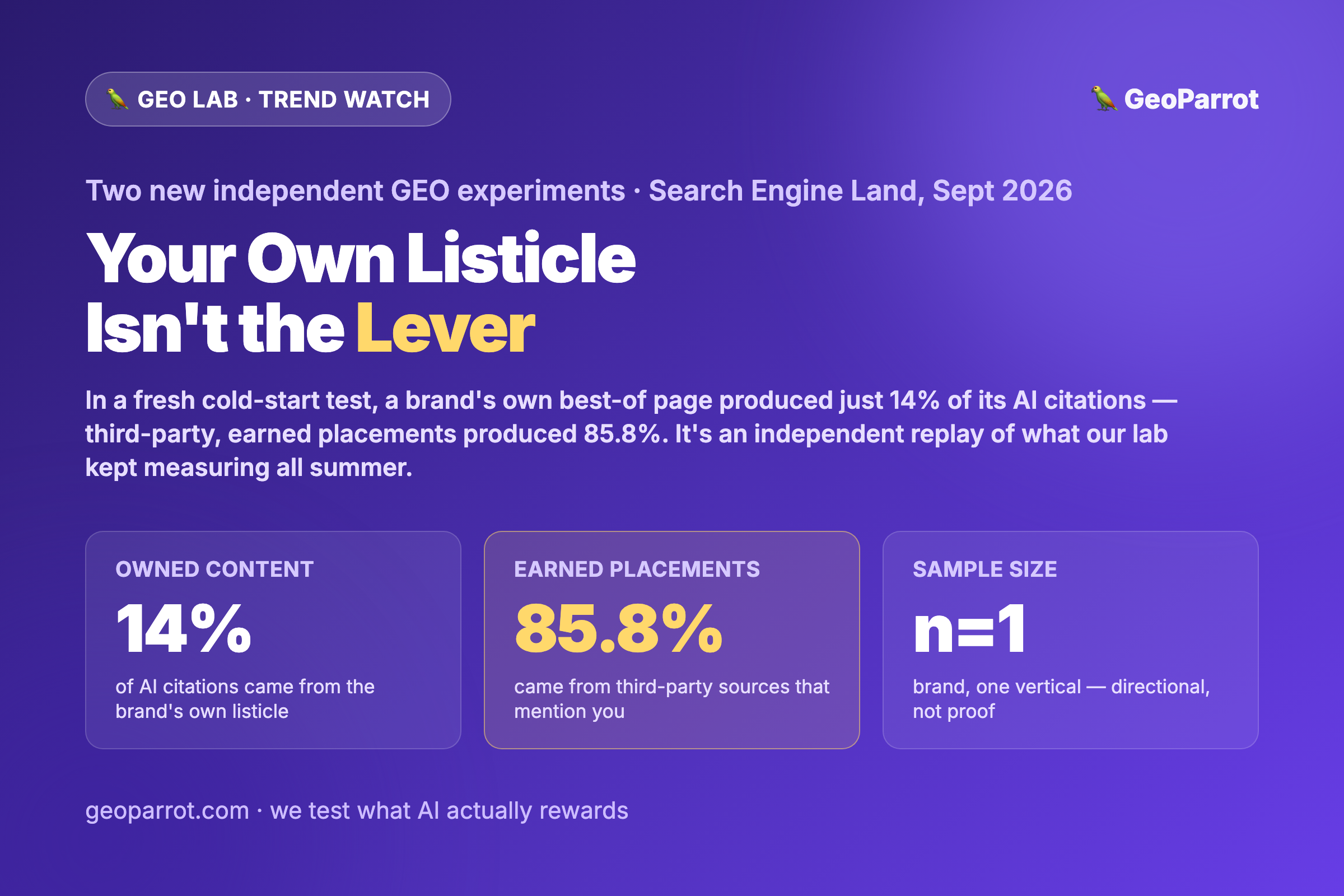
Two New GEO Experiments Just Replicated Our Most Uncomfortable Finding: Earned Beats Owned for AI Citations
A September 14, 2026 Search Engine Land write-up of two structured GEO experiments found a brand’s own best-of listicle produced just 14% of its AI citations while earned third-party placements produced 85.8% — an independent replay of the self-ranking trap we measured all summer. Here’s what the experiments found, where they line up with our…
-
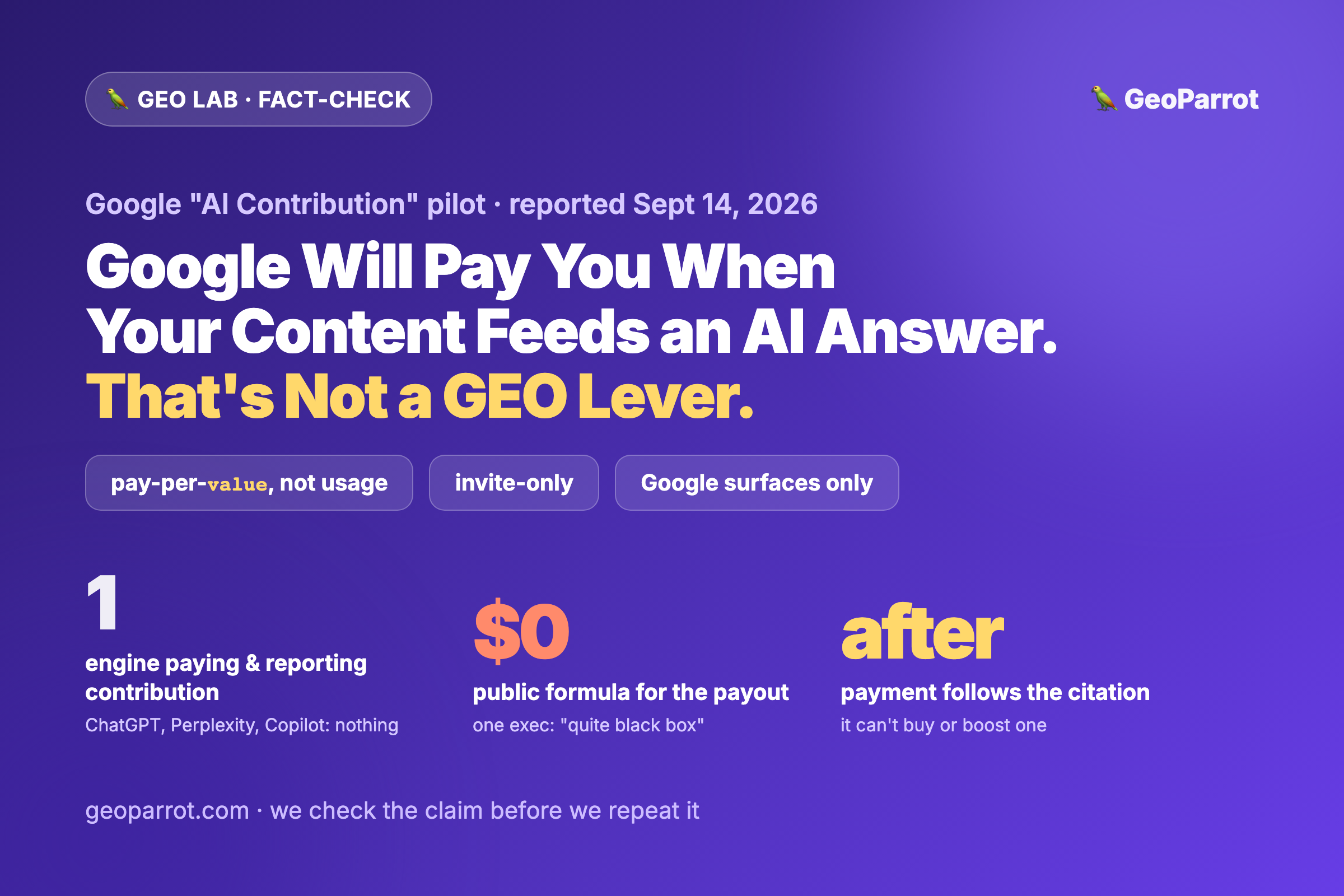
Google Will Now Pay You When Your Content Feeds an AI Answer — Why the Payout Isn’t a GEO Lever
Google’s “AI Contribution” pilot pays selected publishers, via a Search Console widget, when their content “significantly contributes” to an answer in AI Overviews, AI Mode, or Gemini. Reported September 14, 2026, it’s the first engine-side proxy for “did my content actually feed the answer” — but it’s invite-only, one engine, and a “quite black box”…
-
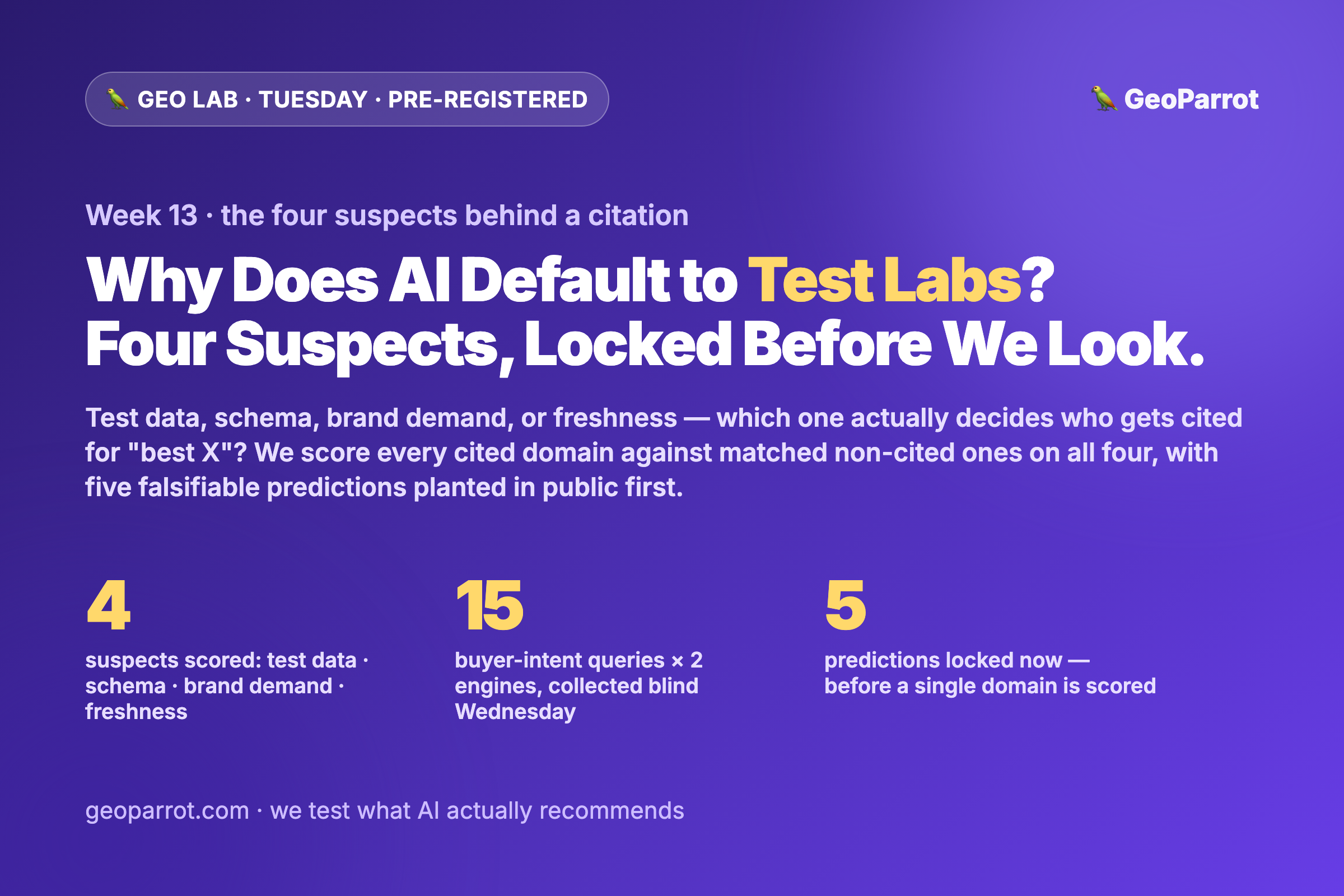
Is It the Test Data, the Schema, the Brand, or the Freshness? Our Pre-Registered Test of Why AI Defaults to Independent Test Labs
Monday we argued AI cites RTINGS and TechRadar because of first-party test data nobody else has, not schema you can bolt on. That’s a hypothesis, and a convenient one. This week we try to break it. Here is the full pre-registered design: across 15 buyer-intent queries on two engines, we score every cited domain —…
-
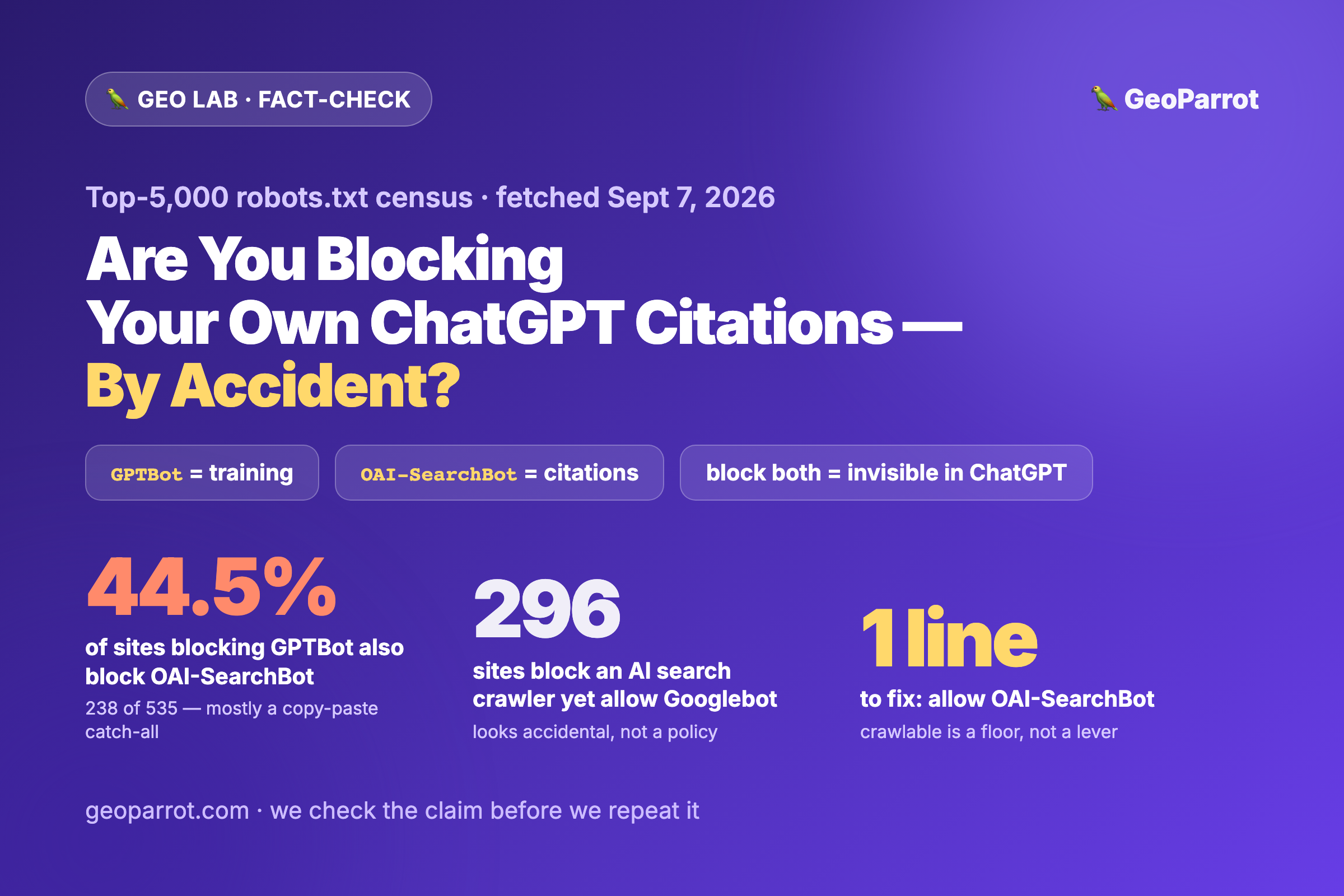
Are You Blocking Your Own ChatGPT Citations? What the Top-5,000 robots.txt Census Found
A September 7, 2026 census of the top 5,000 sites found that 44.5% of sites blocking OpenAI’s training crawler (GPTBot) also block OAI-SearchBot — the crawler that actually lets ChatGPT cite you. That’s an accidental GEO wound: you opt out of training and take your ChatGPT citations down with it. Here’s the two-crawler distinction OpenAI…
-
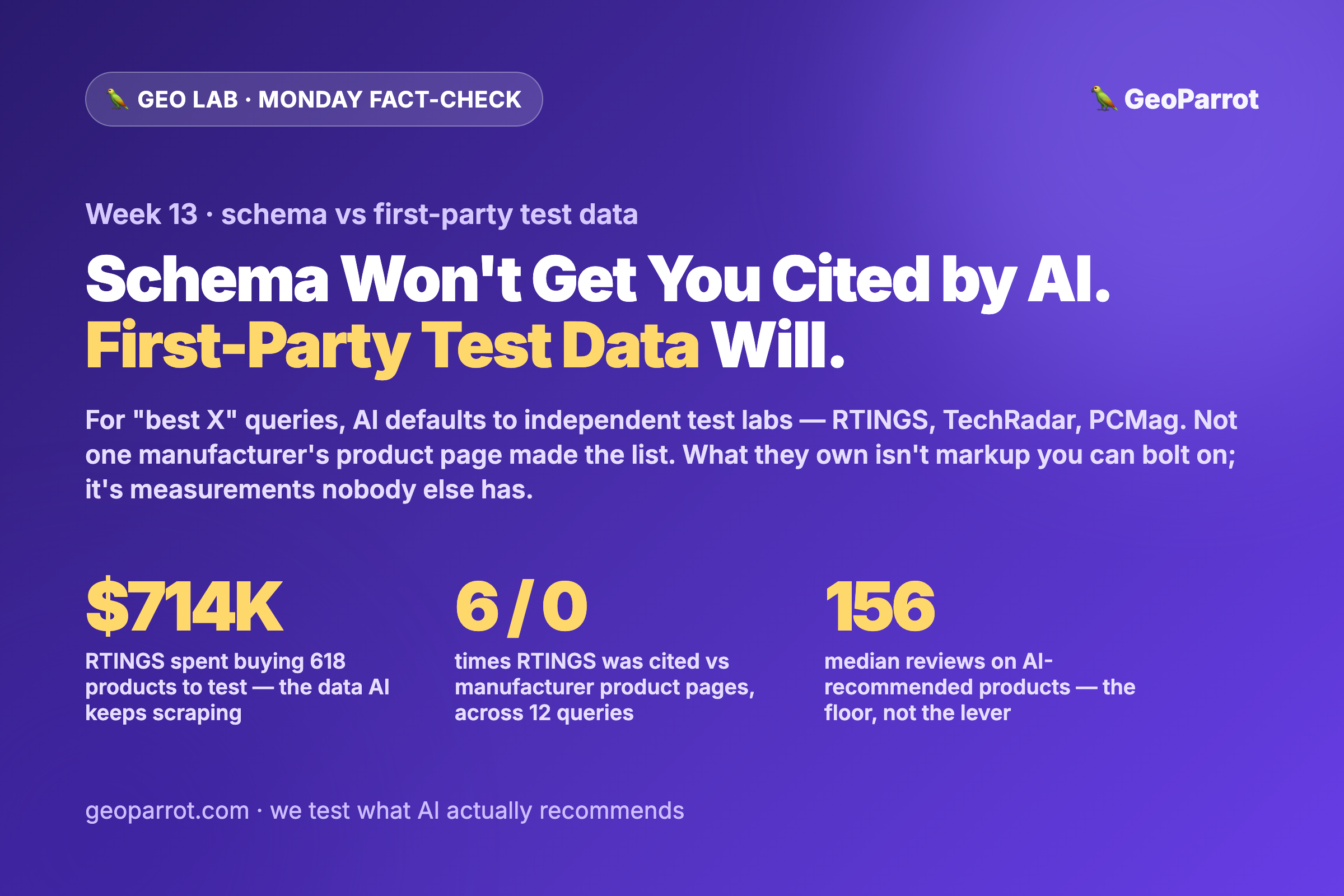
Schema Won’t Get You Cited by AI. First-Party Test Data Will — Here’s What RTINGS and TechRadar Prove
The advice making the rounds this month says you get cited in AI answers by making pages “AI-ready” — add schema, show 150+ reviews, fill in a scorecard. We fact-checked it against our own data. For buyer-intent queries, AI defaults to independent test labs like RTINGS and TechRadar, and the reason isn’t markup you can…
-
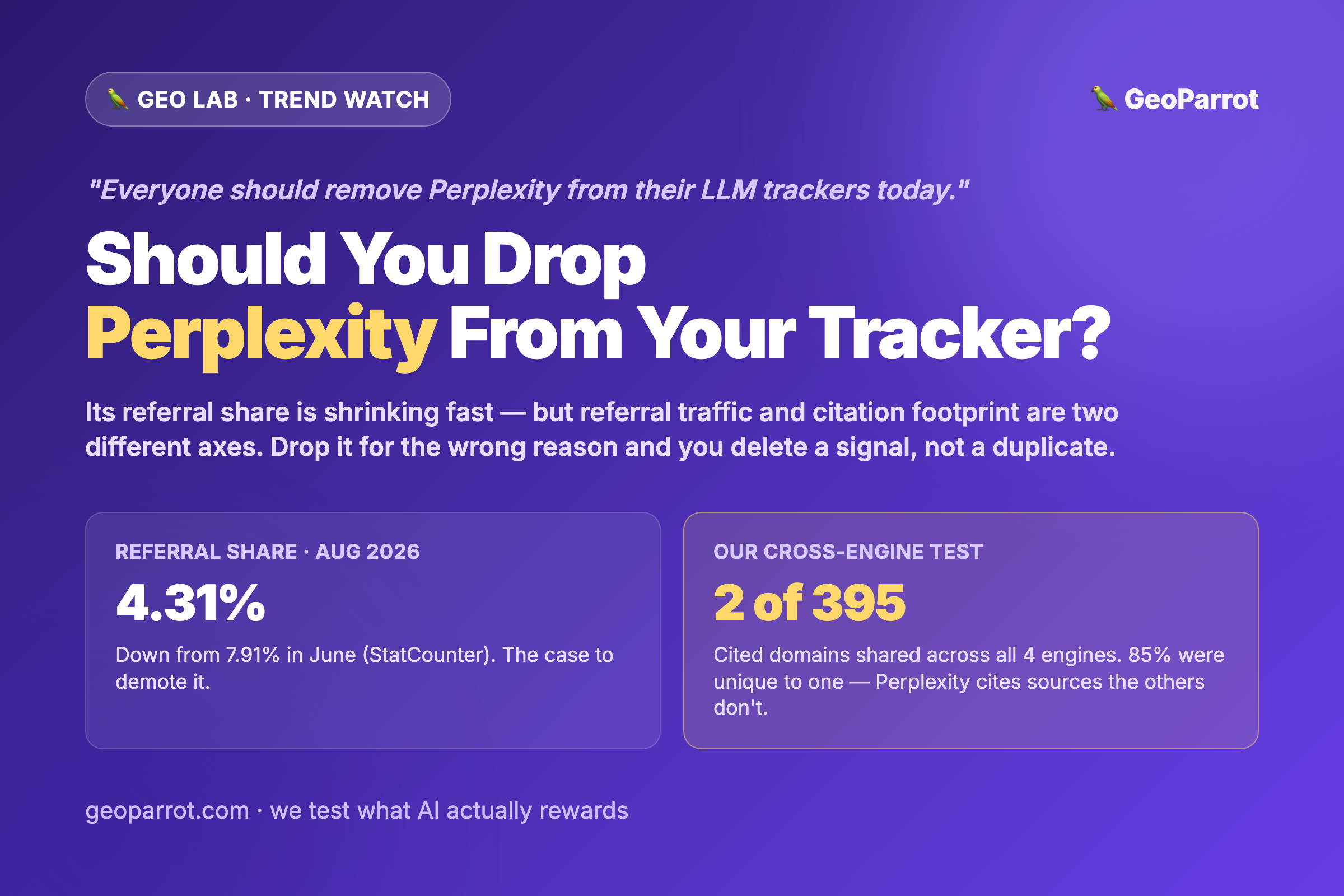
Should You Drop Perplexity From Your AI Tracker? A GEO Lab Fact-Check
A prominent SEO just told everyone to remove Perplexity from their LLM trackers as its referral share collapsed to 4.31%. But referral traffic and citation footprint are different axes — and our cross-engine data shows Perplexity cites sources no other engine does. Here’s the disciplined answer: demote its weight, don’t delete the signal.
-
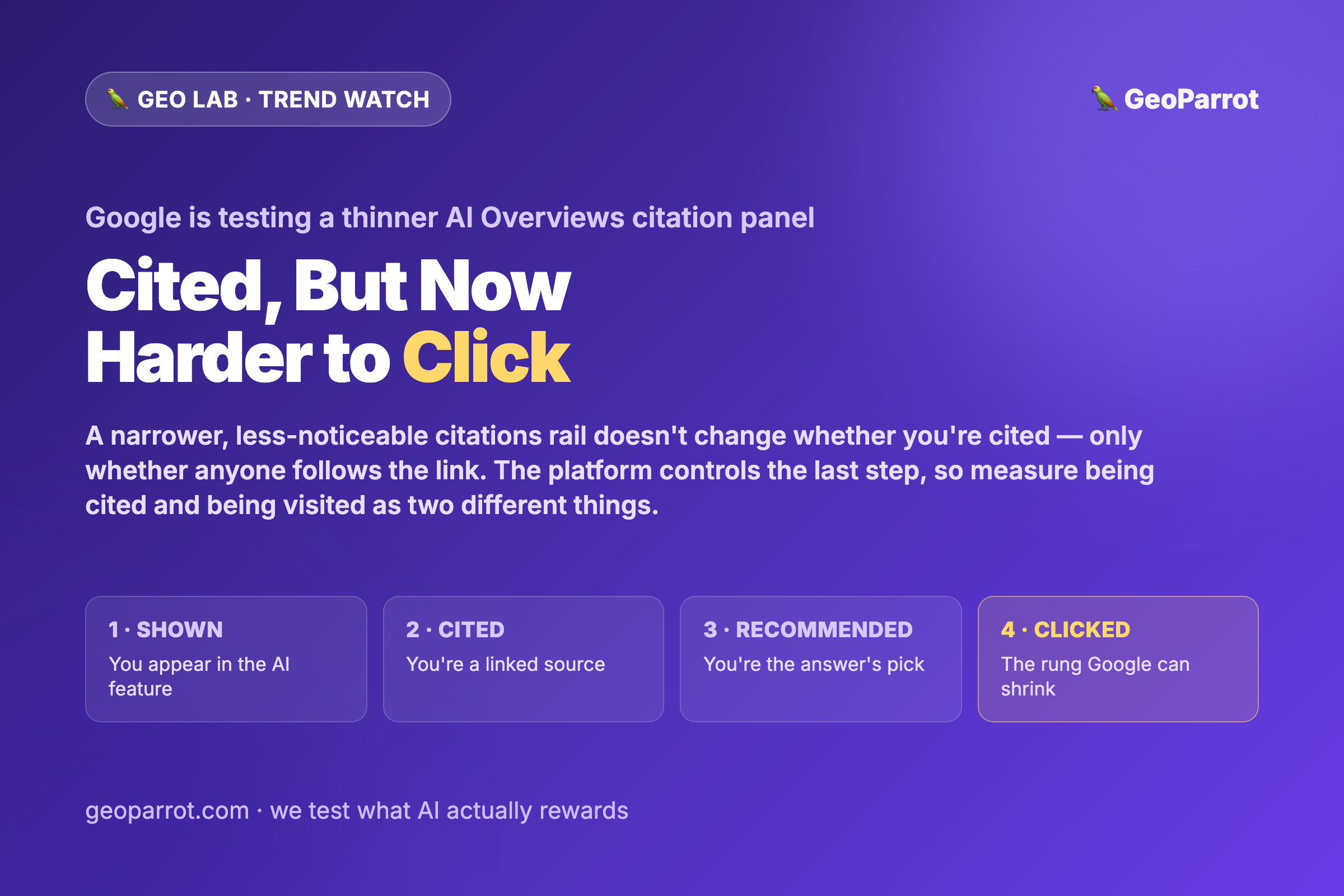
Google Is Testing a Thinner AI Overviews Citation Panel — What a Shrinking Link Rail Means for GEO
Google is quietly testing a narrower, less-noticeable citations panel in AI Overviews on desktop. If it ships, being cited buys you even fewer clicks than before. Here’s the honest read: it’s a test, not a rollout, and it sharpens the one rule GEO Lab keeps insisting on — measure citation and traffic separately.
-
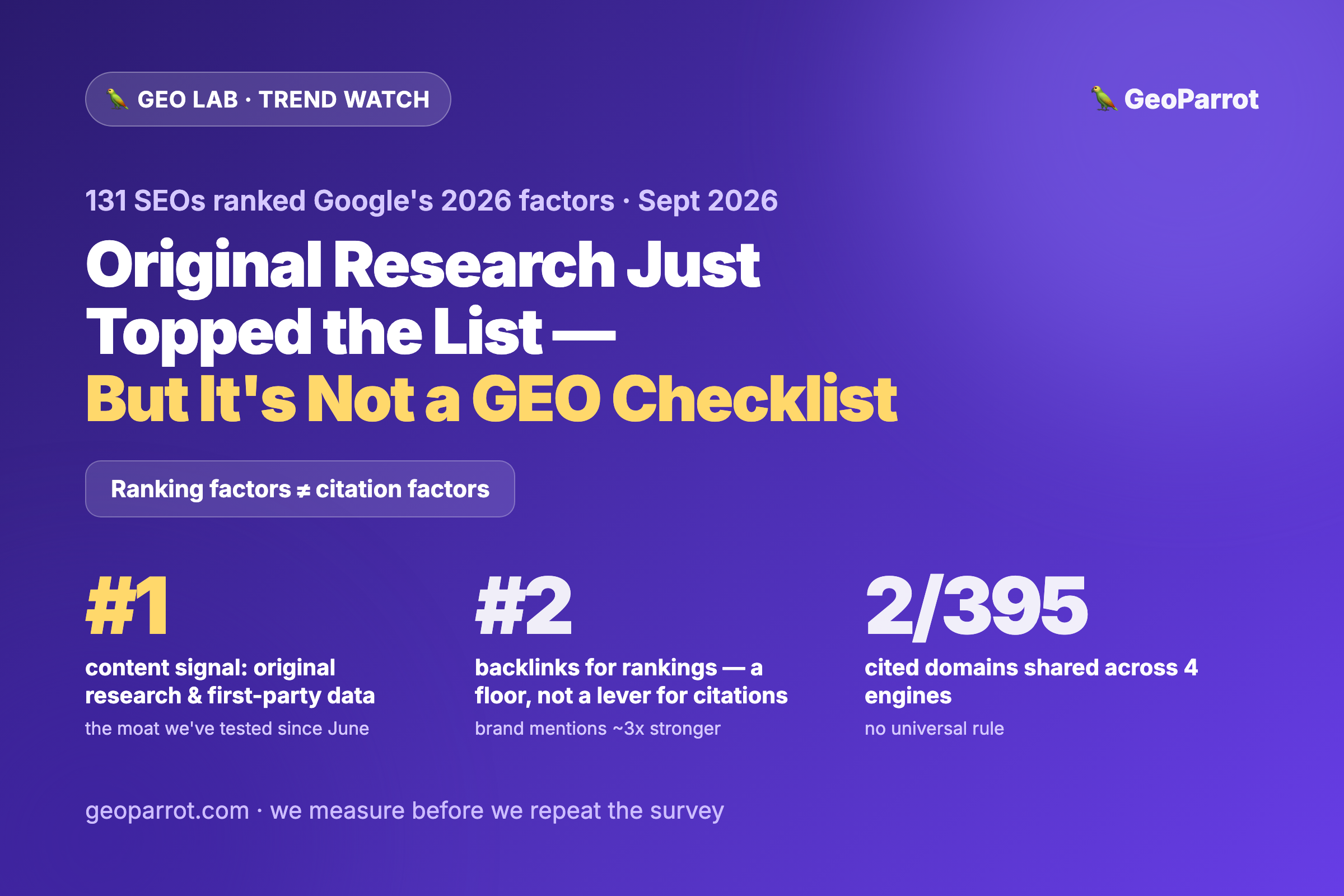
The 2026 Google Ranking Factors Survey Just Crowned Original Research — What It Gets Right (and Wrong) for AI Citations
131 SEO experts just ranked Google’s 2026 factors — and voted original research and first-party data the top content signal. Here’s where that survey converges with what we’ve measured for AI citations, and the three places it stops short for GEO.