
Author: GeoParrot Team
-
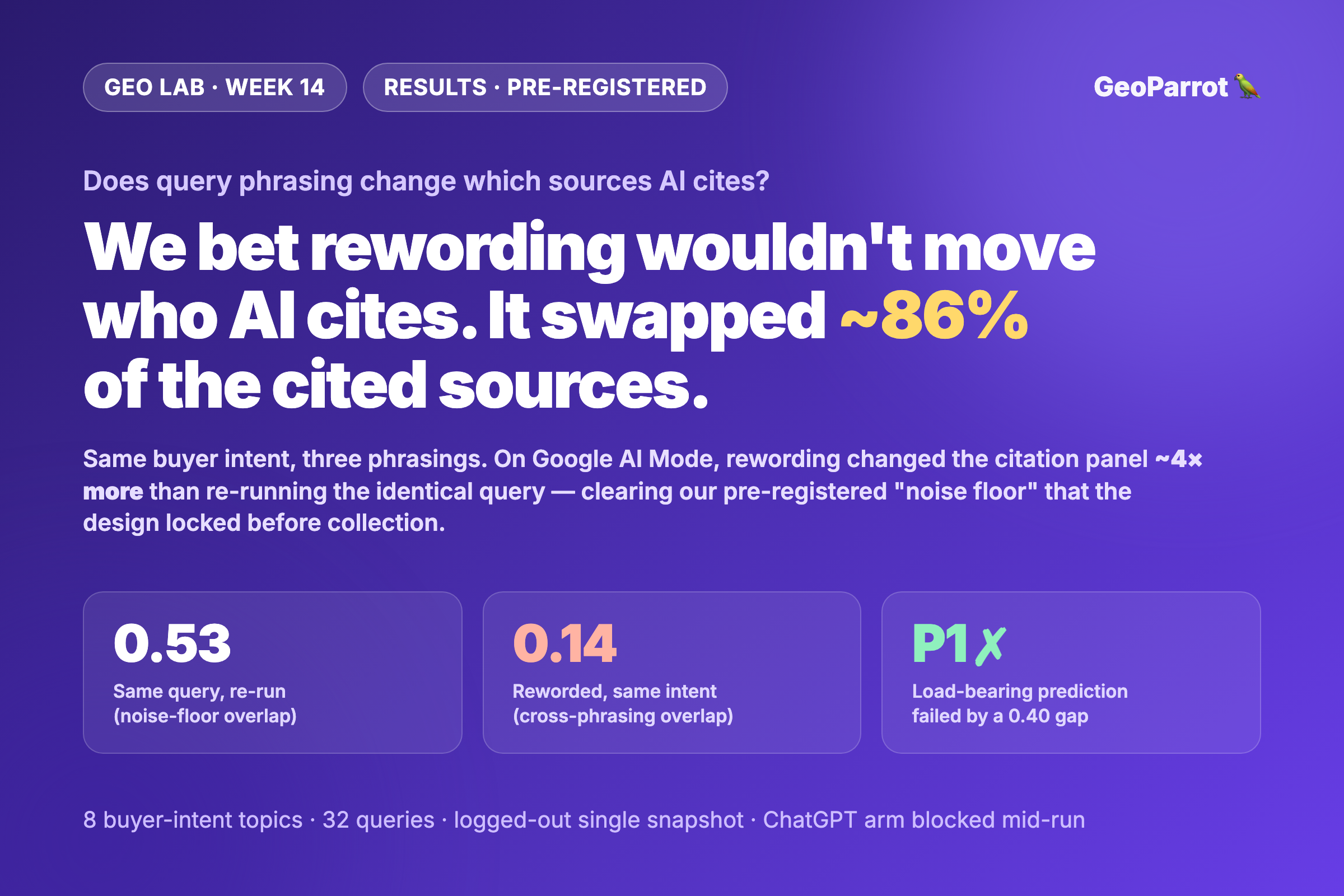
We Bet Rewording Wouldn’t Change Who AI Cites. On Google AI Mode, It Swapped ~86% of the Sources.
Tuesday we pre-registered a bet: query phrasing is a doorbell, not a gatekeeper — it changes whether AI answers, not who it cites. We collected 32 Google AI Mode queries (8 buyer intents x 3 phrasings, plus a noise-floor re-run). The load-bearing prediction failed by a 0.40 Jaccard gap: reworded queries shared only ~14% of…
-
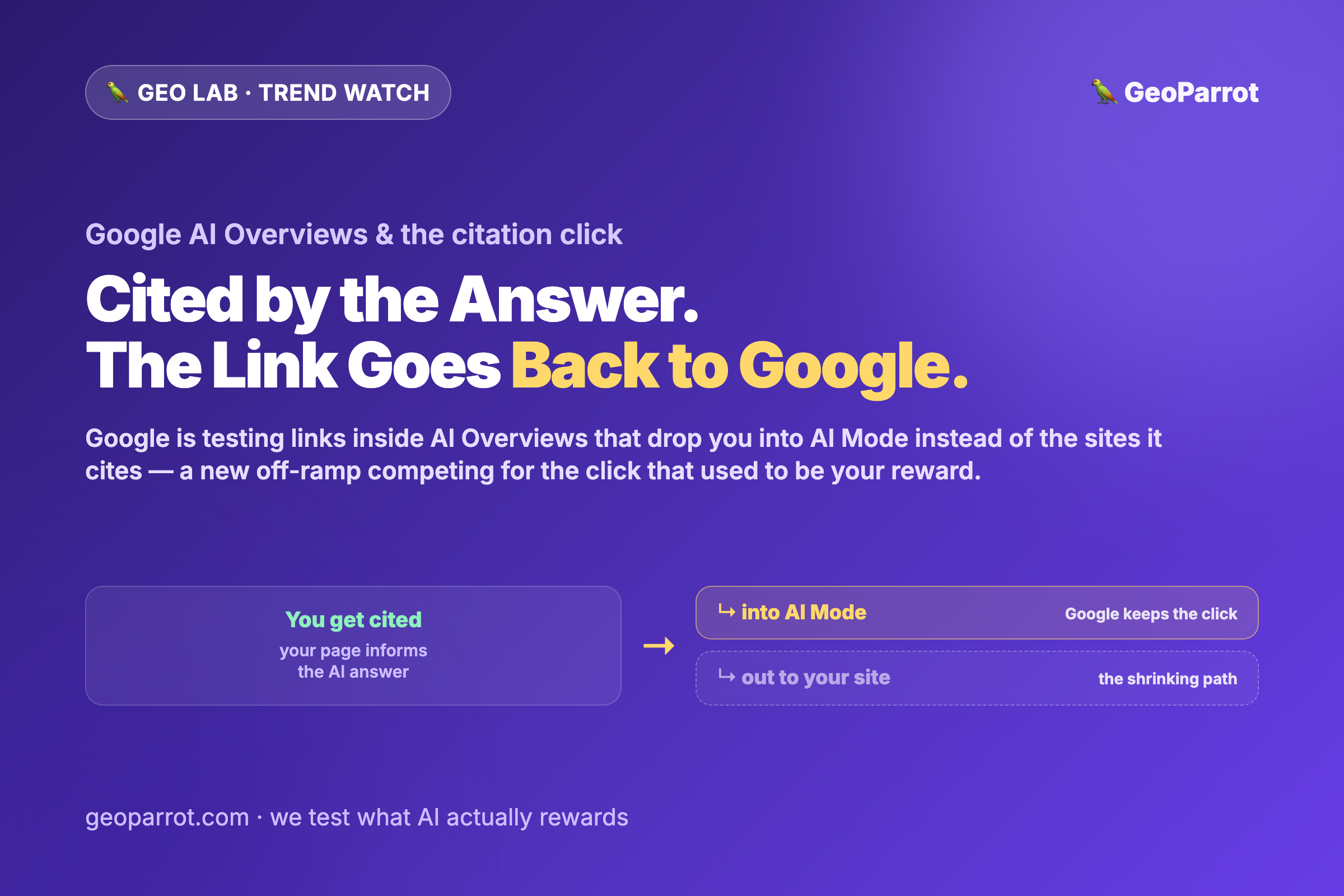
Google Is Testing AI Overview Links That Send You Deeper Into Google — Not to the Sites It Cites
Google is testing normal-looking links at the bottom of AI Overviews that don’t go to a webpage — they drop you into AI Mode with a follow-up question. It’s an unconfirmed test spotted on one query, so treat it as a direction, not a measurement. But the direction matters for GEO: the answer box is…
-
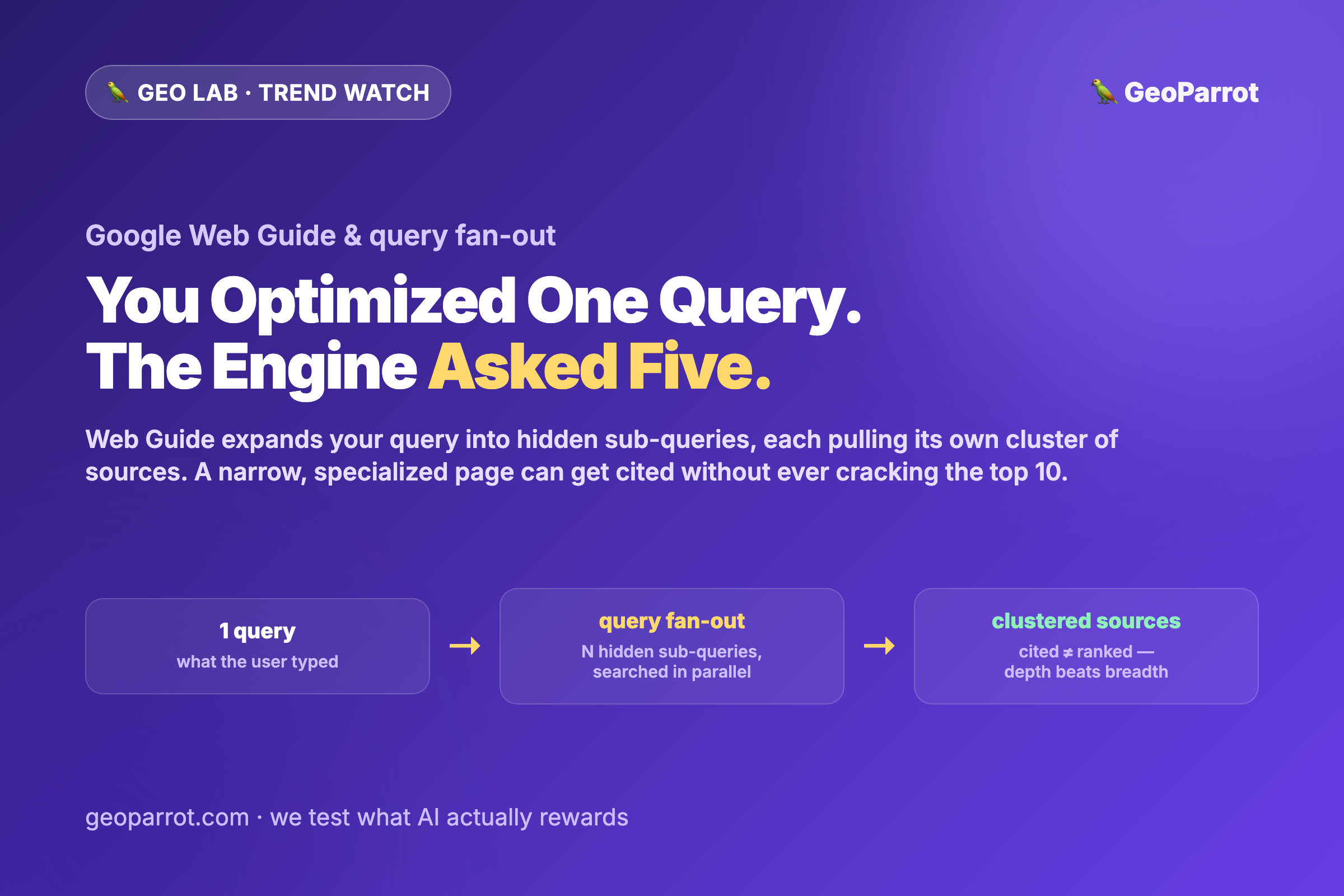
Google’s Web Guide Just Trapped Users in AI-Organized Results — What Query Fan-Out Means for Getting Cited
This week Google’s Web Guide “Classic search” escape button stopped working — you click it and stay in the AI-organized layout. The bug is small; the mechanism underneath it isn’t. Web Guide runs on query fan-out: one query becomes many hidden sub-queries, each pulling its own cluster of sources. That quietly changes who gets cited…
-
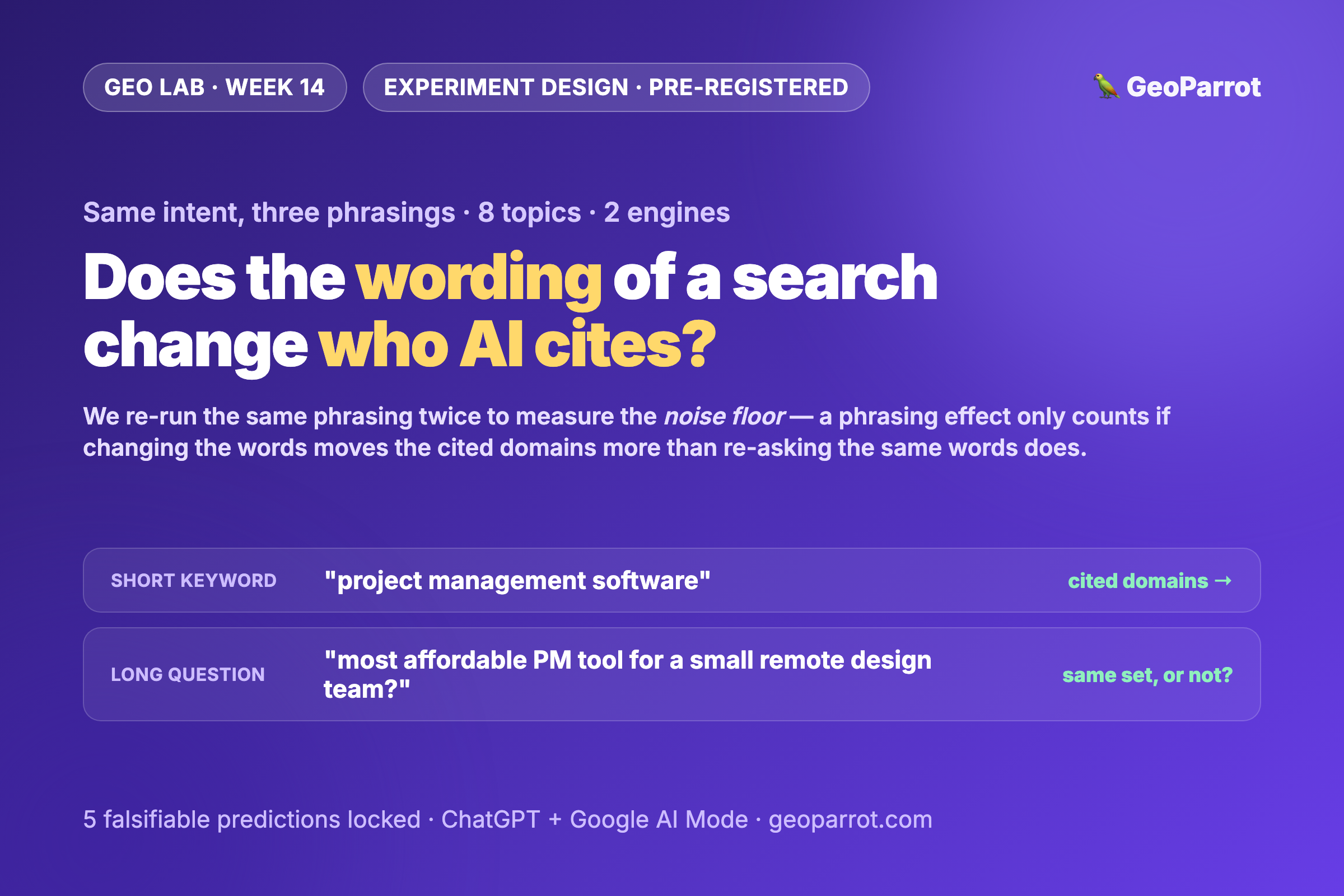
Same Intent, Three Phrasings: Our Pre-Registered Test of Whether Query Wording Changes Who AI Cites
Monday we separated trigger (does an AI answer appear?) from selection (does it cite you?) and argued the “write for conversational queries” trend mostly moves the first. This week we test the second. Here is the full pre-registered design: 8 buyer-intent topics, each phrased three ways (short keyword to long conversational question), run on ChatGPT…
-
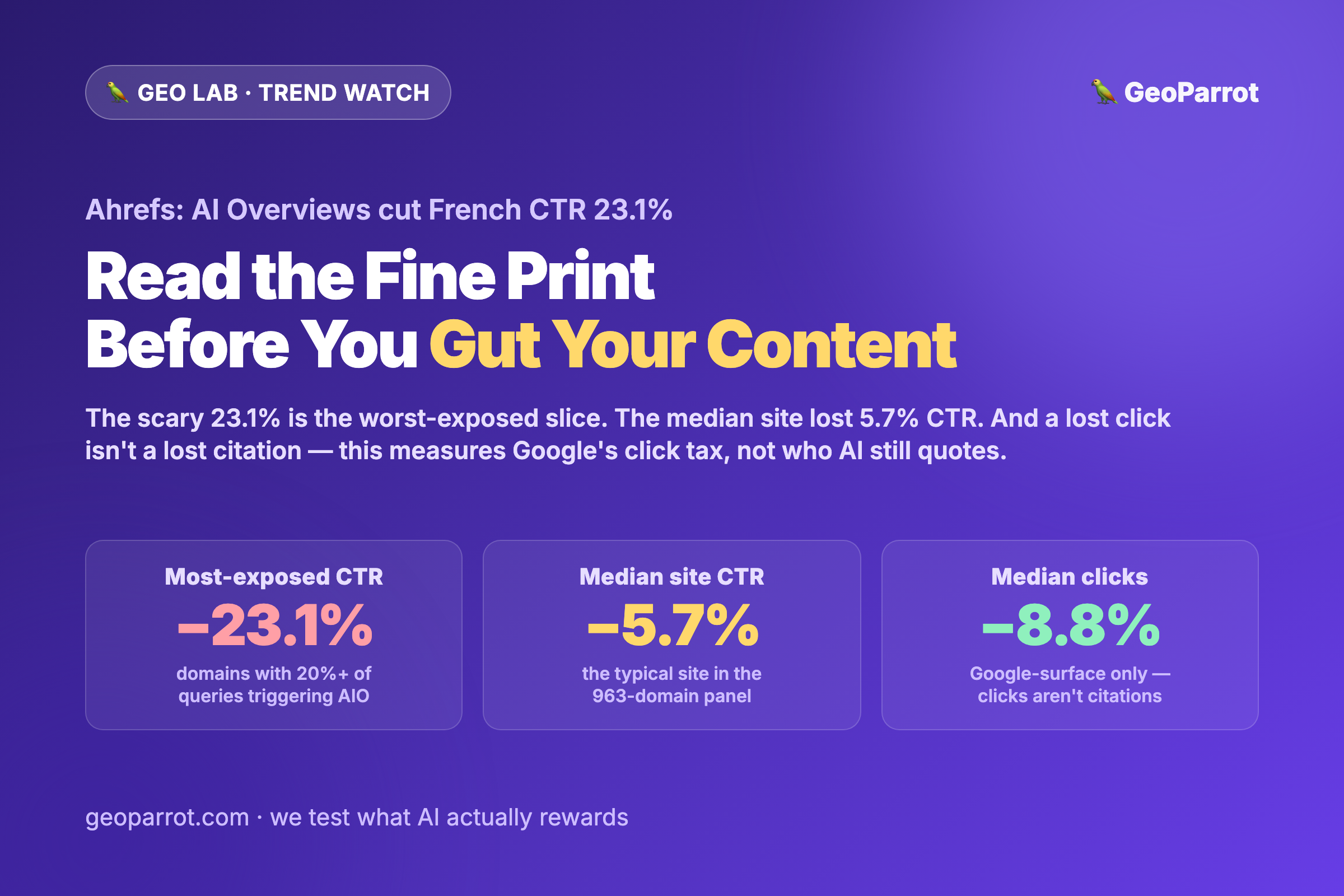
AI Overviews Cut French CTR by 23.1% — Read the Fine Print Before You Gut Your Content
Ahrefs’ new France study says AI Overviews cut CTR 23.1% — but that’s the worst-exposed slice; the median site lost 5.7% CTR and 8.8% of clicks. And the deeper GEO point everyone skips: a CTR drop measures the click tax on Google’s surface, not whether you’re still the cited source or how you show up…
-
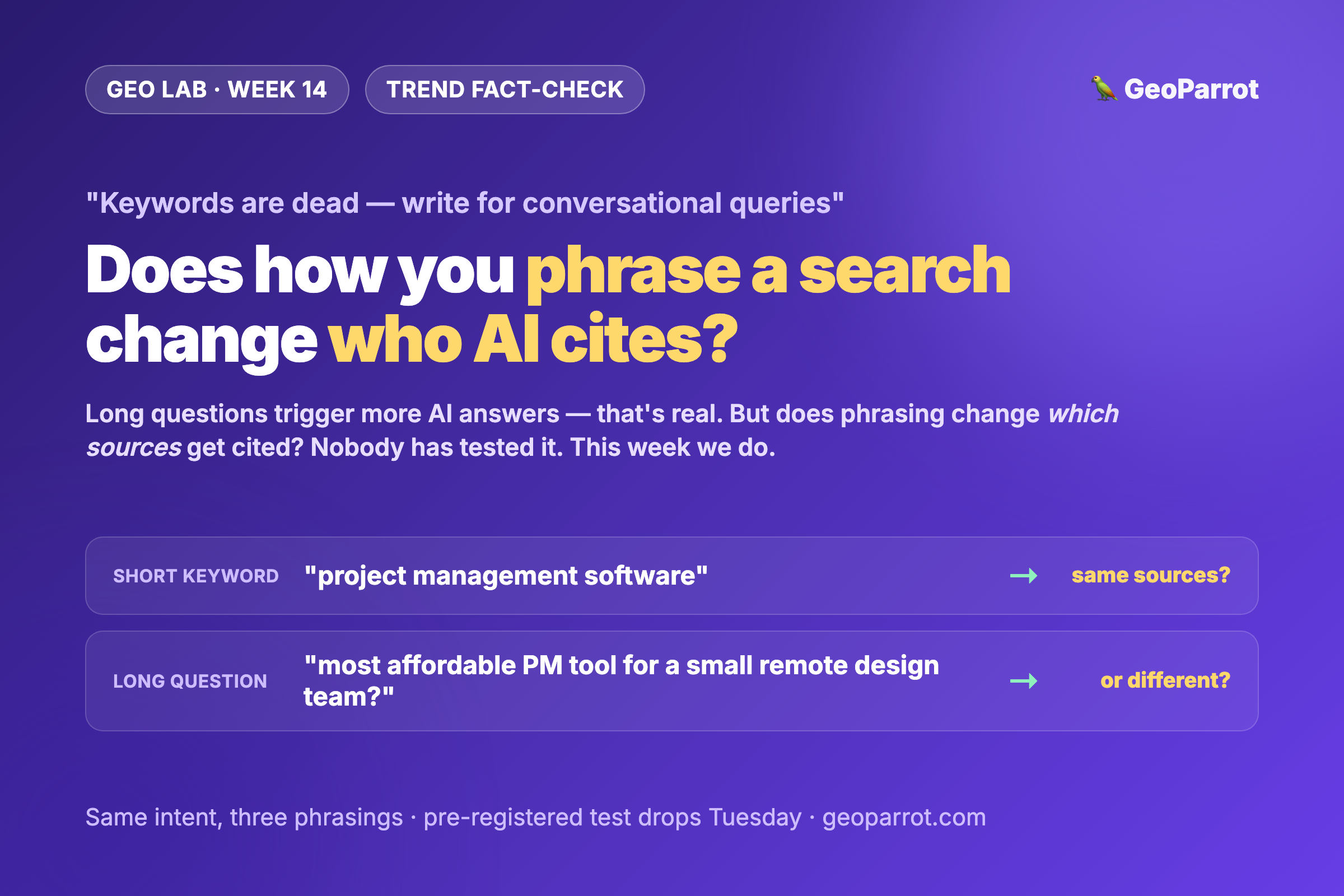
Everyone Says “Write for Conversational Queries” Now. But Does How You Phrase a Search Change Who AI Cites?
The 2026 GEO consensus is “keywords are dead, write for long conversational questions.” The trigger part is real — 8+ word questions fire AI answers far more often. But the untested leap is whether phrasing changes WHICH sources get cited. This week the GEO Lab tests it: same intent, three phrasings, do the cited domains…
-
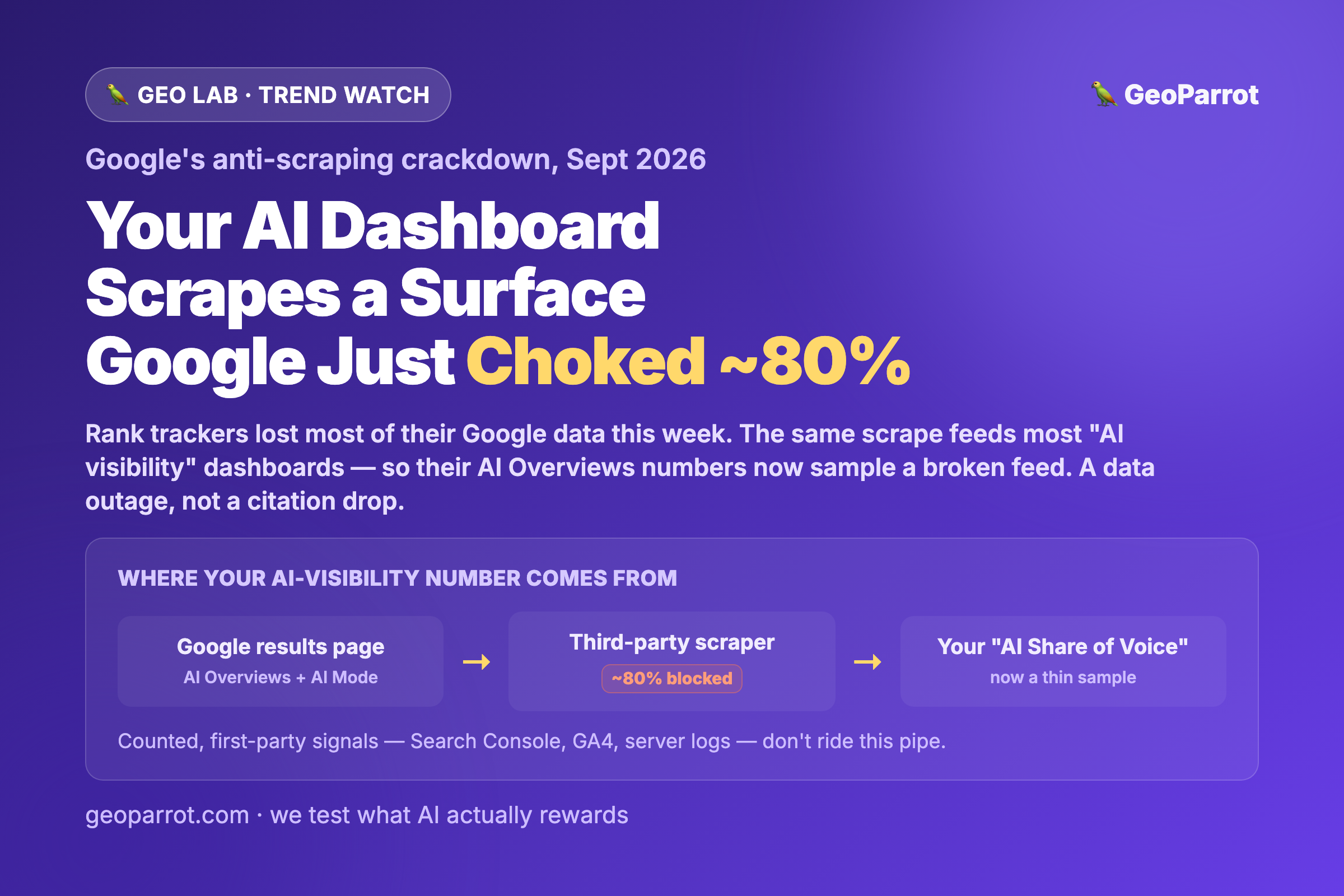
Google Just Choked Rank-Tracker Data by ~80% — and Your AI Visibility Dashboard Scrapes the Same Surface
Since around September 13, Google’s anti-scraping measures have knocked out most of the data rank trackers harvest — Nozzle reported an ~80% drop, Sistrix throttled, DataForSEO hit. The under-asked GEO question: most “AI visibility” dashboards scrape the same Google surface. Here’s what that breaks, what it doesn’t, and what still counts.
-
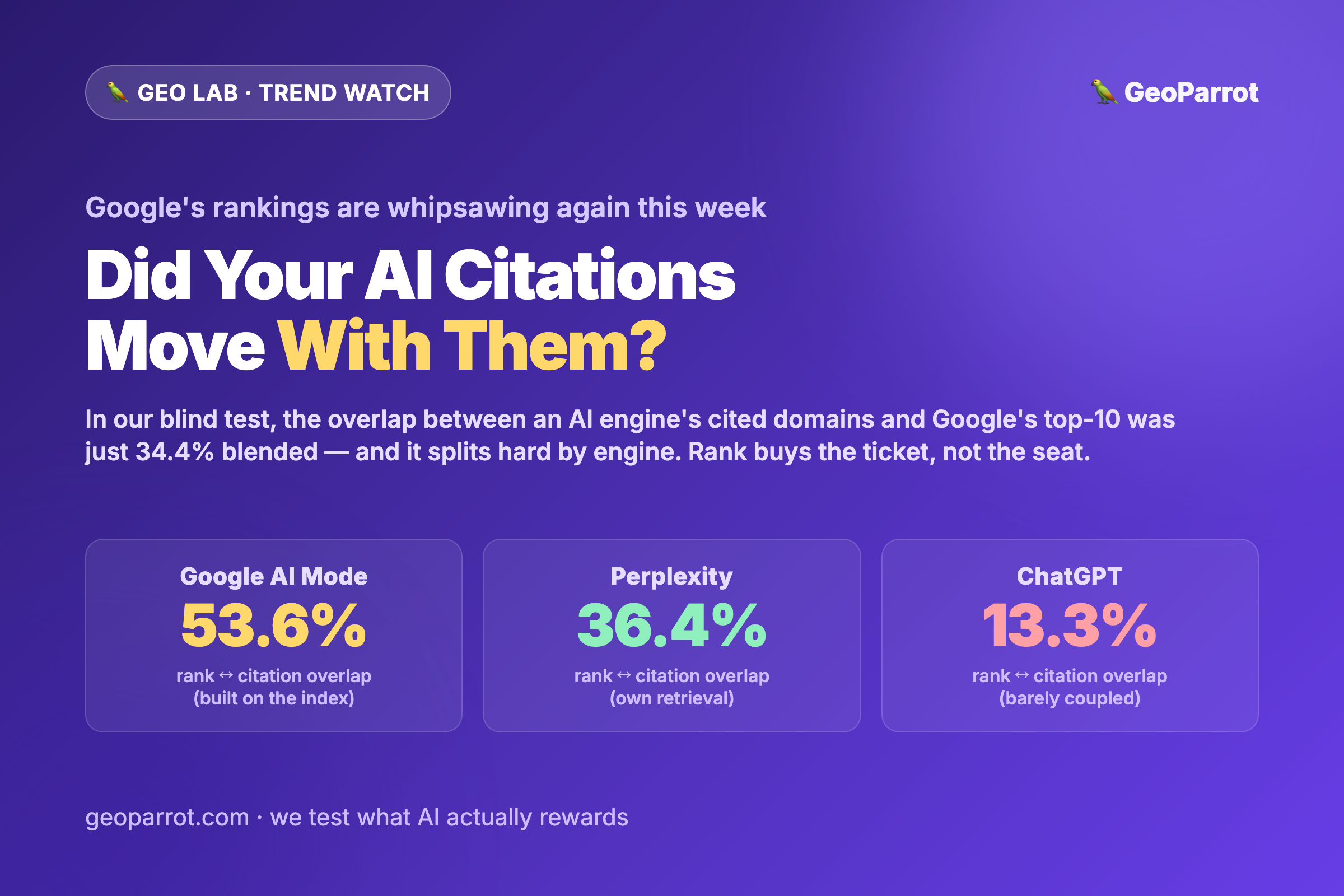
Google Rankings Are Whipsawing Again This Week — Did Your AI Citations Move With Them?
An unconfirmed Google update tanked rankings around Sept 4, reversed them on Sept 13, and volatility spiked again this week. The GEO question nobody is asking: when your Google rank swings, do your AI citations swing too? Our blind test says mostly no — rank predicts AI citation weakly and unevenly (53.6% overlap on AI…
-
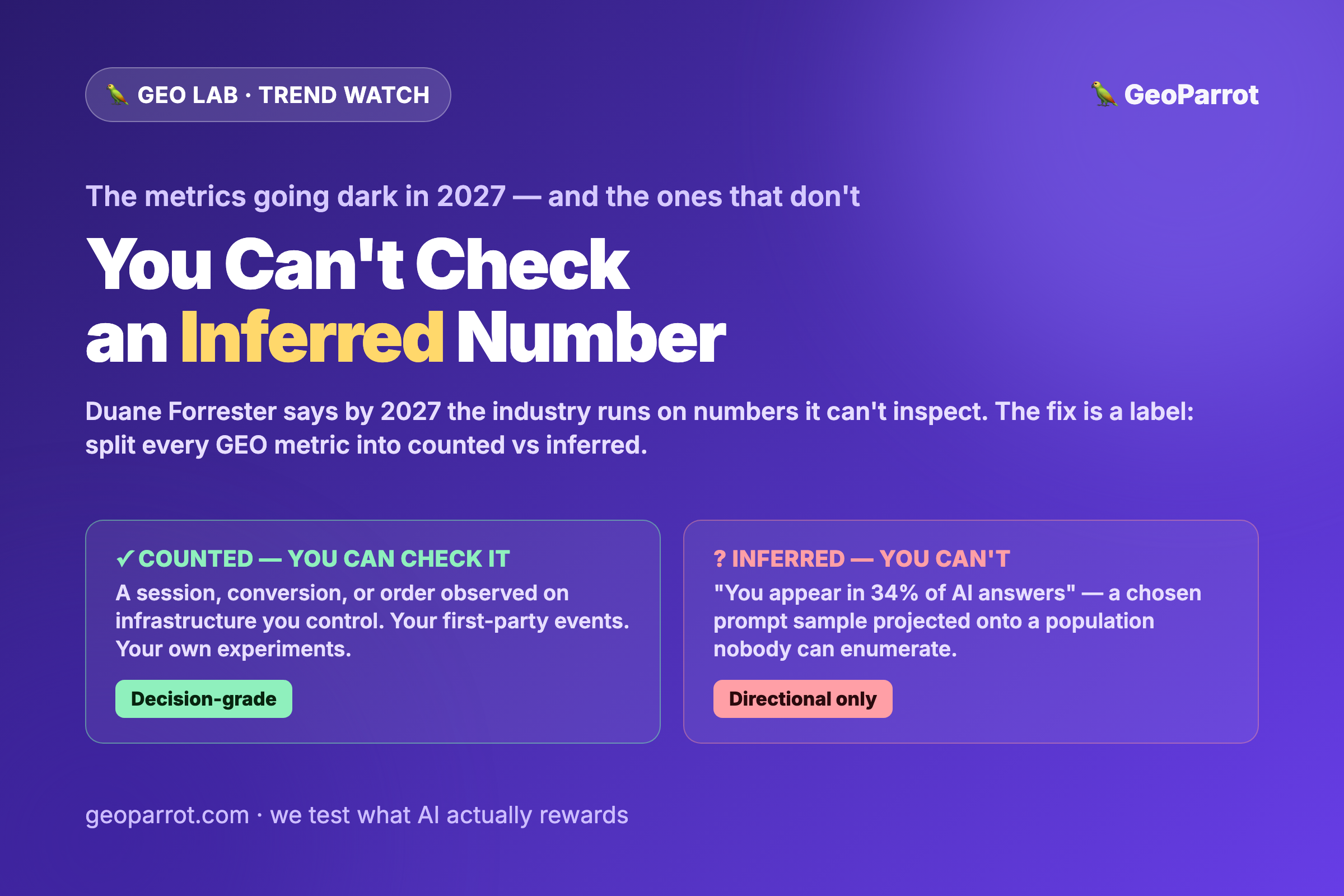
Duane Forrester Says You Won’t Be Able to Check Your 2027 GEO Metrics. Here’s What You Still Can Count.
SEO veteran Duane Forrester predicts that by 2027 the industry will run on numbers it can’t inspect. He’s right about the vendor dashboards — but two GEO numbers stay countable: your own first-party events and your own experiments. Here’s how to tell inferred from counted.
-
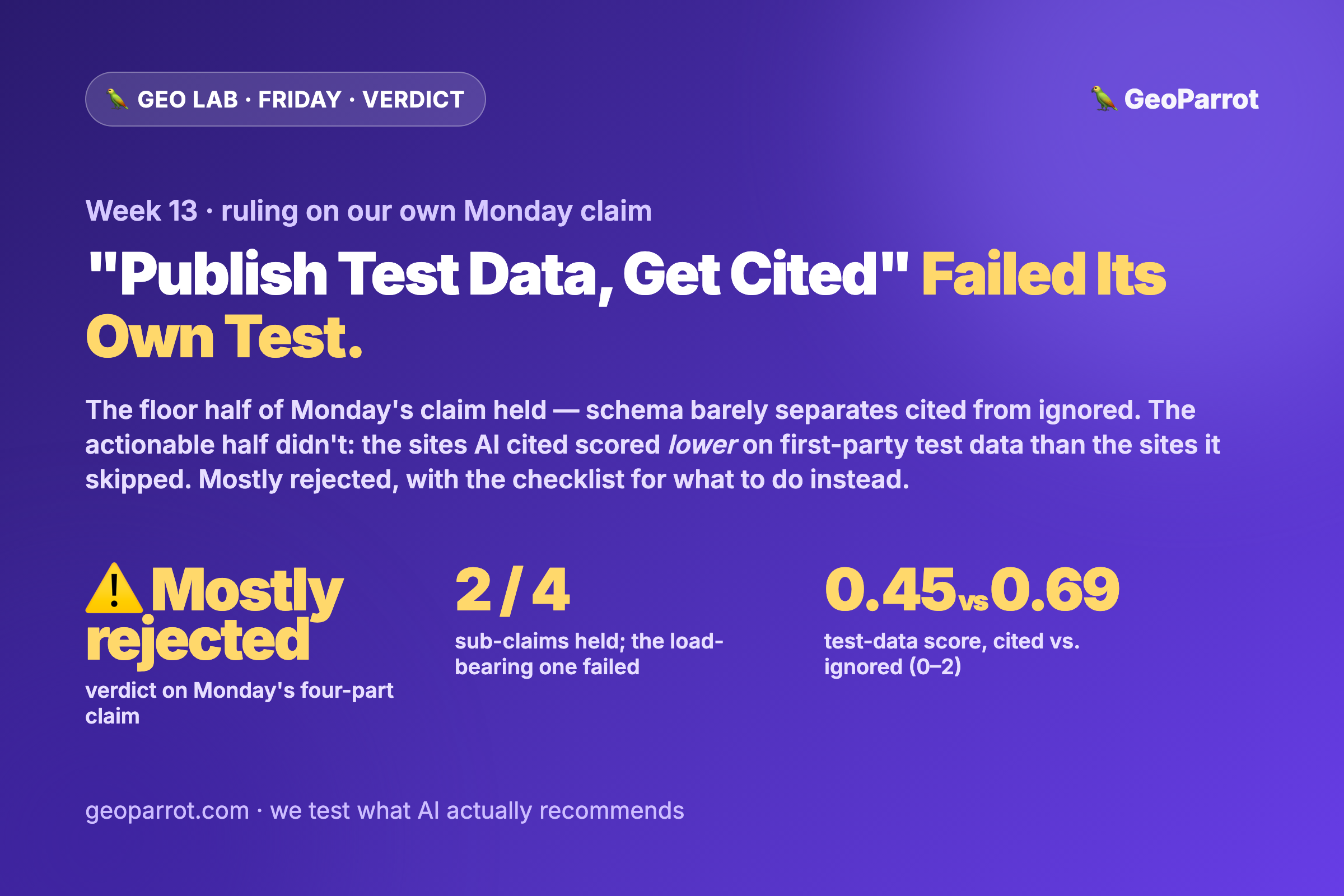
The Verdict: “Publish Test Data and AI Will Cite You” Failed Its Own Test — Here’s What to Do Instead
Monday we claimed first-party test data is the lever that gets you cited by AI. Friday’s verdict, after a pre-registered experiment on 148 domains: mostly rejected. The floor half held (schema barely separates cited from not-cited), but the actionable half — publish a test, get the citation — failed in the opposite direction. Cited sites…