
Author: GeoParrot Team
-
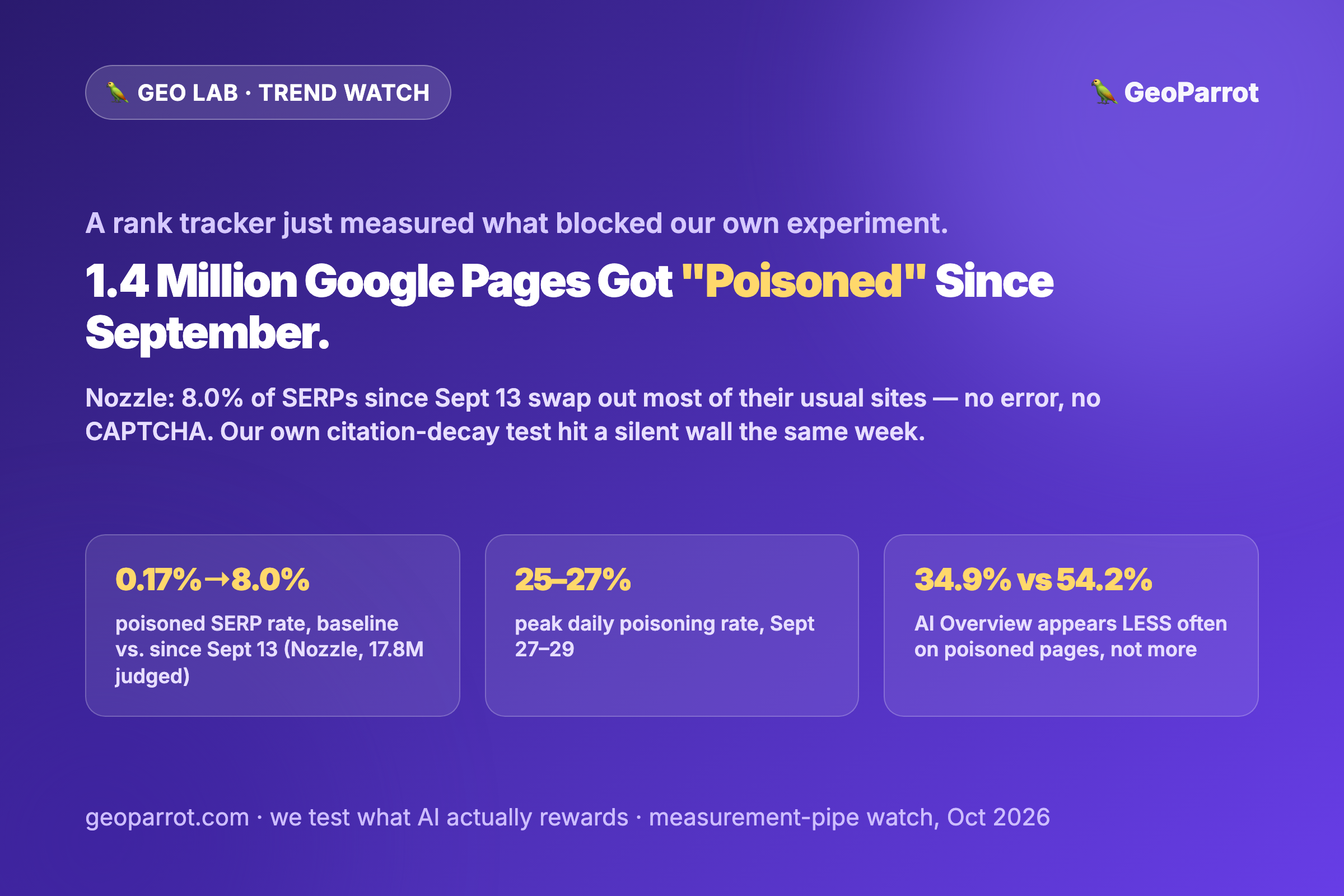
A Rank Tracker Just Measured 1.4 Million “Poisoned” Google Pages. It’s Probably What Blocked Our Own Experiment.
Rank-tracking vendor Nozzle quantified 1.42 million “poisoned” Google SERPs since September 13 — pages that look normal but swap out most of their usual sites. The timing lines up almost exactly with our own blocked citation-decay experiment. The twist: the data undercuts the easy “Google is shielding AI Overviews” theory.
-
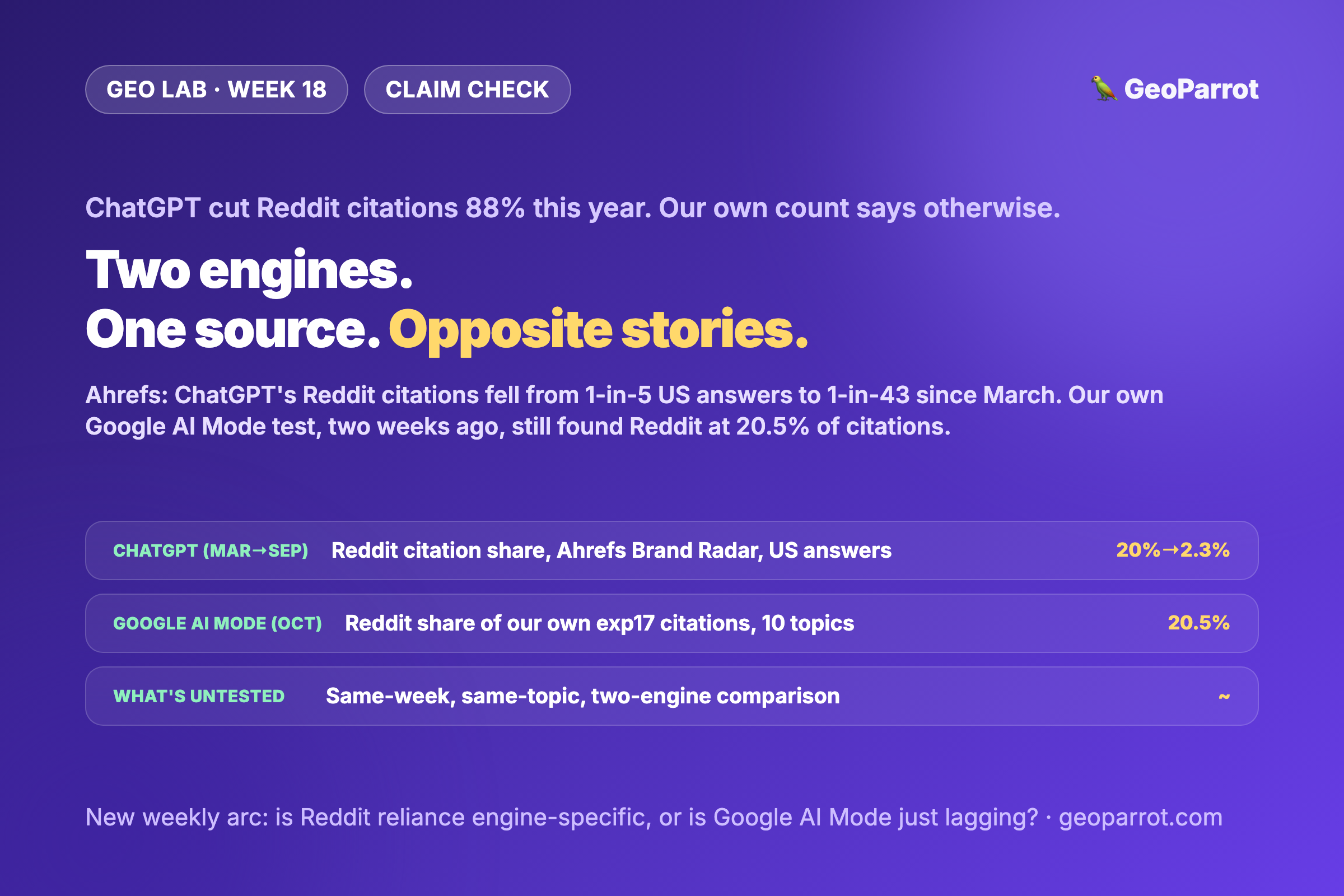
ChatGPT’s Reddit Citations Collapsed 88% This Year. Our Own Google AI Mode Data Still Shows 21%.
Ahrefs’ Brand Radar data shows ChatGPT cut Reddit citations ~88% between March and September 2026 (1-in-5 US answers down to 1-in-43). Our own Google AI Mode experiment, two weeks ago, found Reddit at 20.5% of what it actually cited — close to where ChatGPT started, not where it ended up. We check whether that’s a…
-
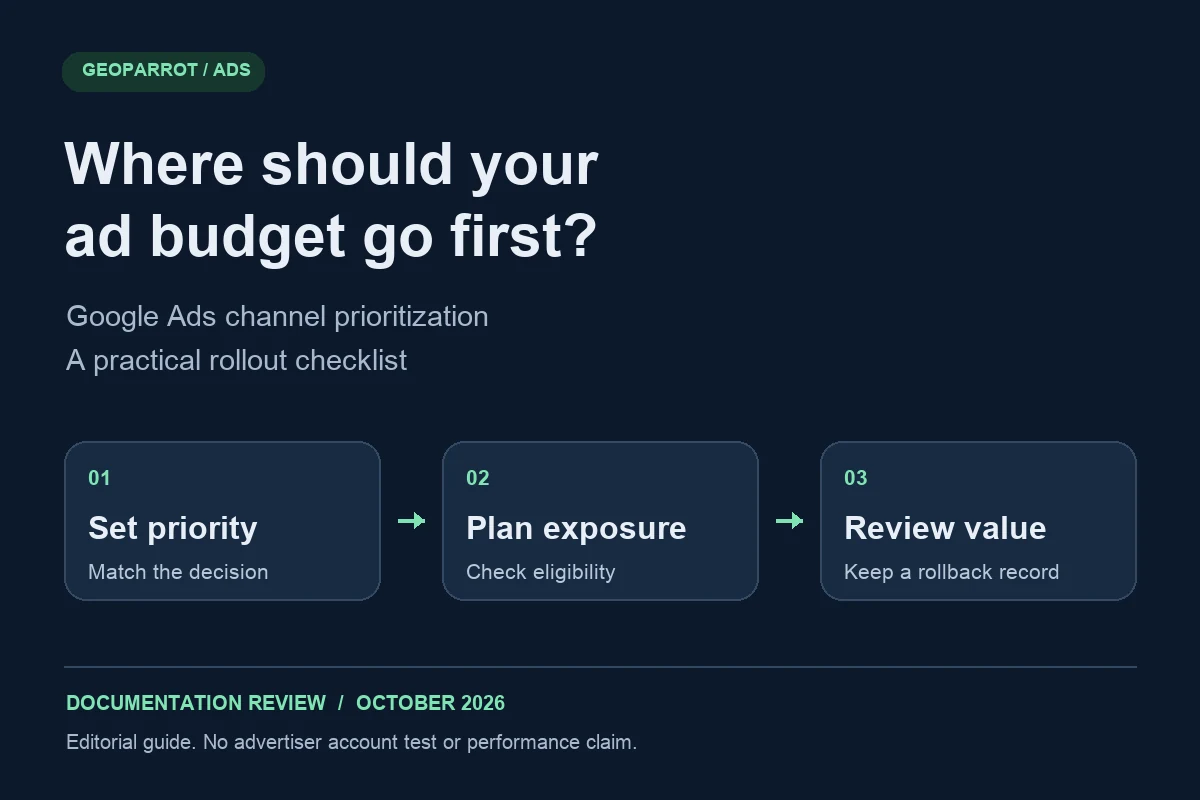
Google Ads Channel Prioritization: A Budget Control Checklist
Understand Google Ads channel prioritization and budget allocation, then plan a controlled rollout with a decision table, review template, and rollback checks.
-
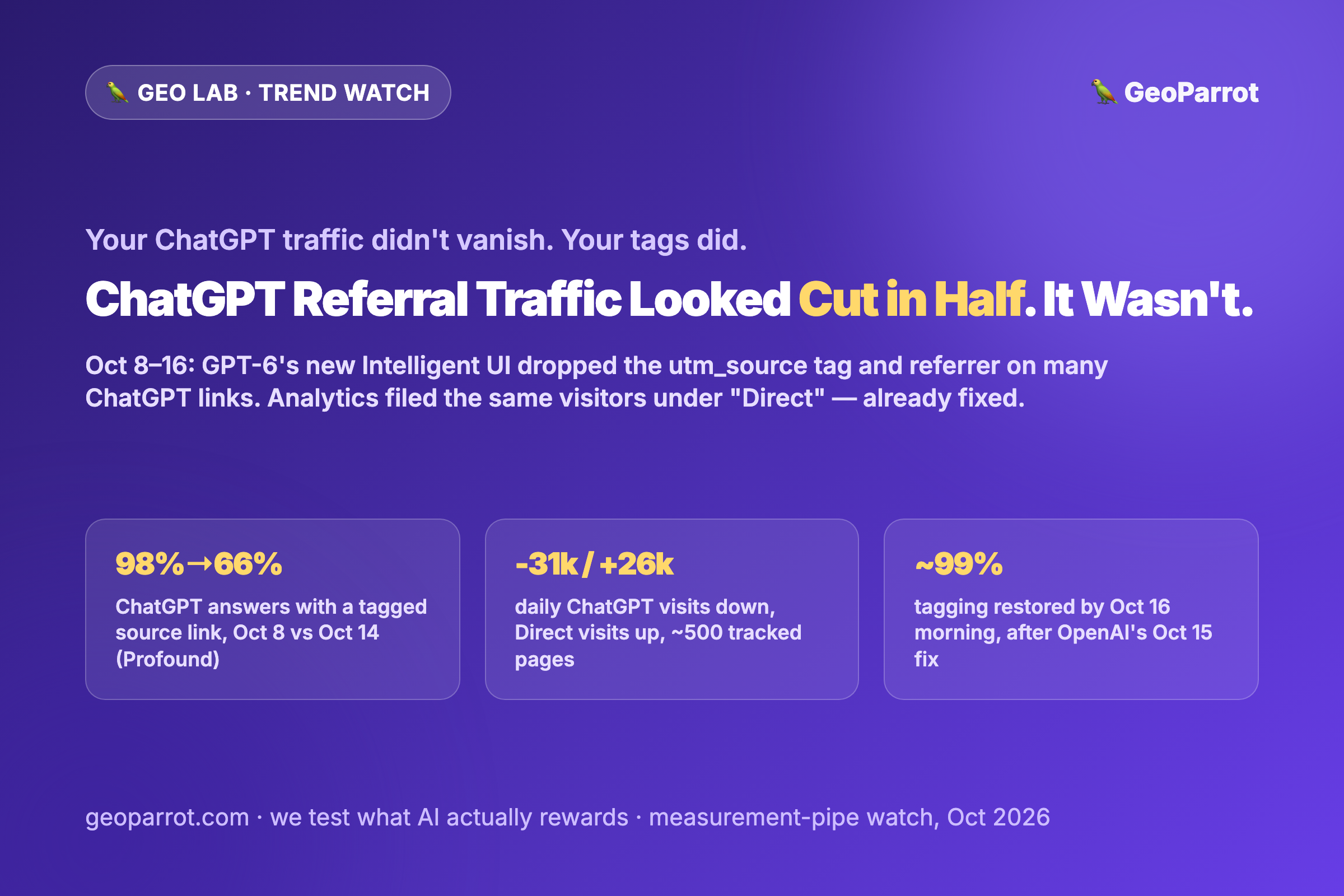
ChatGPT Referral Traffic Looked Like It Collapsed This Week. Your Tags Broke, Not Your Citations.
From October 8 to 16, 2026, ChatGPT links lost their utm_source tag and referrer after the GPT-6 Intelligent UI rollout, so GA4 quietly filed real ChatGPT visits as “Direct.” We separate the confirmed bug (fixed) from what it changes about how you should read any AI-referral number.
-
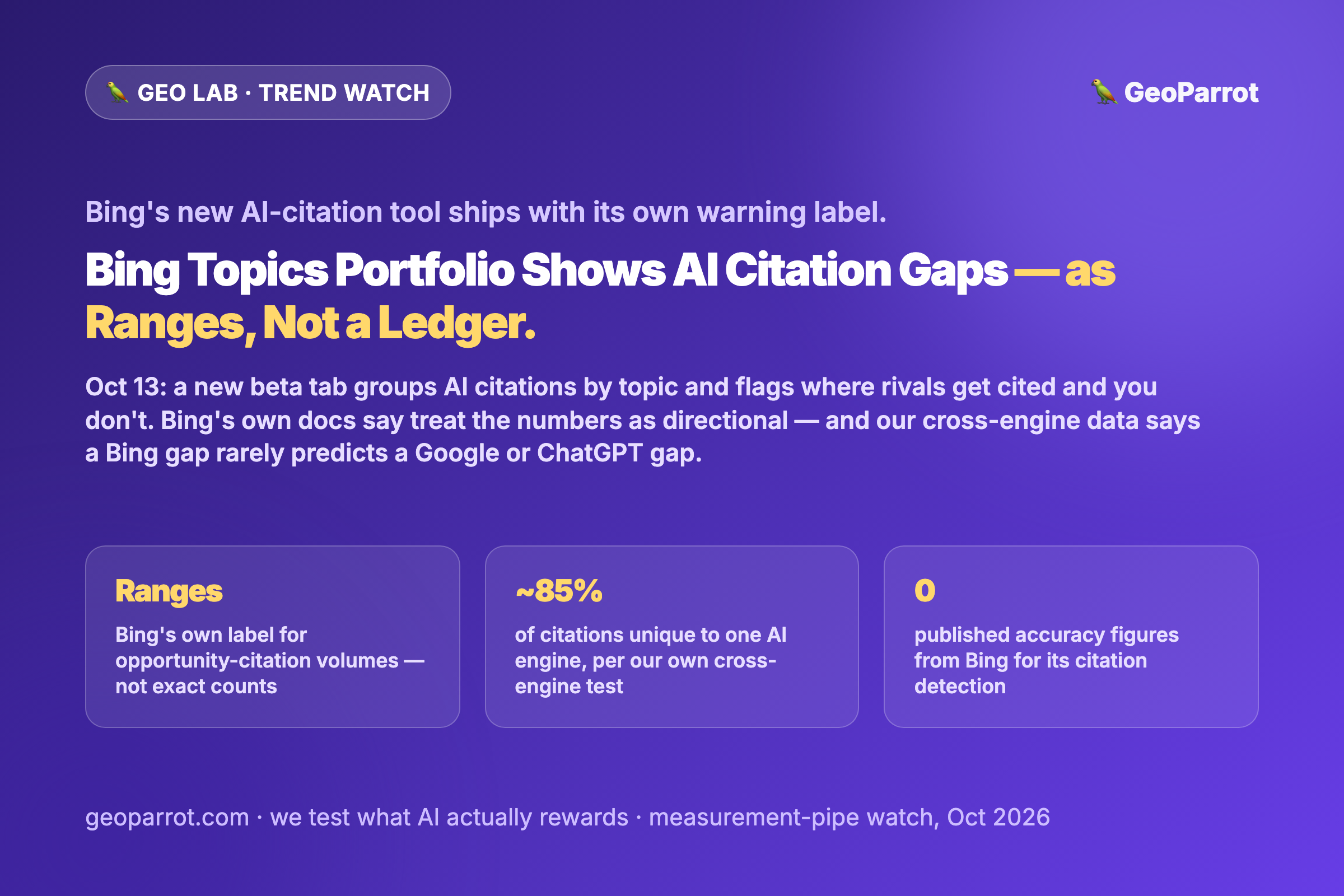
Bing’s New AI-Citation Tool Comes With Its Own Warning Label
Bing Webmaster Tools shipped Topics Portfolio on October 13, a beta tool that groups AI citations by topic and flags where competitors are cited and you aren’t. Bing’s own docs say to treat the numbers as directional, not a ledger. Here’s what that caveat actually means.
-
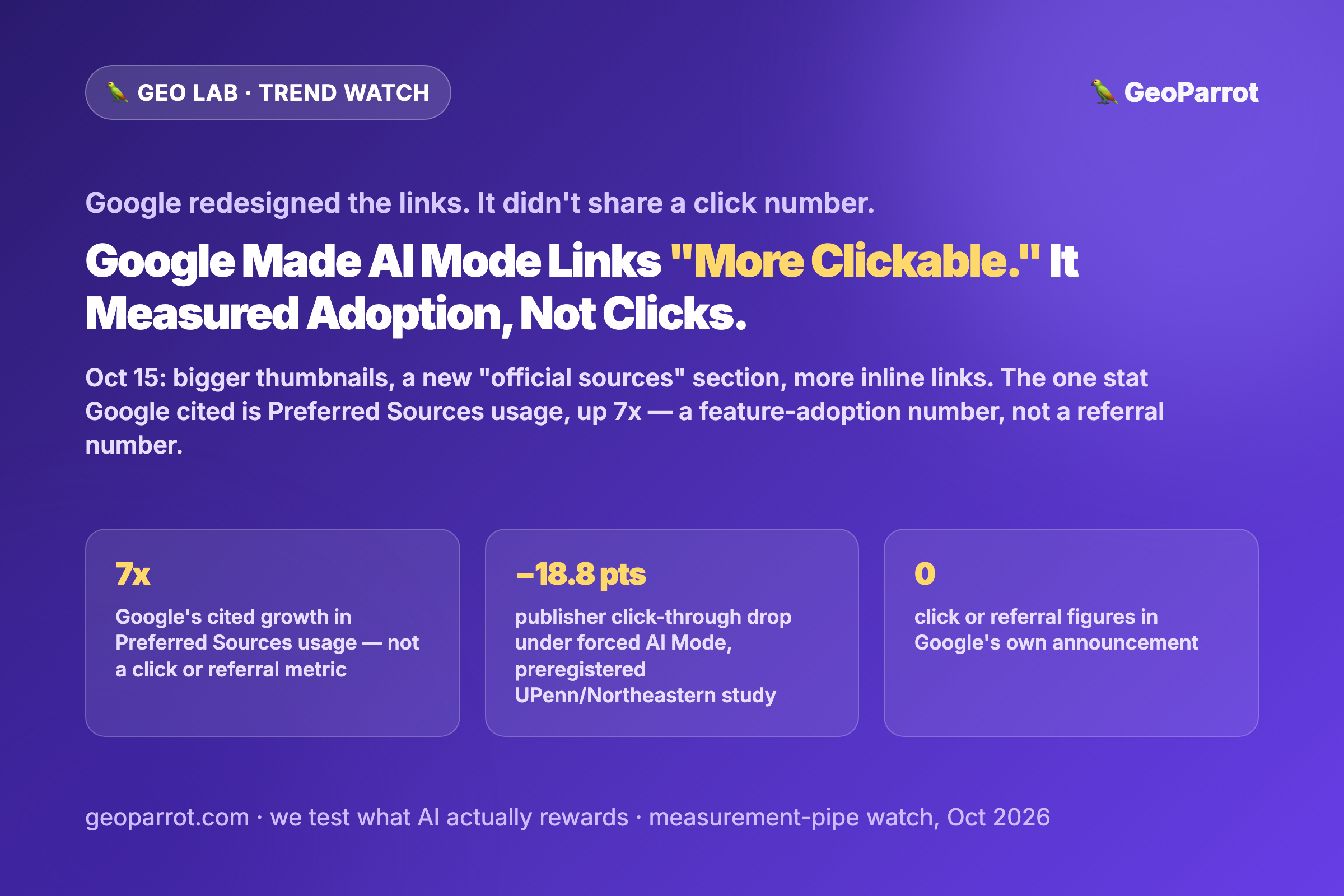
Google Made AI Mode Links “More Clickable.” The Number It Shared Isn’t a Click.
Google’s October 15 AI Mode and AI Overviews update promises bigger thumbnails, a new “official sources” section, and more inline links. The one stat it cited is feature adoption, not clicks. Here’s what our own click-rate data says about the gap.
-
Travel Experience Platforms: 4 SEO & GEO Patterns Behind Bookable Discovery
A synthesis of four evidence-first audits: Klook, GetYourGuide, Viator and KKday—and the information architecture patterns worth borrowing.
-
KKday SEO & GEO Audit: Turning Local Travel Jobs Into Answerable Pages
An evidence-first audit of KKday’s travel-task navigation, Asia destination chain and ticket-level proof signals.
-
Viator SEO & GEO Audit: Booking Confidence as a Discovery Signal
An evidence-first audit of Viator’s trust promise, Rome destination routing and constraint-led discovery filters.
-
GetYourGuide SEO & GEO Audit: The Destination Is the Search Object
An evidence-first audit of GetYourGuide’s destination-led marketplace: city/landmark discovery, comparison cards, trust signals, Korean localisation and help architecture.