
Author: GeoParrot Team
-
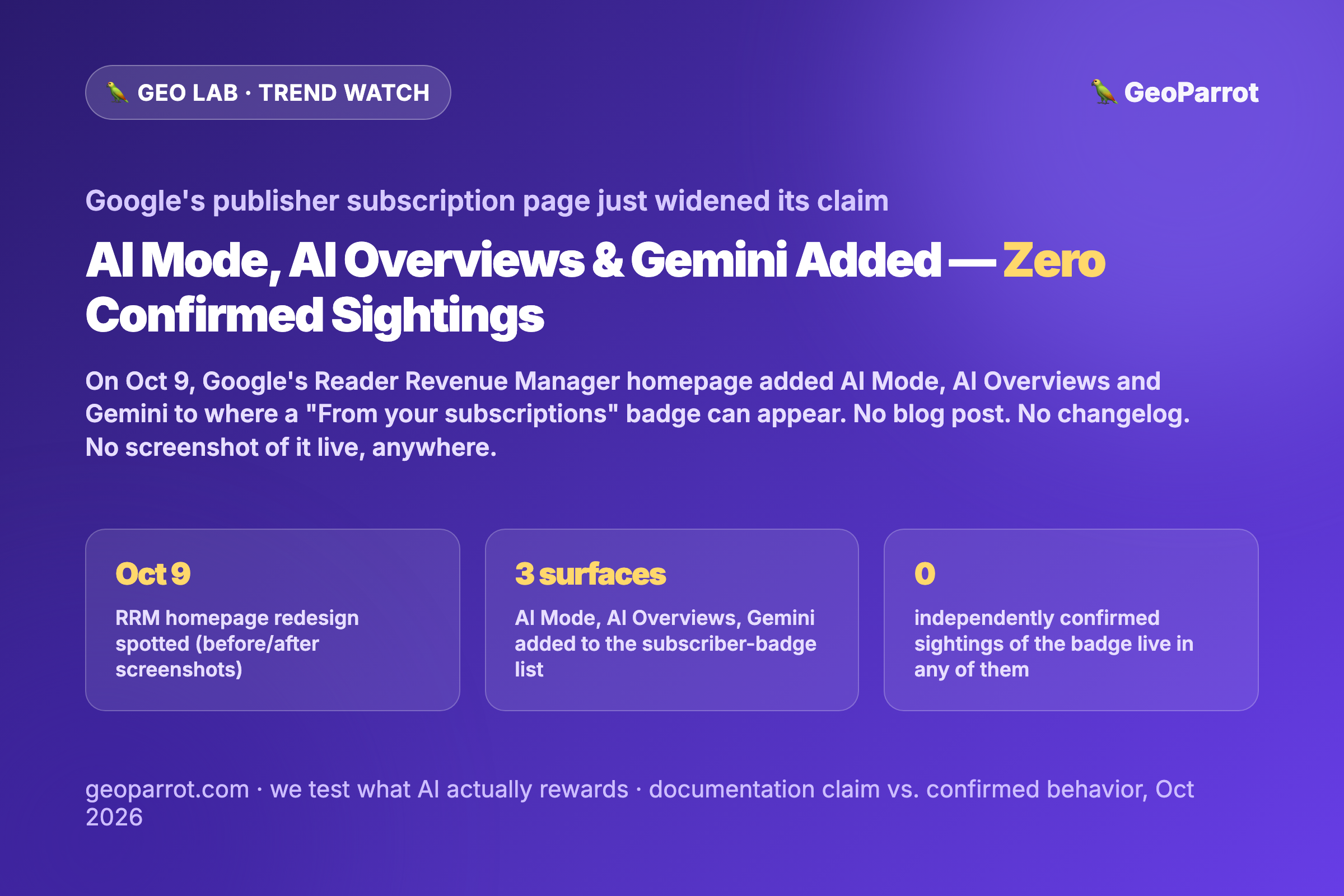
Google Just Added AI Mode, AI Overviews and Gemini to Its Publisher Subscriptions Page. Here’s What That Does and Doesn’t Confirm.
On October 9, 2026, Google redesigned the Reader Revenue Manager homepage and added a line saying subscriber content can carry a “From your subscriptions” distinction on AI Mode, AI Overviews and Gemini — not just Search, Discover and News. No Google blog post, no changelog, no in-the-wild screenshot of it actually rendering. We separate what…
-
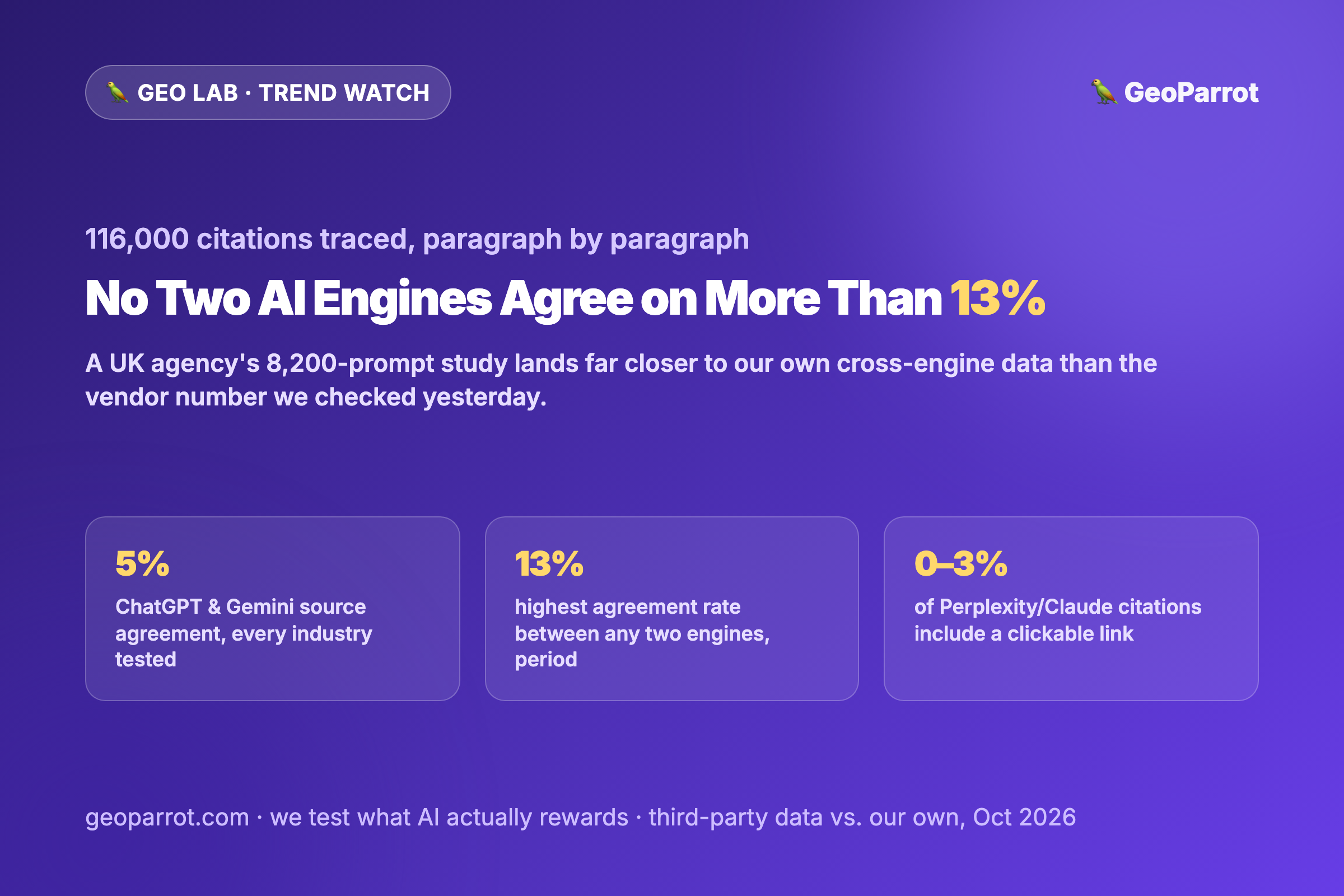
A 116,000-Citation Study Just Landed. It Confirms Our Number, Not Yesterday’s Vendor’s.
A UK agency traced 116,000 AI citations across 8,200+ prompts and five industries, paragraph by paragraph. Result: ChatGPT and Gemini agree on just 5% of sources, and no two engines agree on more than 13% — far closer to our own ~85% single-engine-exclusive finding than the 27.2% a vendor published this week. The study also…
-
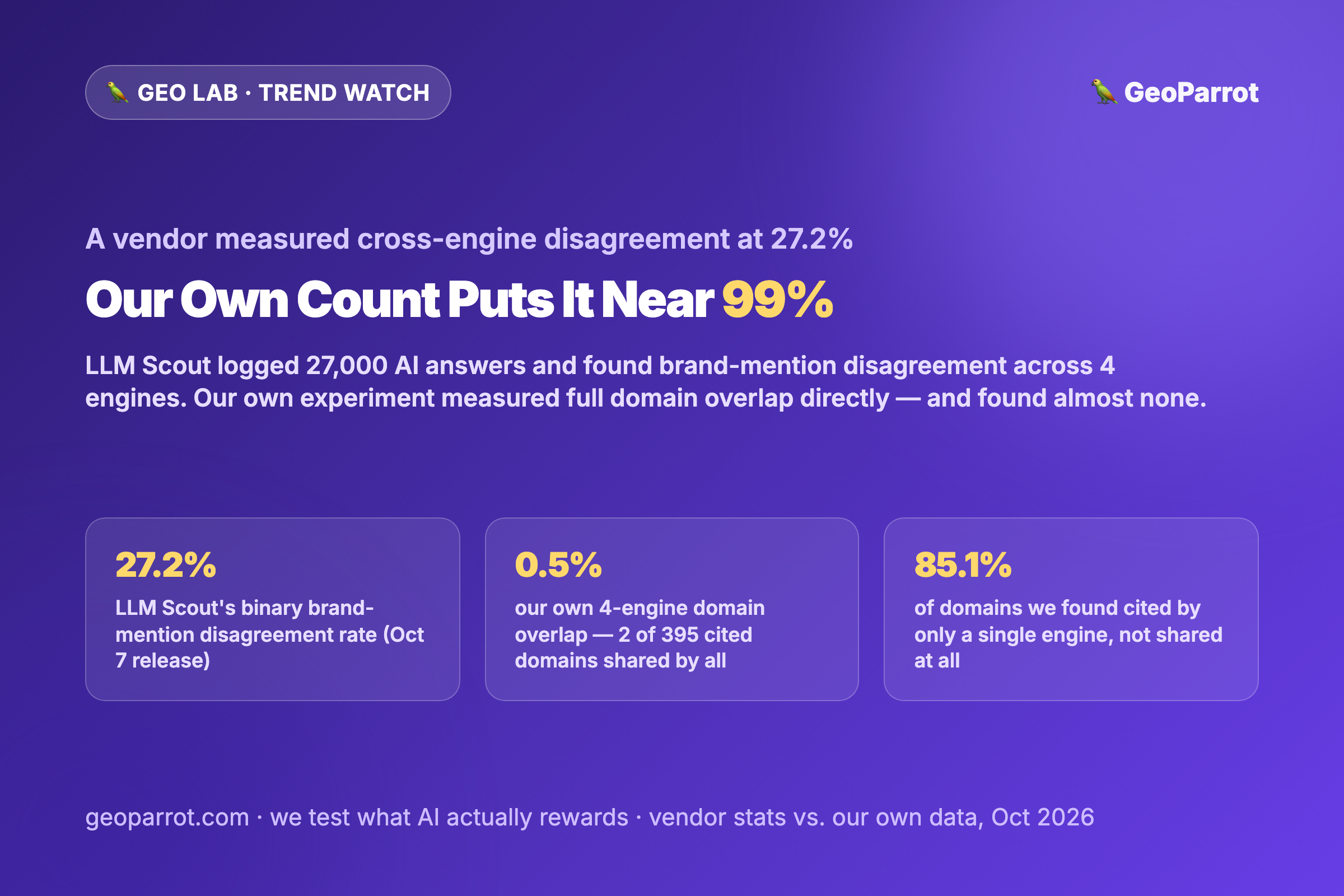
A Vendor Just Measured Cross-Engine Citation Disagreement at 27%. Our Own Count Puts It Near 99%.
A new analytics platform logged 27,000 AI answers and found ChatGPT, Claude, Gemini and Perplexity disagree on brand mentions 27.2% of the time. Our own cross-engine experiment measured domain-level citation overlap directly and found it near zero. Both numbers are real — they’re just not measuring the same thing, and that gap is the whole…
-
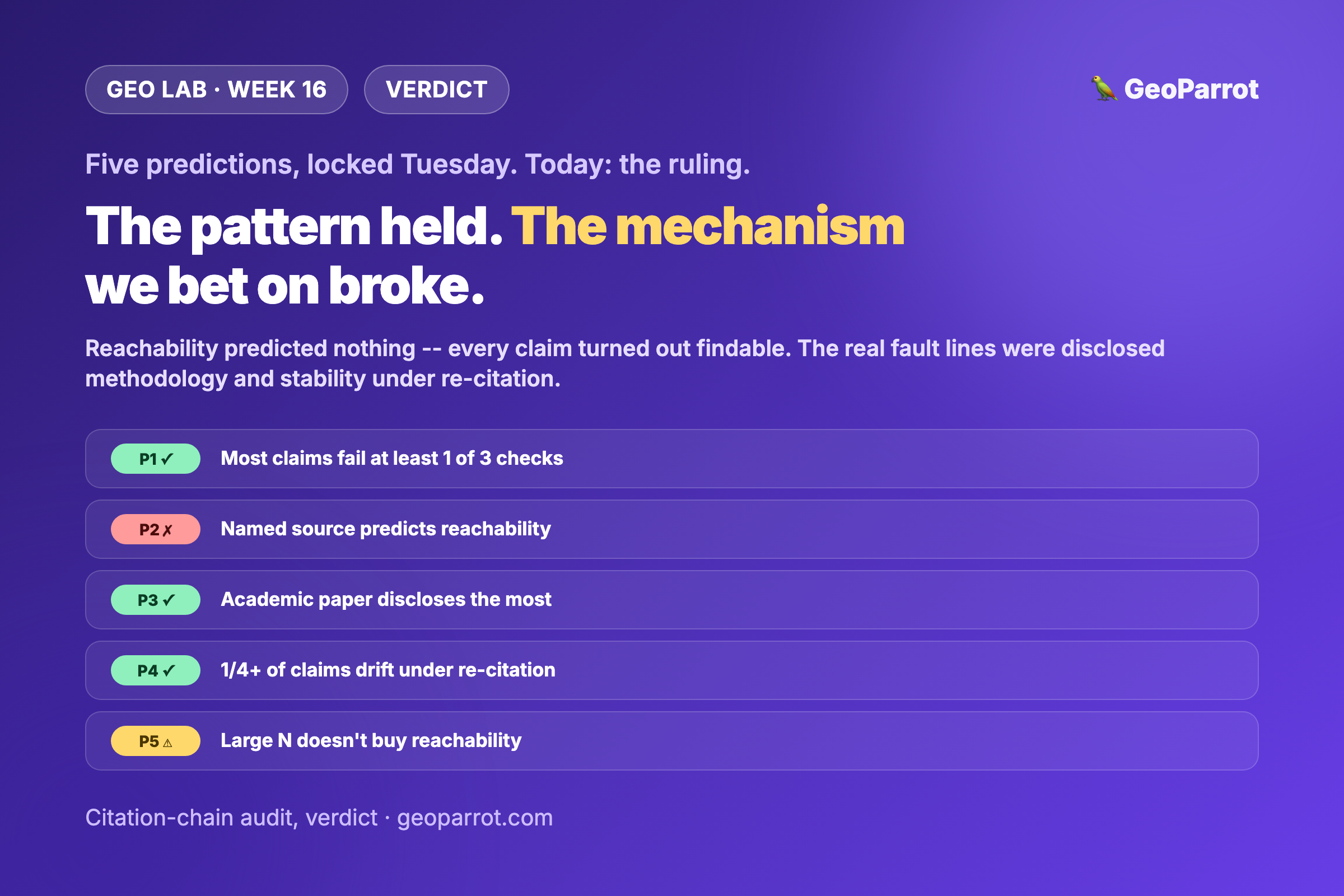
The Verdict: GEO’s Citation Chain Breaks — Just Not Where We Bet It Would
Monday we traced 3 GEO citation stats by hand and found a real problem. This week we pre-registered a method, scored 8 more, and judged five locked predictions against the data. The pattern held, harder than predicted — but the mechanism we bet would explain it was wrong, and our own research tooling broke the…
-
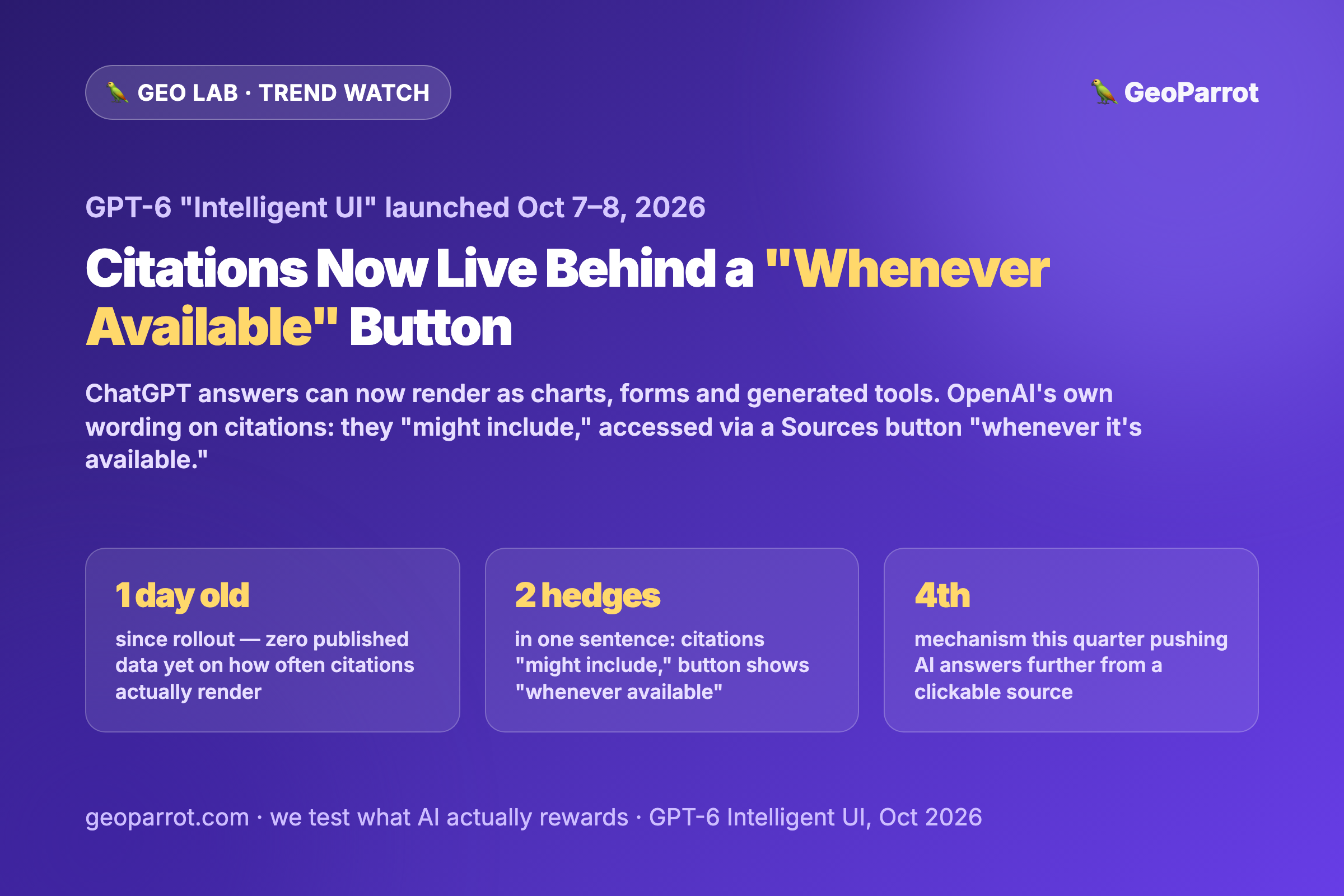
ChatGPT’s New Interactive Answers Launched Yesterday. Nobody Said What Happens to Citations Inside Them.
GPT-6’s new “Intelligent UI” turns ChatGPT answers into charts, forms, checklists and generated tools starting Oct 7, 2026. OpenAI’s own wording: citations “might include… accessed via a Sources button whenever it’s available.” That’s a conditional, not a guarantee. We lay out what’s actually confirmed, what’s still unknown, and why this is the next stage of…
-
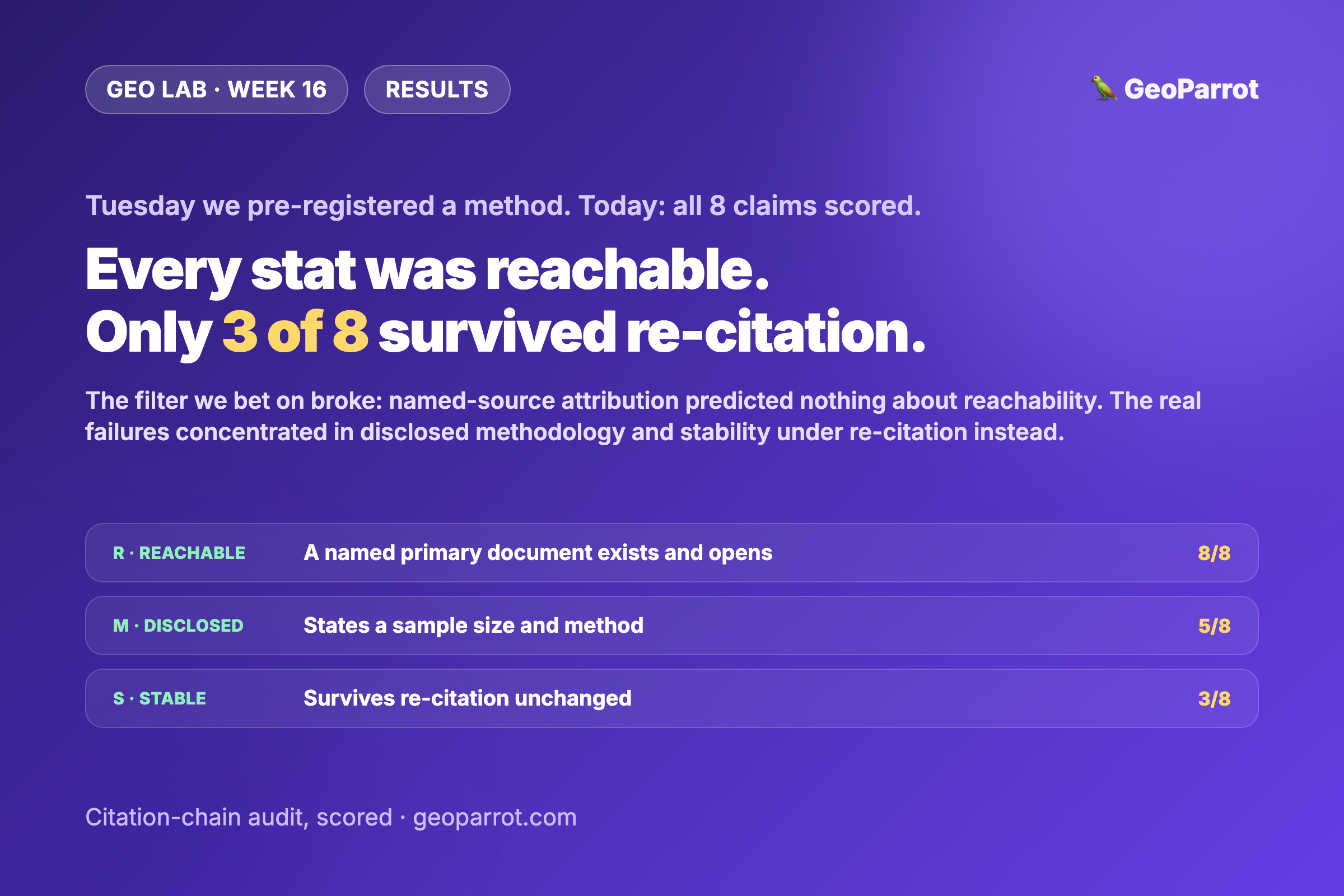
We Scored 8 GEO Citation Stats on 3 Criteria. The Filter We Bet On Broke.
We pre-registered a 3-criterion scoring method (Reachable, Methodology-disclosed, Stable) against 8 widely-repeated GEO citation stats, then scored all 8. Every single claim turned out to be reachable — the filter we bet would catch half the aggregator-sourced claims caught none of them. The real failures concentrated in disclosed methodology (5/8 pass) and stability under re-citation…
-
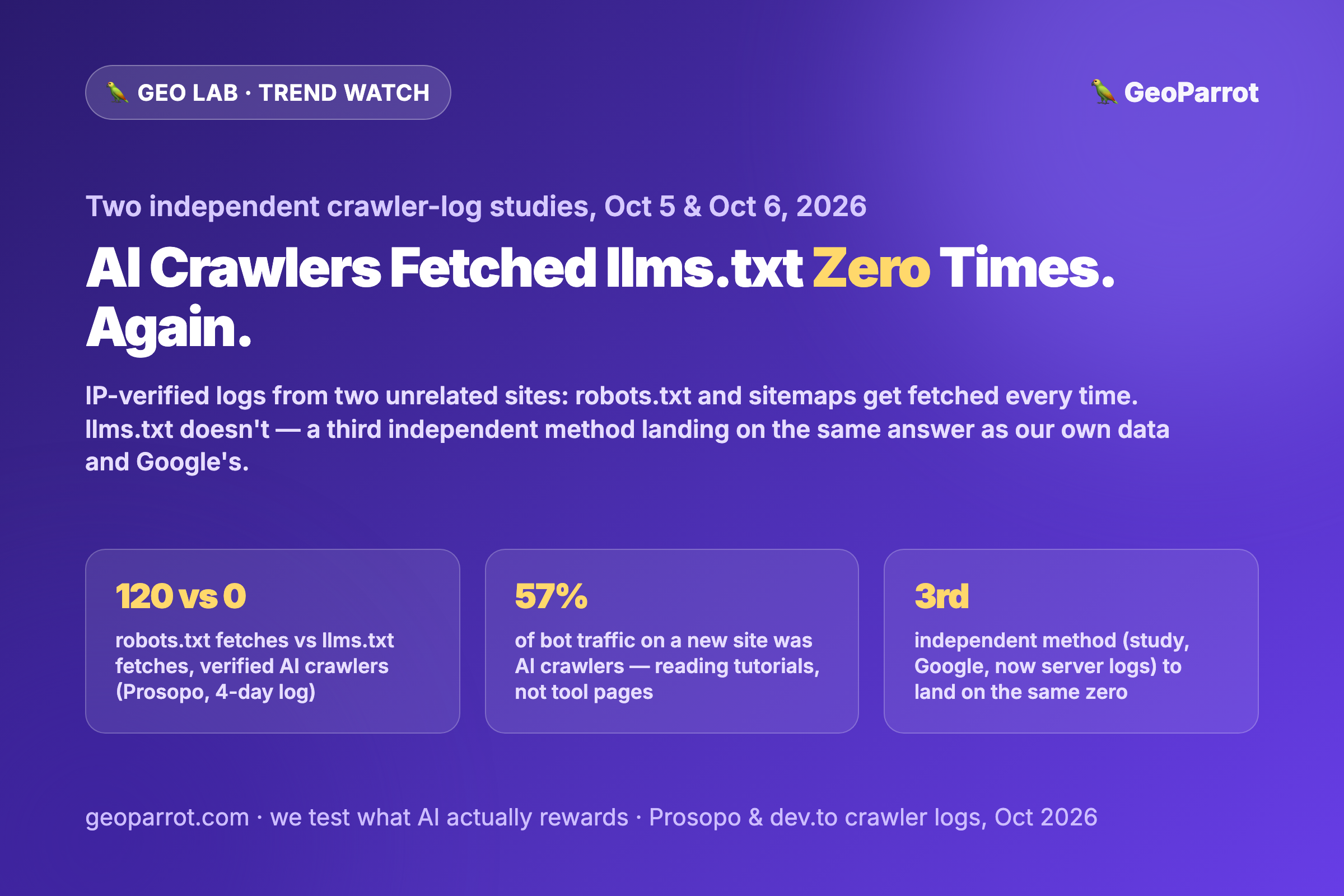
This Week, Two Sites Published Raw AI-Crawler Logs. Combined Fetches of llms.txt: Zero.
Two independently run sites published IP-verified AI-crawler logs this week (Prosopo, Oct 5; a tools-and-tutorials site on dev.to, Oct 6). Combined: 155 robots.txt fetches, 59 sitemap fetches, 0 verified AI-crawler fetches of llms.txt. That’s a third independent method landing on the same answer as our own 137,000-site study and Google’s June confirmation. What crawlers reliably…
-
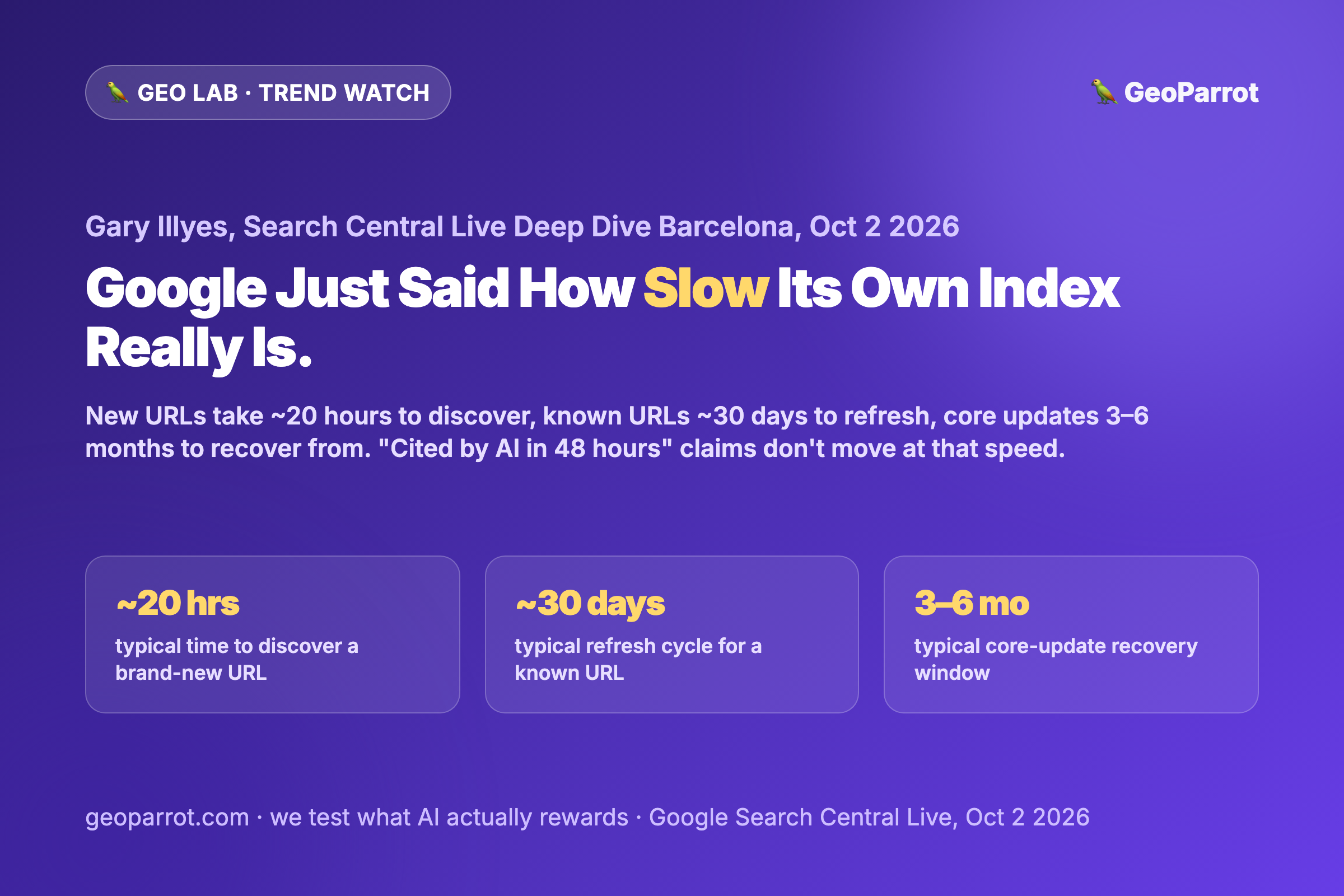
Google Just Put Numbers on How Slow Its Own Index Is. Your “Get Cited by AI in 48 Hours” Claim Doesn’t Hold Up.
At Google Search Central Live Deep Dive in Barcelona (Oct 2, 2026), Gary Illyes shared internal timing data: new URLs take ~20 hours to discover, known URLs take ~30 days to refresh, and core-update recovery takes 3-6 months. GEO vendors sell “cited by AI in days” case studies. The honest read: those numbers describe organic…
-
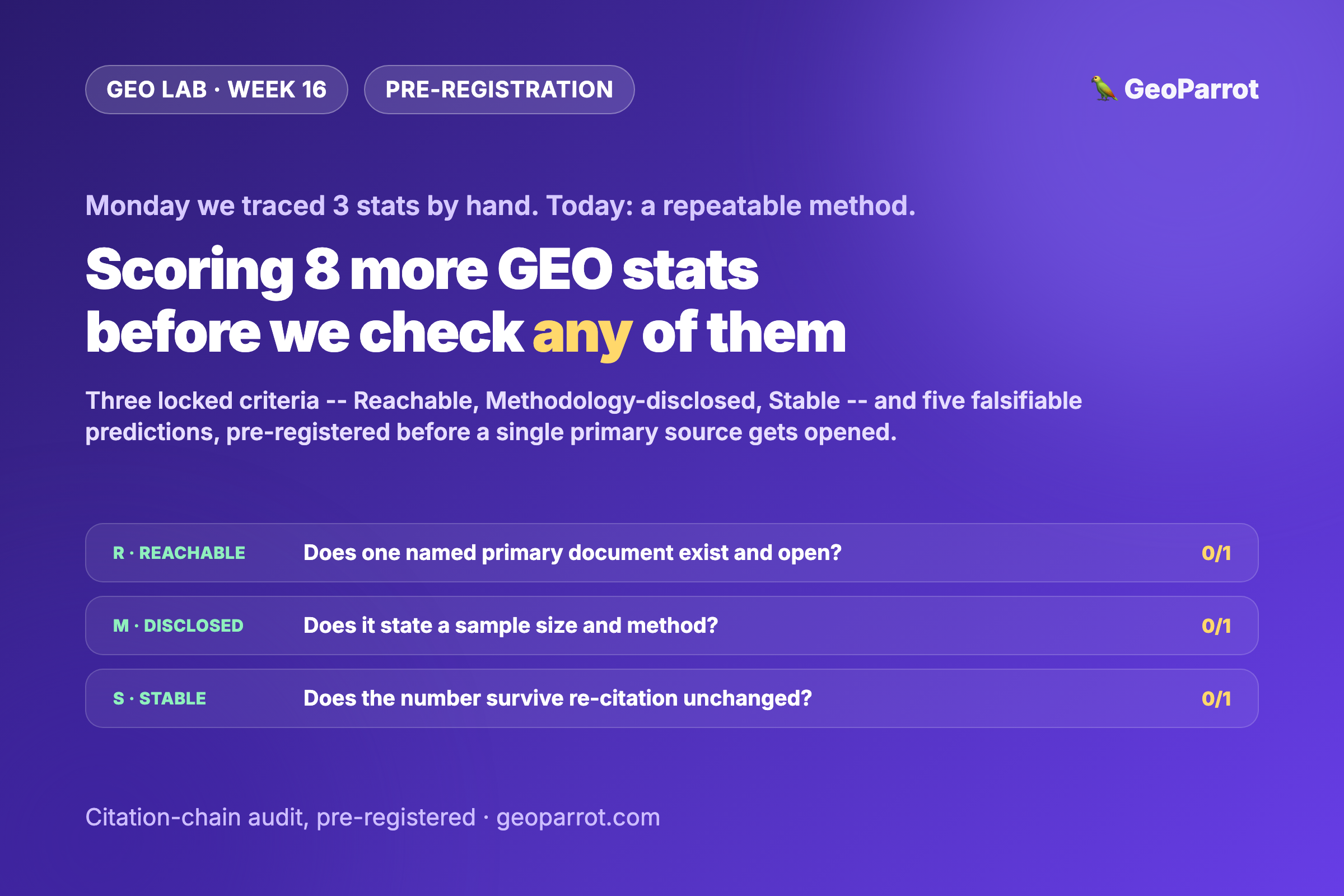
Monday We Traced 3 GEO Stats to Their Source. Today We’re Pre-Registering a Scoring Method to Audit 8 More.
Monday we traced three widely-repeated GEO citation stats back to their primary sources and found one was unreachable, one was methodologically transparent, and one got garbled by our own research tool mid-session. Today we lock a repeatable scoring method — Reachable, Methodology-disclosed, Stable — and pre-register it against 8 more stats circulating in October 2026…
-
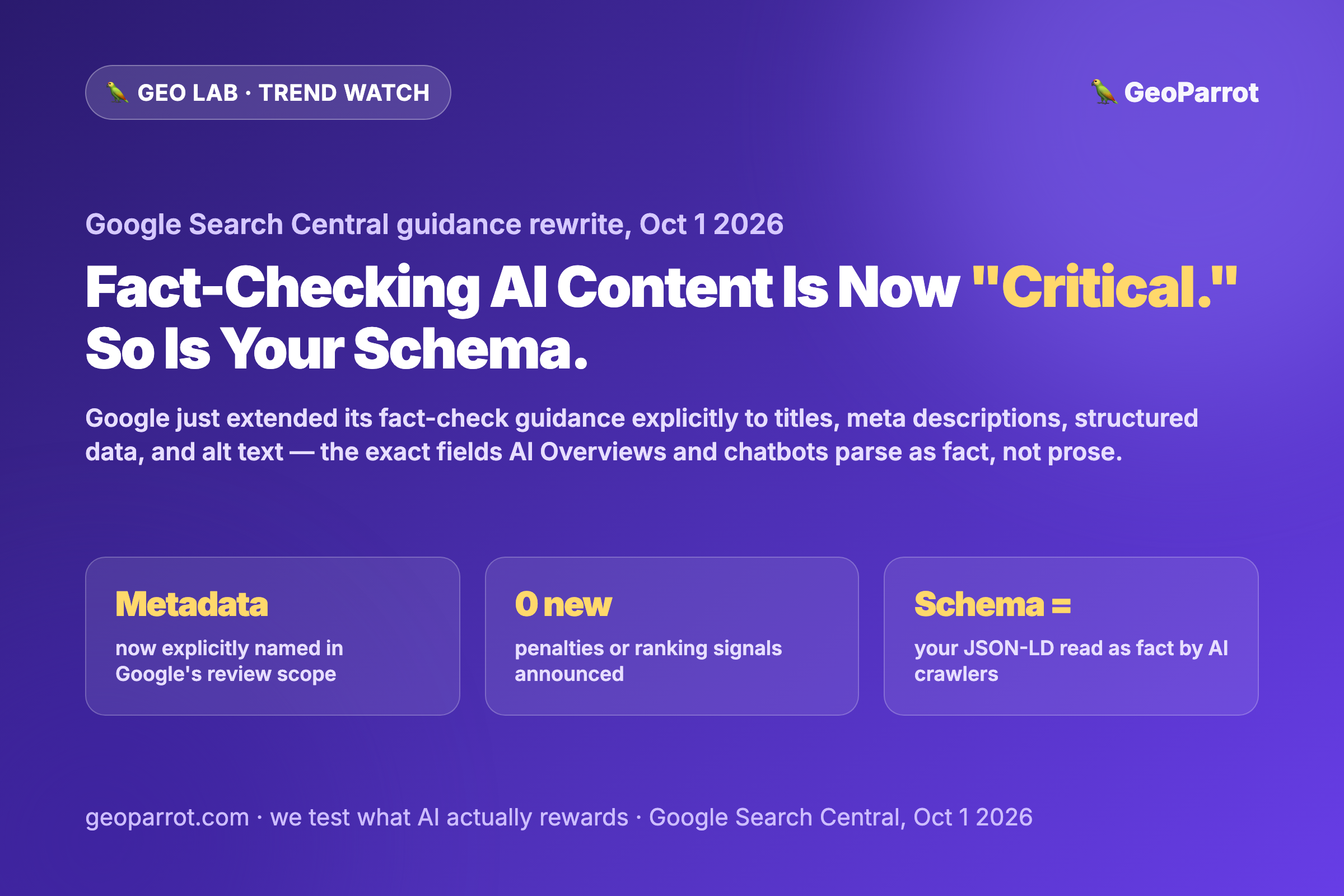
Google Just Made Fact-Checking AI-Generated Metadata “Critical.” Most GEO Pipelines Skip That Step.
On October 1, 2026, Google rewrote its generative-AI content guidance to call manual fact-checking “critical” — and explicitly extended that review to titles, meta descriptions, structured data, and alt text, not just body copy. No new penalty was announced. But the GEO Lab reading is that this names the exact layer most automated content and…