
Travel experience platforms · Case study 04
KKday turns an Asia trip into a connected set of local travel jobs—then makes each ticket page answerable.
What is KKday—and what does it organise?
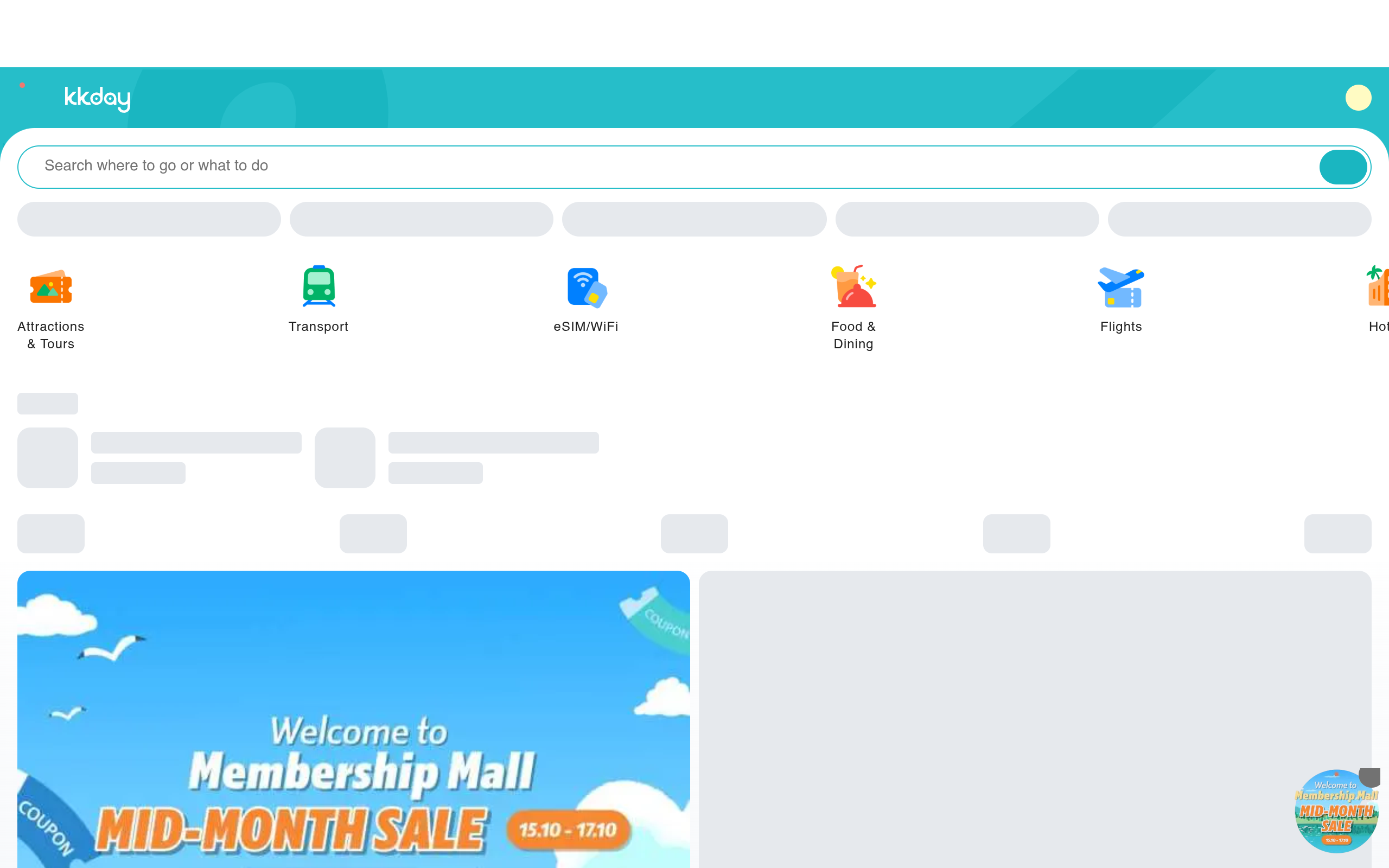
KKday is a travel marketplace with a particularly visible Asia-travel operating model. Instead of framing the catalog only as “tours,” its public navigation groups the trip into jobs a traveller recognises: entry tickets, local transport, connectivity, food, flights, accommodation and travel services. The discovery model is therefore where to go or what to do → solve a local travel task → choose a concrete, bookable option.
Travel activities and trip-services marketplace with strong Asia destination coverage.
Assemble a local trip from tickets, access, connectivity and other practical needs.
Can the site connect a named place to a specific need, then prove the product is suitable?
Audit checklist
01. The homepage maps travel intent beyond attractions
The information architecture recognises that a trip is not one intent. A visitor can start from sightseeing, mobility, connectivity or a meal—useful entry routes that can become distinct topic and entity pages rather than one generic marketplace listing.
What to test next: crawl the category and destination routes to confirm that each path has unique canonical content, not merely different filters applied to the same inventory template.
02. The product page keeps the place and attraction explicit
CONSULTING READ
The named entity survives the conversion path.
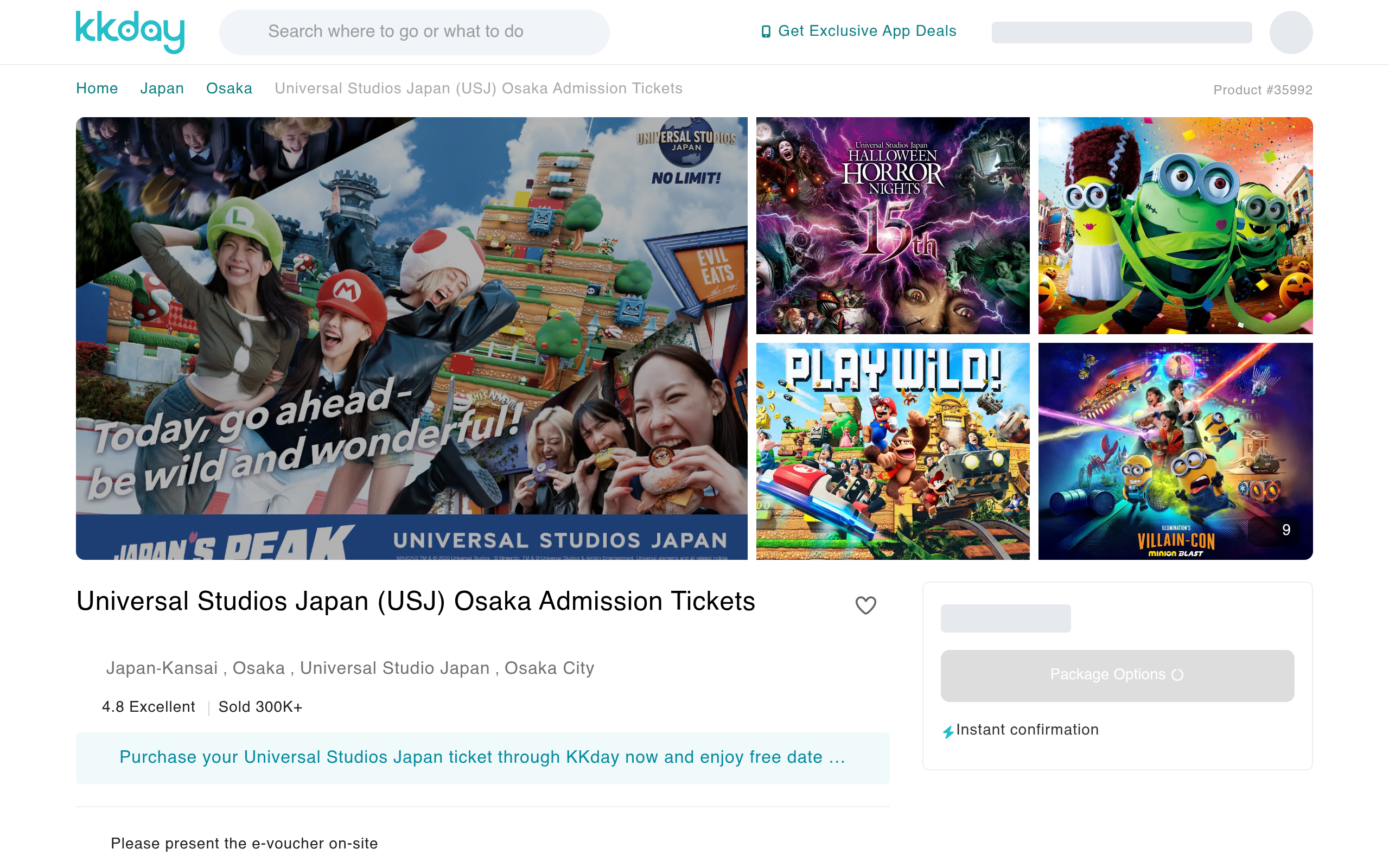
A reader can see the country, city, attraction and ticket object together. This is the essential chain for both human orientation and a citation-ready answer: it reduces ambiguity about what is being offered and where it applies.
03. The decision unit combines social proof with fulfilment proof
Rating and sales volume address social confidence; instant confirmation addresses fulfilment timing. They answer different risks and appear close to the decision point.
The page visibly states these signals, but the capture does not establish their calculation method, package-by-package eligibility or policy exceptions. Those require a deeper product and checkout audit.
GEO reading: recommendation needs local context plus a usable constraint
“Buy a Universal Studios Japan ticket” becomes a useful answer only if a reader can confirm the attraction, city, product type, availability mechanics and expected fulfilment. KKday places several of these facts together. The next optimisation step is to make package differences, date applicability, cancellation conditions and source updates equally explicit in crawlable page content.
Final diagnostic
Audit evidence and limits
Inspected: October 16, 2026, logged-out public pages: KKday homepage and Universal Studios Japan ticket page.
Not measured: rankings, citations, analytics, conversion, package availability, policy eligibility, checkout, full-template crawl or structured data. This is a public-signal consulting audit, not a performance claim.
Leave a Reply