Evidence-first case study · sports brand SEO + GEO series, part 15 of 20
Columbia Sportswear is not a VF Corporation brand like Vans or The North Face — yet columbia.com serves the identical interactive “press and hold” human-verification challenge on every page type we tried, this time extending to the homepage itself, which rendered cleanly on both prior VF brands. Its Korean storefront, columbiakorea.co.kr, is operated directly by Columbia’s own Korean subsidiary (not a licensee) and carries a genuinely substantive llms.txt plus a robots.txt that explicitly blocks OpenAI’s GPTBot and Common Crawl’s CCBot by name — the first brand in this series to name an AI crawler specifically to exclude it, rather than allow it or stay silent. Yet that same Korean site’s Product schema is broken: every product page we checked ships an aggregateRating block wrapped in a JavaScript-style comment, making the JSON-LD invalid and hiding a real 4.4-star, 89-review rating behind a dummy placeholder review. Google AI Mode cited a Columbia domain in 7 of our 10 test queries.
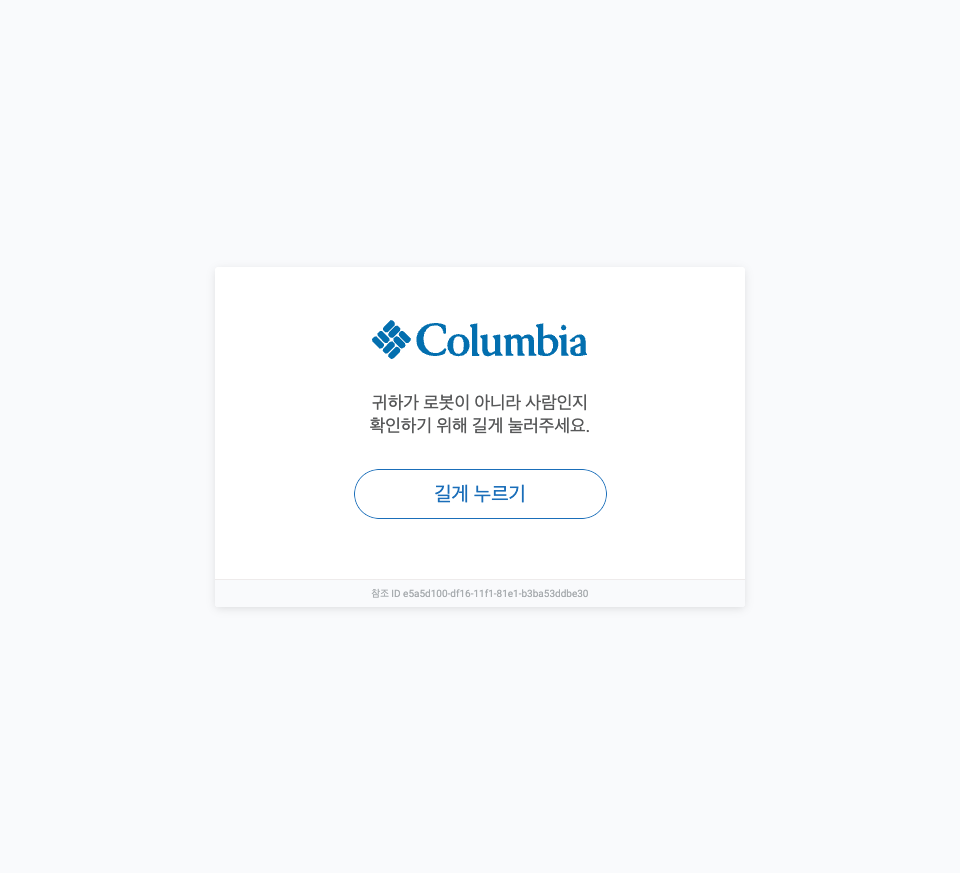
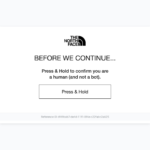
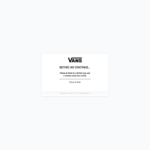
Requesting the US Men’s Jackets category page in a real, headed browser: the same “press and hold” challenge we documented on Vans and The North Face — but Columbia Sportswear Company has no corporate relationship to VF Corp, suggesting this is a shared bot-defense vendor used industry-wide, not family-specific infrastructure.
What is Columbia trying to do — and why audit it fifteenth?
This is part 15 of GeoParrot’s sports-brand series, running the same evidence-first method we used on The North Face, Vans and twelve other major brands. Columbia Sportswear is an American outdoor-apparel company founded in 1938 in Portland, Oregon, publicly traded (NASDAQ: COLM) and still partly family-controlled. It earns the fifteenth slot because it breaks a pattern this series had started to treat as VF-Corp-specific: the identical “press and hold” captcha signature, on a brand with no shared ownership, no shared parent and (as far as public records show) no shared e-commerce platform with Vans or The North Face.
Brand category Outdoor apparel, footwear and equipment company, founded 1938 in Portland, Oregon; publicly traded, majority family-controlled.
Primary user job Find a warm, weatherproof jacket — often the Bugaboo interchange system or an Omni-Heat down piece — at a lower price point than premium technical brands, with confidence about warmth rating and true-to-size fit.
SEO + GEO challenge A real, headed browser session hits the same bot-defense challenge on every US page type including the homepage, while the Korean site’s product schema is technically broken (invalid JSON) despite looking complete at a glance.
The product we tracked: Men’s Bugaboo IV Fleece Interchange Jacket
We used the Bugaboo IV — Columbia’s longest-running and best-known interchange jacket system — as the tracked product on the US site. Google site search resolved the product URL cleanly (/p/mens-bugaboo-iv-fleece-interchange-jacket-2174901.html); visiting it directly in our headed browser returned the same challenge every time. On the Korean storefront we tracked the comparable Men’s Mt.Hood Down Jacket (C74YM3674010), which rendered without any block.
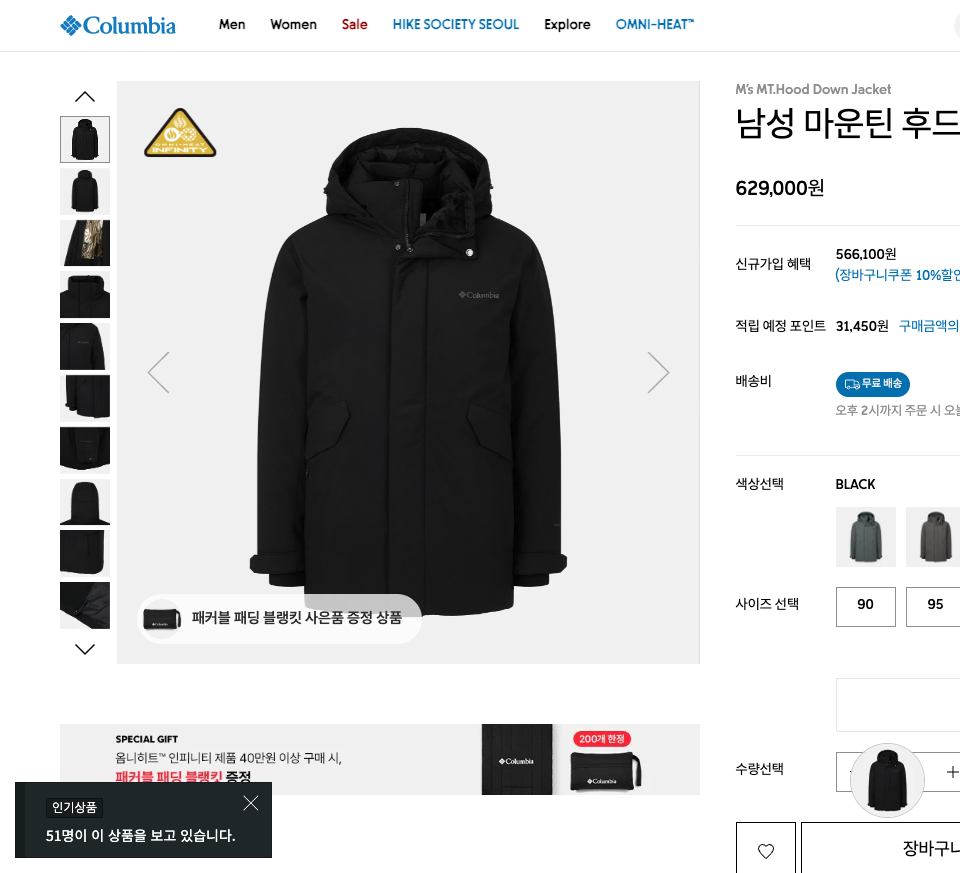
The Men’s Mt.Hood Down Jacket on columbiakorea.co.kr: ₩629,000, rendering cleanly — but see the G-score and schema sections below for why this exact page’s structured data doesn’t actually validate.
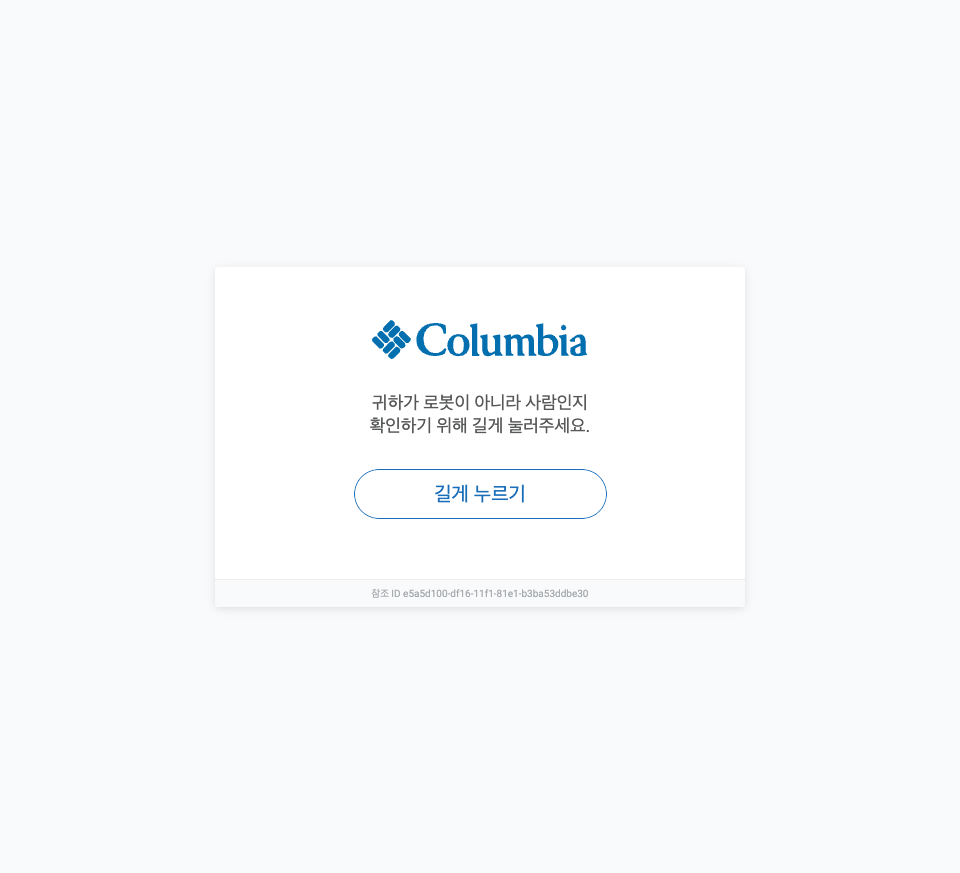
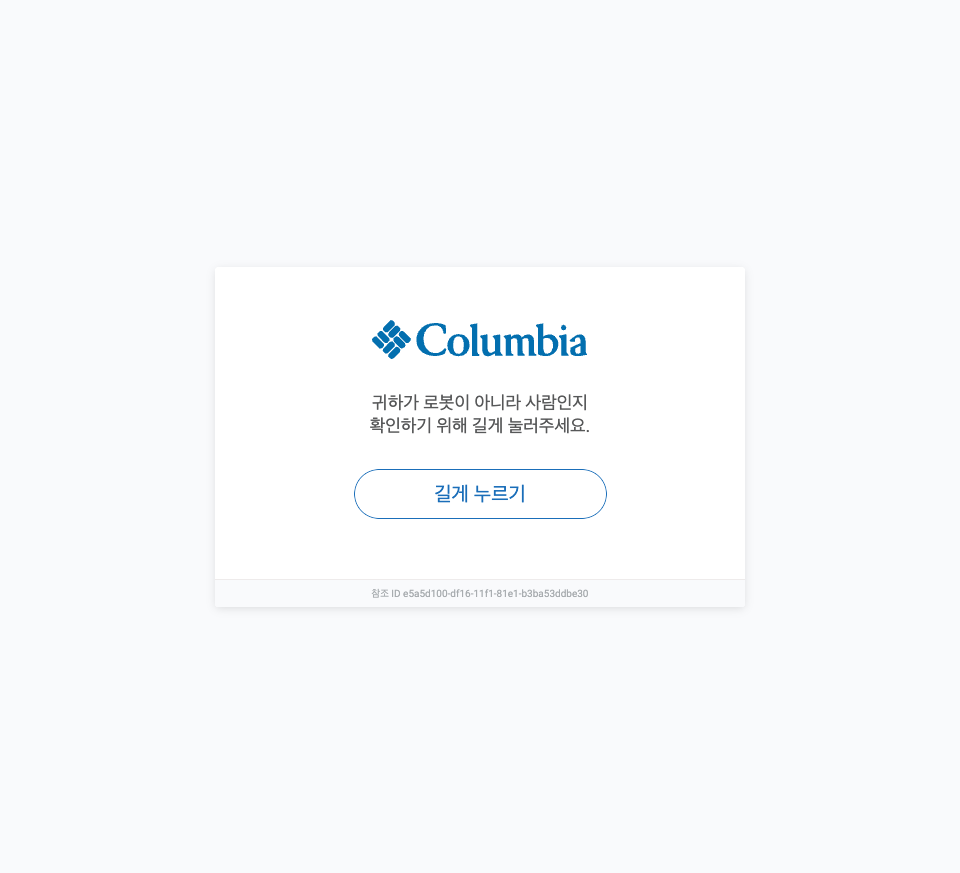
The US Bugaboo IV product page URL, found cleanly via Google site search: the same challenge, not the product.The US Help / Customer Service page: the same challenge again.
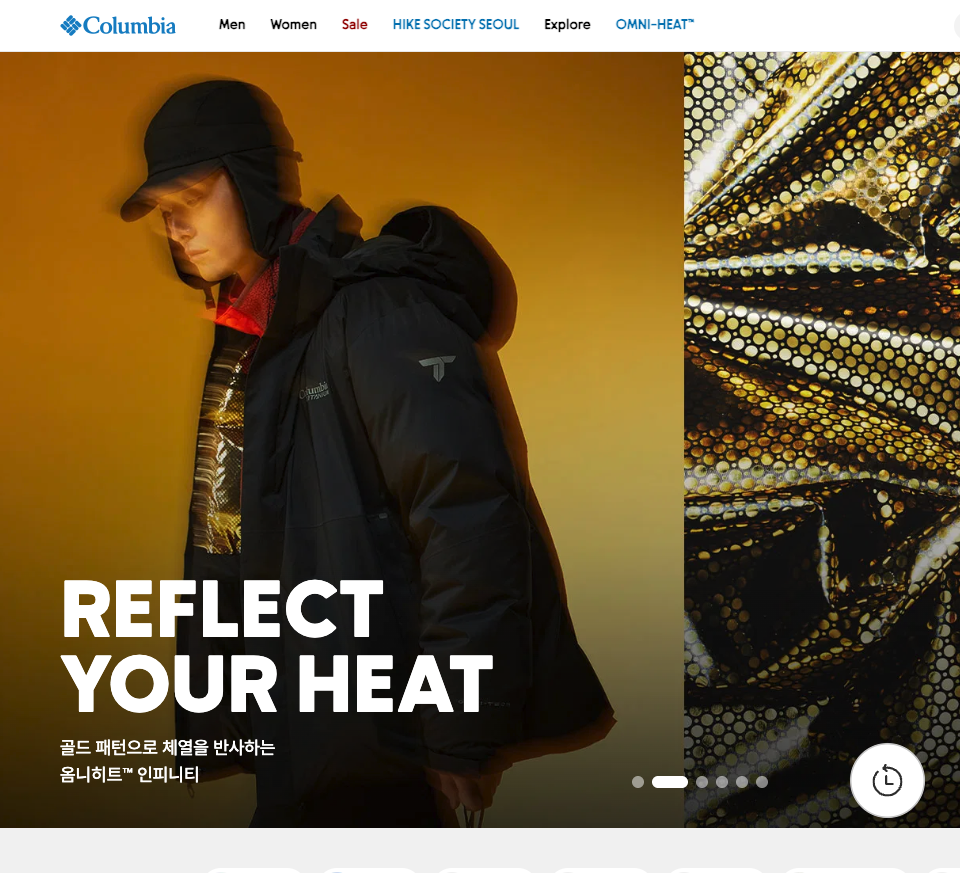
Columbia Korea’s homepage — the Korean-operated storefront, not a US mirror — rendered cleanly in the same session where every US page type was blocked.
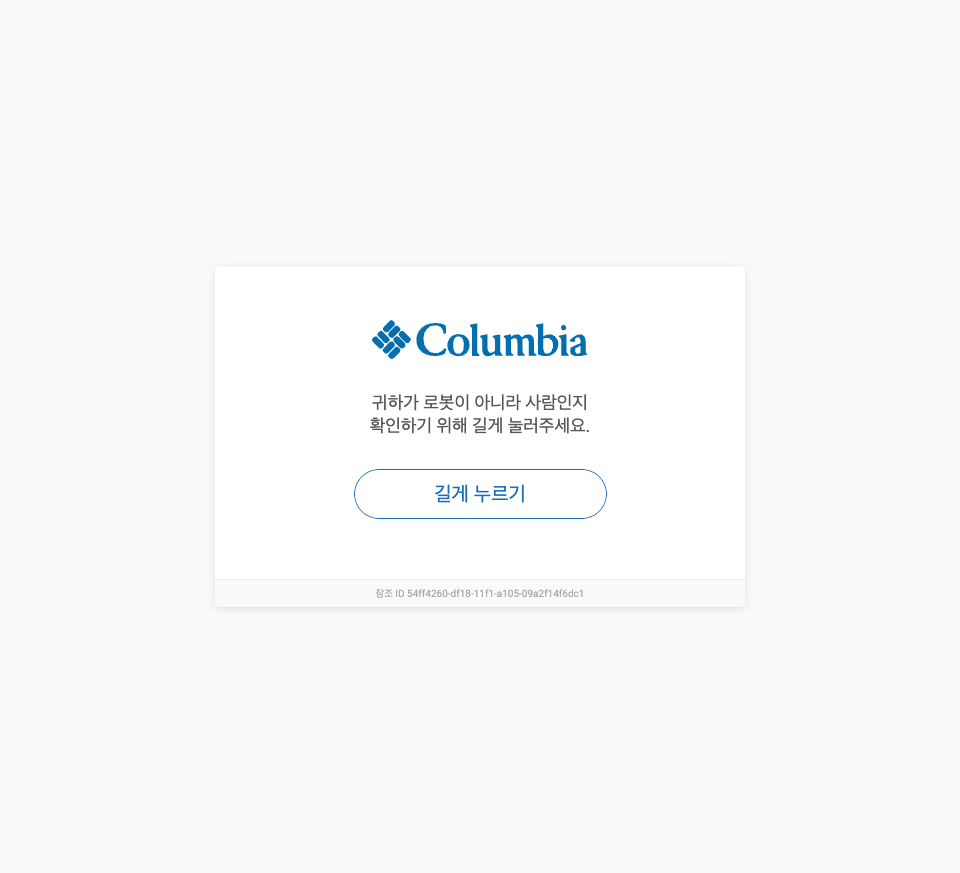
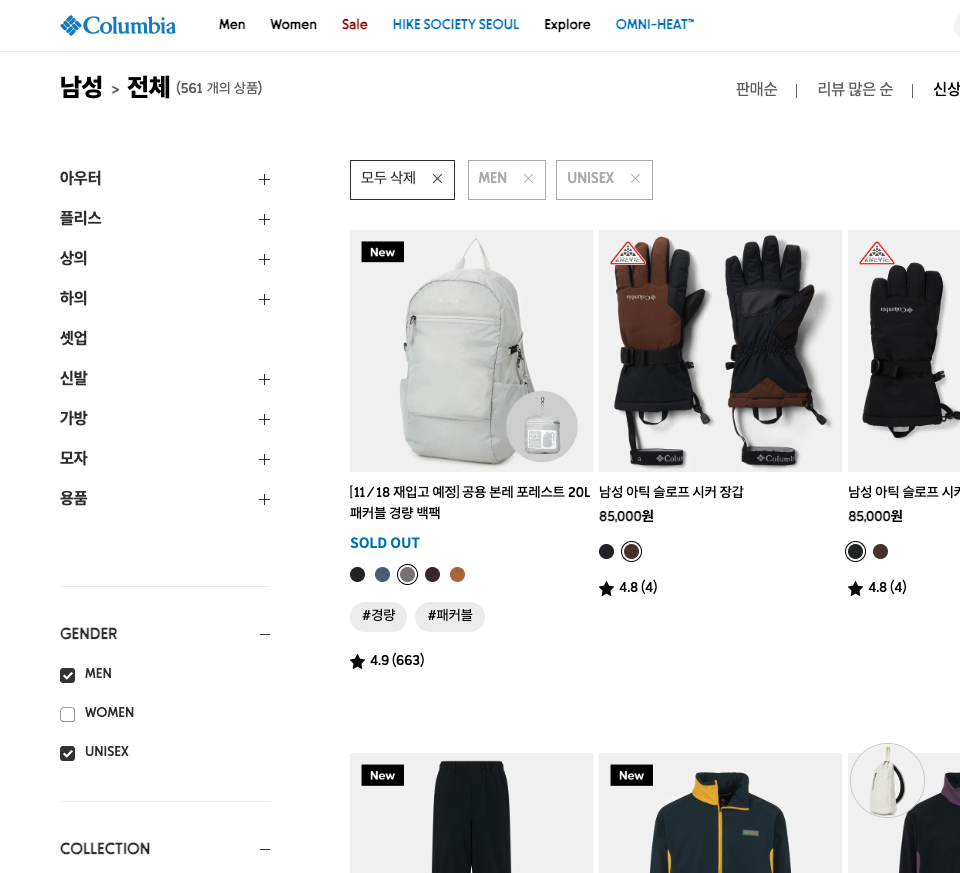
columbia.com’s llms.txt path, also challenge-gated here — though repeated requests in the same session also returned a plain 403 and, once, a branded soft-404 page instead.Columbia Korea’s Men’s category page (561 products) — another clean render on the Korean-operated site.
AI citation snapshot: 10 real queries, Google AI Mode
We sent 10 verbatim queries to Google AI Mode (udm=50) and checked direct a[href] links, counting a citation when either columbia.com or columbiakorea.co.kr appeared.
Query
Columbia domain cited?
Who else showed up
columbia bugaboo jacket review
✅ Yes
columbiasportswear.nl, zappos.com, outdoorgearlab.com, reddit.com — columbia.com cited directly alongside a European regional storefront and a major third-party retailer
is columbia a good outdoor brand
❌ No
reddit.com, donegood.co, fibre2fashion.com, bettertrail.com, quora.com, taobao.com, threadlogic.com — entirely third-party opinion and trade-press sources, no Columbia-owned domain of any kind
columbia vs north face
❌ No
forwardme.com, advnture.com, threadlogic.com, reddit.com, facebook.com, merchology.com, jaceapparel.com, tacklevillage.com — neither brand’s own domain appears; this series’ brand-vs-brand comparison query continues to miss more often than it hits
columbia sportswear return policy
✅ Yes
columbiasportswear.co.uk, columbiasportswear.com.au — only Columbia-family domains cited, no third-party source at all
best columbia jacket for winter
✅ Yes
scheels.com, theinertia.com, mountainlifemedia.ca, columbiasportswear.ca, slopemagazine.com, deporvillage.net — cited alongside a major outdoor retailer and gear-review outlets
columbia omni-heat technology explained
✅ Yes
columbiasportswear.co.in, tiktok.com, alltricks.co.uk, 53degreesnorth.ie, sail.ca, reddit.com, facebook.com — Columbia’s own technology explainer cited alongside social platforms and several regional retailers
who owns columbia sportswear
✅ Yes
columbiasportswearcompany.com, linkedin.com, wikipedia.org, columbiasportswear.co.uk, familybusinessmagazine.com, marketscreener.com — columbia.com cited alongside the separate investor-facing corporate domain, Wikipedia and a family-business trade publication
how to wash a columbia jacket
✅ Yes
columbiasportswear.co.uk, nikwax.com, quora.com, useactive.com, reddit.com — Columbia’s own care guidance cited directly alongside a detergent brand, matching the pattern we saw on The North Face’s equivalent query
columbia sizing guide
✅ Yes
absolute-snow.com, columbiasportswear.fi, univbkstr.com, bcf.com.au, evo.com, gotapparel.com, greatoutdoors.ie — cited in a crowded field of regional retailers and sizing resources
where are columbia jackets made
❌ No
wikipedia.org, straitstimes.com, instagram.com, columbiasportswear.co.uk, columbiasportswearcompany.com, facebook.com — Columbia-family domains appear (the UK storefront, the corporate site) but not columbia.com or columbiakorea.co.kr specifically, so this doesn’t count under our fixed two-domain rule
Result: a Columbia domain cited in 7/10 queries (Nike 5/10, Adidas 4/10, Puma 5/10, Under Armour 8/10, New Balance 6/10, ASICS 7/10, Skechers 4/10, Lululemon 8/10, Reebok 7/10, Converse 7/10, On Running 6/10, Hoka 5/10, Vans 8/10, The North Face 9/10) — squarely mid-to-upper pack. Note that we counted strictly for columbia.com or columbiakorea.co.kr, the two domains we audited; regional Columbia-owned storefronts (columbiasportswear.co.uk, .com.au, .ca, .fi, .co.in, .nl) appeared across nearly every query but weren’t counted toward this total, so the true “any Columbia-owned domain” citation rate is almost certainly higher than 7/10. As in most prior audits, the brand-vs-competitor comparison query (“columbia vs north face”) missed entirely, and it’s notable that the ownership-fact query (“who owns columbia sportswear”) hit here, matching The North Face but unlike Vans the day it was audited.
G-score audit: the 8-pillar hygiene checklist
We scored five measurable URLs with the same 8-pillar static-HTML checklist (JSON-LD present, FAQ content, visible date, author byline, concrete data points, table/list structure, 3+ subheadings, a 30-500 character early answer) used in our Week 17 quality-score experiment and on all fourteen prior brands. Four US pages were attempted and excluded: the homepage, Men’s Jackets category, Bugaboo IV PDP and Help page all returned the “press and hold” challenge instead of page content, in our real headed-browser session, every time we tried.
Page
Fetch method
G-score
Notable pillars
KR homepage
Plain fetch (200 OK)
0.625
2 JSON-LD blocks, visible date, data points, table/list structure and 3+ subheadings; no FAQ, no author
KR Mt.Hood Down Jacket PDP
Plain fetch (200 OK)
0.625
2 JSON-LD blocks (including a Product block — but see below, it’s invalid JSON), visible date, author signal, data points; no FAQ, no 3+ subheadings in this template
KR ROC Tech Cargo Pant PDP
Plain fetch (200 OK)
0.625
Same pattern as the jacket PDP — same product-page template, same broken Product JSON-LD
KR Men’s category
Plain fetch (200 OK)
0.375
1 JSON-LD block (sitewide WebSite/WebPage graph only), list structure present; no data points, no subheadings
KR FAQ page
Plain fetch (200 OK)
0.375
1 JSON-LD block (same sitewide graph); the Q&A content itself is JavaScript-rendered and absent from the static fetch, so our FAQ pillar check (which looks for FAQPage schema or 2+ question-style headings) fails despite the page existing
US homepage / Men’s Jackets category / Bugaboo IV PDP / Help
Browser-rendered — blocked
n/a
All four returned the “press and hold” challenge instead of page content on every attempt; excluded from the average rather than scored as 0
Five-page average: 0.525 (Nike: 0.4375, Puma: 0.354, Under Armour: 0.5208, New Balance: 0.5833, Adidas: 0.6458, ASICS: 0.4583, Reebok: 0.5417, Converse: 0.5208, On Running: 0.4583, Hoka: 0.6, Vans: 0.425, The North Face: 0.525) — tied with The North Face for the series average so far, mid-pack. The PDP pages score the same 0.625 as the homepage on our checklist, but that number flatters them: the pillar that matters most for a shopping page, structured product data, is present in name only once you try to actually parse it.
A blocked US homepage, a direct-run Korean site, and a Product schema that doesn’t parse
Every US page type we tried, including the homepage, hits the same interactive challenge — The homepage, Men’s Jackets category, Bugaboo IV product page and Help page all returned the identical “press and hold” human-verification challenge in our real headed-browser session. Vans and The North Face (both VF Corp brands) blocked their deep storefront pages the same way, but their homepages rendered cleanly; Columbia has no corporate relationship to VF Corp, and here the block extends to the homepage itself — the most restrictive single-site posture we’ve measured in this series.
robots.txt is readable via browser (200 OK) but a plain curl request gets a 403 from Cloudflare — Once past that gate, the file names three bots explicitly: AhrefsBot and Pinterestbot get a 0.5-second crawl-delay, and — notably — ClaudeBot gets its own block with a 1-second crawl-delay and no disallow rules, making Columbia the second brand in this series (after Adidas, which set a 6-second delay) to name an AI crawler by name rather than staying silent about AI traffic entirely. GPTBot, PerplexityBot, Google-Extended and CCBot go unmentioned on the US site. Two monitoring/uptime bots, Halebot and Alertsite, are fully disallowed — a smaller echo of the ThousandEyes block we found on The North Face.
llms.txt gave three different responses across repeated requests in the same session — One request returned the interactive challenge; another returned a plain 403 “access denied” page; a third returned a branded soft-404 (“Oops! Have you lost the trail?”) merchandising best-sellers instead of an error. The deep storefront pages blocked identically every single time we tried them — this inconsistency is specific to the llms.txt path.
/sitemap.xml itself errors out, but the real sitemap index works and is current — Requesting /sitemap.xml directly fails to load at all in our browser session; the Sitemap: directive inside robots.txt instead points to /sitemap_index.xml, which loads cleanly (200 OK) and is split into product, category and two other segments, each timestamped November 13, 2026 — the same day as this audit, suggesting active, automated maintenance rather than a stale file.
Columbia Korea is run by Columbia’s own subsidiary, not a licensee — and its robots.txt is the first in this series to explicitly block AI training crawlers by name — Unlike The North Face Korea (operated under license by Youngone Outdoor) or New Balance Korea (operated by E-Land World), columbiakorea.co.kr’s footer identifies the operating entity as Columbia Sportswear Korea itself, with a named CEO and Korean business registration number. Its robots.txt disallows GPTBot and CCBot from /data/ (the image directory) by name, with Korean-language comments explaining the intent (“OpenAI’s crawler block”), while explicitly allowing Googlebot-Image to the same path — the opposite stance from New Balance Korea, which explicitly allowed every major AI crawler.
Columbia Korea’s llms.txt is genuinely substantive — the second real one we’ve found in this series — Like The North Face Korea’s, it’s a real, curated document (nearly 13,000 characters): a brand description, official contact numbers, and dozens of categorized Korean-language links across men’s, women’s and activity-specific product catalogues. Every other llms.txt we’ve checked in this series besides these two has been a clean 404, a repurposed generic error template, or simply absent.
…but the Product JSON-LD on every Korean PDP we checked is invalid JSON — Both product pages we fetched carry a Product schema block with a real offers price and a placeholder review object (rating 0, author literally named “Columbia”) — immediately followed by a JavaScript-style /* ... */ comment wrapping a commented-out aggregateRating block containing what looks like the real rating data (4.4 stars, 89 reviews). Comments aren’t valid JSON syntax, so json.loads() fails on this block entirely: Expecting property name enclosed in double quotes. A structured-data parser following the JSON-LD spec wouldn’t extract a Product entity from this page at all — the schema looks complete to a human skimming the source, but it doesn’t actually work.
What works / What to verify
WHAT WORKS
A directly-operated (not licensed) Korean storefront with a substantive, actively-maintained llms.txt and sitemap index, an explicit named AI-crawler policy (block GPTBot/CCBot, allow Googlebot-Image) on the Korean site, and a 7/10 AI citation rate that likely understates the true number since regional Columbia storefronts weren’t counted.
WHAT TO VERIFY
Whether the “press and hold” challenge on the US homepage itself (not just deep pages) also catches the retrieval infrastructure AI engines actually use; why the Korean PDP’s aggregateRating data exists in the page source but is deliberately commented out of the JSON-LD rather than simply included; and why llms.txt returns three different responses to repeated requests when every other US page type blocks with total consistency.
Target query check — reported honestly, not inflated
We have not re-measured “columbia seo” or “columbia geo audit” query volume this session. Per the pattern already confirmed across fourteen earlier subjects in this series on October 20, 2026 (Keyword Planner, US) — the large majority showed no measurable search volume at all for “[brand] SEO/GEO audit” phrasing — we’re not claiming this title drives ranking-based traffic. The distribution case for this series rests on internal links, our own index, and readers already following the GEO Lab arc, not on search demand for “[brand] SEO audit” as a query.
Frequently asked questions
Is Columbia’s bot-blocking the same vendor as Vans and The North Face?
The visible challenge screen is functionally identical — the same “press and hold” human-verification interaction on every blocked page — but Columbia Sportswear Company has no corporate relationship to VF Corporation, which owns Vans and The North Face. The most likely explanation is a shared third-party bot-defense vendor used independently by multiple retailers, not shared internal infrastructure, though we can’t confirm the specific vendor from the outside.
Why is the Korean Product schema “broken” if the page still displays a price and reviews correctly?
Because JSON-LD is read by two different systems that don’t always agree: a browser renders the visible page from the underlying product database regardless of what’s in the schema block, while a structured-data parser reads only the JSON-LD script tag literally. Wrapping the aggregateRating field in a /* ... */ comment makes that one script tag invalid JSON — a strict parser following spec would fail to extract any Product entity from it, even though a human skimming the raw HTML can still see the real numbers sitting right there, commented out.
Does blocking GPTBot and CCBot mean Columbia Korea is invisible to ChatGPT?
Not necessarily, and we didn’t test ChatGPT citations directly in this audit (consistent with the composer failures flagged on earlier audits in this series). GPTBot is OpenAI’s crawler for training-data collection, not the live retrieval crawler ChatGPT’s search feature uses when answering a user’s question in real time — the two can have different access rules. Blocking GPTBot restricts training-data scraping specifically; it doesn’t automatically determine whether a live AI answer engine can see or cite the page at point of query.
Does a 7/10 AI citation rate mean Columbia’s US-side blocking doesn’t matter for AI visibility?
Not reliably — this audit is itself a data point against that conclusion, consistent with fourteen prior brands in this series. Our Week 17 experiment found hygiene and technical-structure scores were not a dependable predictor of AI citation, and here a brand with a near-complete block on real-browser access to its own US storefront, including the homepage, still recorded a mid-to-upper-pack citation rate. A likely explanation is that Google’s own crawling and retrieval infrastructure isn’t subject to the same interactive challenge that stopped our browser — but our 10-query snapshot measures the domain family, not individual URL citation, so we can’t confirm that specific mechanism from this data alone.
Audit evidence, scope and limits
Inspected: November 2026, public logged-out access from a Korea-based IP (real headed-browser session used for screenshots, G-score rendering and citation testing; plain HTTP fetches used urllib with a standard desktop user agent). Screens: the US homepage, Men’s Jackets category, the Bugaboo IV product page and Help (all challenge-gated), llms.txt (inconsistent across repeated attempts), robots.txt (200 via browser, 403 via plain curl) and sitemap_index.xml (200 both ways) — plus the Columbia Korea homepage, its llms.txt and robots.txt, two product pages (Mt.Hood Down Jacket, ROC Tech Cargo Pant), a Men’s category page and the FAQ page, a 10-query Google AI Mode citation snapshot, and an 8-pillar G-score scored on five measurable target pages (four US pages were attempted and excluded as challenge-gated).
Not measured: rankings, Search Console performance, analytics, conversion, signed-in/member flows, ChatGPT citations (not attempted, given the composer failures flagged on earlier audits in this series), whether the “press and hold” challenge is triggered by our specific IP/request pattern versus all automated traffic generally, or the complete product/locale catalogue beyond the two product lines and seven URLs sampled here. We did not attempt to solve the “press and hold” challenge at any point. This is a public-signal snapshot, not a performance claim or a full-catalogue crawl.
This is part 15 of a daily series. Every day, GeoParrot runs this same evidence-first method — real screenshots, a 10-query AI citation snapshot, an 8-pillar G-score audit, and an honest target-query check — against one more major sports and athletic-wear brand. Next: Fila.



Leave a Reply