Evidence-first case study · sports brand SEO + GEO series, part 16 of 20
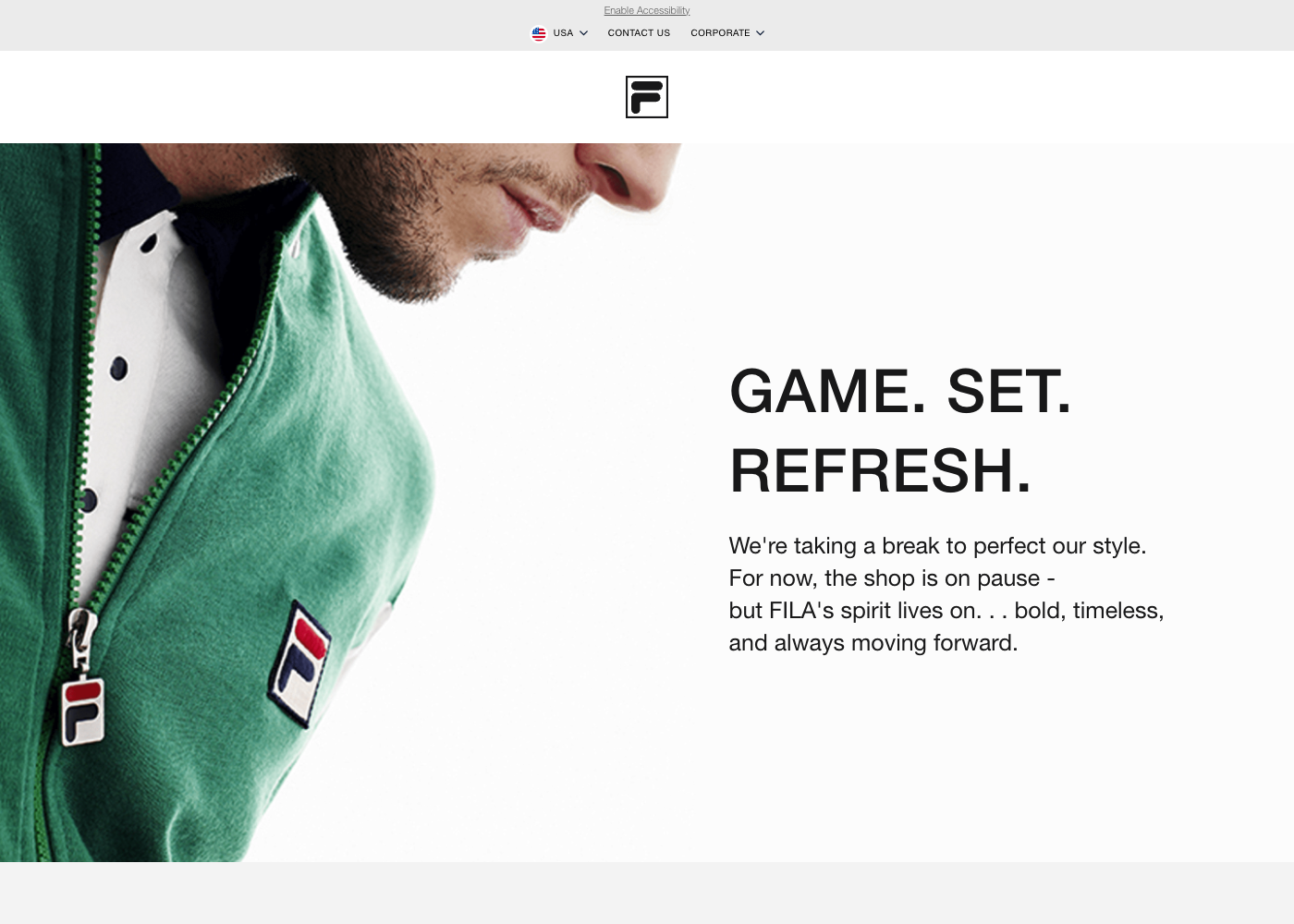
FILA’s US flagship, fila.com, isn’t blocked by a captcha like several brands earlier in this series — it has no e-commerce running at all. The homepage displays a static “the shop is on pause” notice, every category and product URL we tried returns a plain IIS 404 page (its error-page title is declared in a Korean character set, ks_c_5601-1987), and llms.txt, sitemap.xml and every other non-legal path fail the same way. Meanwhile fila.co.kr — operated directly by FILA Holdings Corp, the Seoul-based company that has owned the global FILA trademark since 2007 — runs a fully live Shopify storefront with a genuine llms.txt, an agents.md file and a published UCP/MCP endpoint for AI-agent shopping, infrastructure well ahead of anything else audited in this series. Google AI Mode cited a FILA domain in just 2 of our 10 test queries, the lowest rate we’ve measured so far.
fila.com’s entire homepage, in full: “We’re taking a break to perfect our style. For now, the shop is on pause — but FILA’s spirit lives on.” No product links, no category navigation — just this notice plus a USA locale switcher, Contact Us and Corporate menu.
What is FILA trying to do — and why audit it sixteenth?
This is part 16 of GeoParrot’s sports-brand series, running the same evidence-first method we used on The North Face, Columbia Sportswear and thirteen other major brands. FILA was founded in 1911 by the Fila brothers in Coggiola, near Biella, Italy, and built its global reputation through 1970s-80s tennis and 1990s chunky-sneaker culture (the Disruptor II). In 2007, Fila Korea acquired the worldwide FILA trademark and brand rights; the resulting company, now FILA Holdings Corp., is headquartered in Seoul and listed on the Korea Exchange. It earns the sixteenth slot because it’s the first brand in this series where the US storefront isn’t merely hard to crawl — it has stopped operating as a store at all, while the brand’s own Korean parent runs what is, on paper, the most AI-agent-ready storefront we’ve found in sixteen audits.
Brand category Heritage Italian sportswear brand (founded 1911), globally owned since 2007 by FILA Holdings Corp., a Seoul-headquartered, Korea Exchange-listed company.
Primary user job Find an iconic chunky retro sneaker (the Disruptor II) or current heritage-reissue running shoe, check whether it’s genuinely still possible to buy one from FILA directly in the US, and compare pricing against resellers.
SEO + GEO challenge The US flagship domain has no functioning e-commerce to crawl, index or cite at all — while the Korean parent’s own storefront runs the most advanced AI-agent shopping infrastructure (UCP/MCP, llms.txt, agents.md) we’ve documented in this series.
The product we tracked: a Disruptor-era heritage reissue
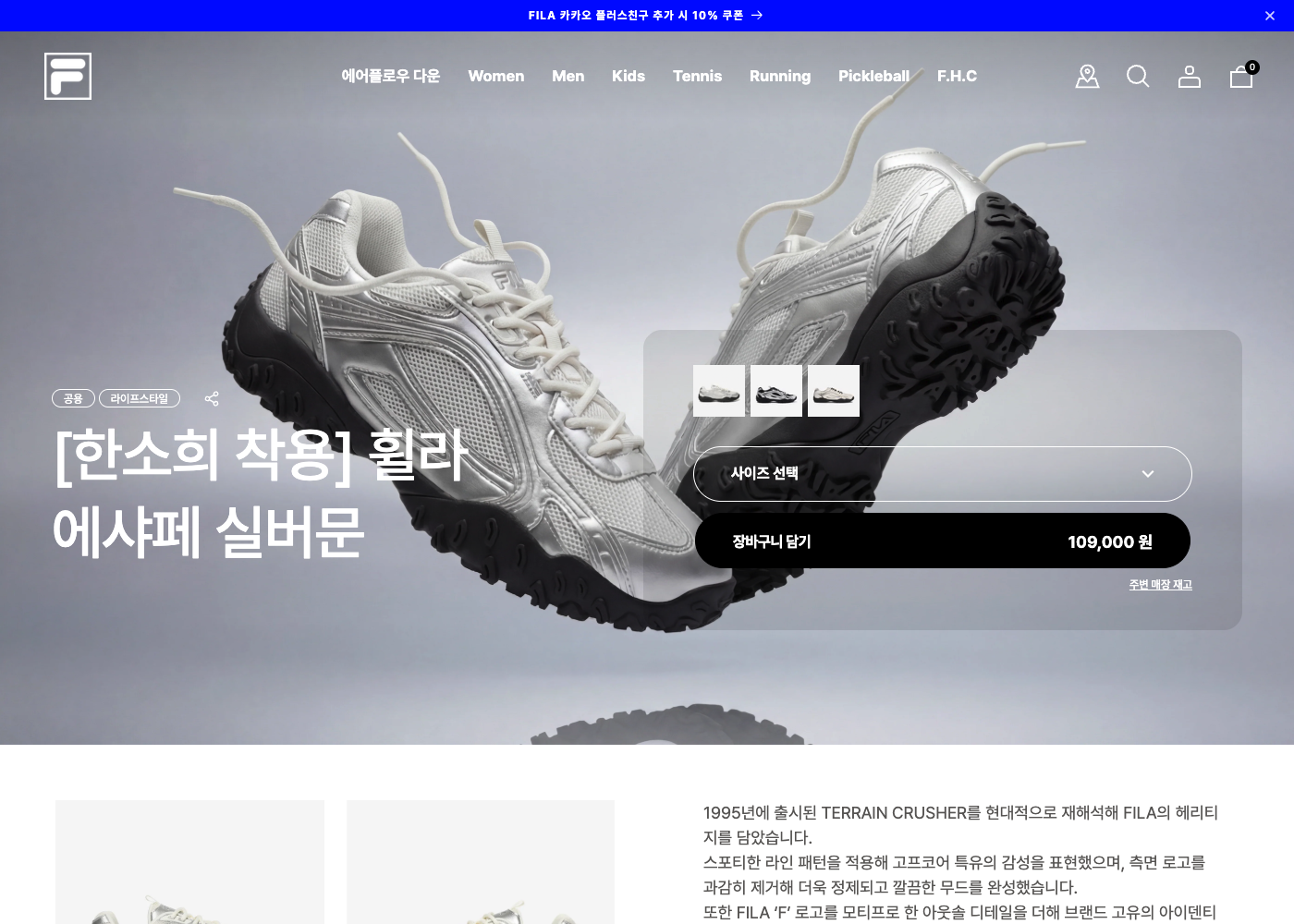
We could not track a live US product — there are none to track. Searching Google for site:www.fila.com disruptor returns a single indexed URL: the paused homepage itself. On the Korean storefront we tracked a current heritage sneaker explicitly described as a modern reinterpretation of FILA’s 1995 TERRAIN CRUSHER, part of the same chunky-silhouette lineage that made the Disruptor II famous — a fitting like-for-like substitute given the US product line it would have competed against no longer exists online.
The Korean PDP: ₩109,000, full size run (220-290mm), rendering cleanly with valid Product/Offer JSON-LD for every size variant.
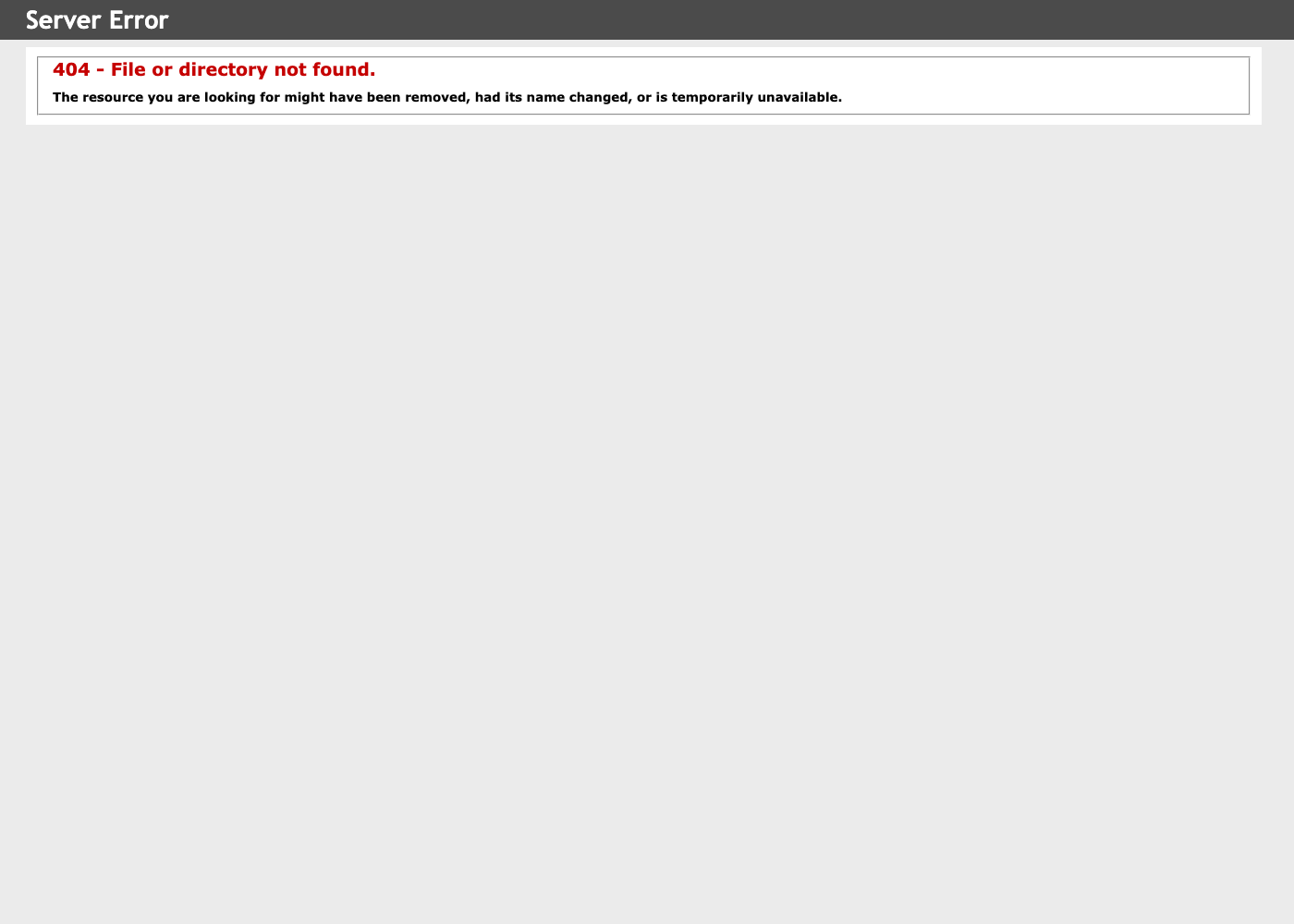
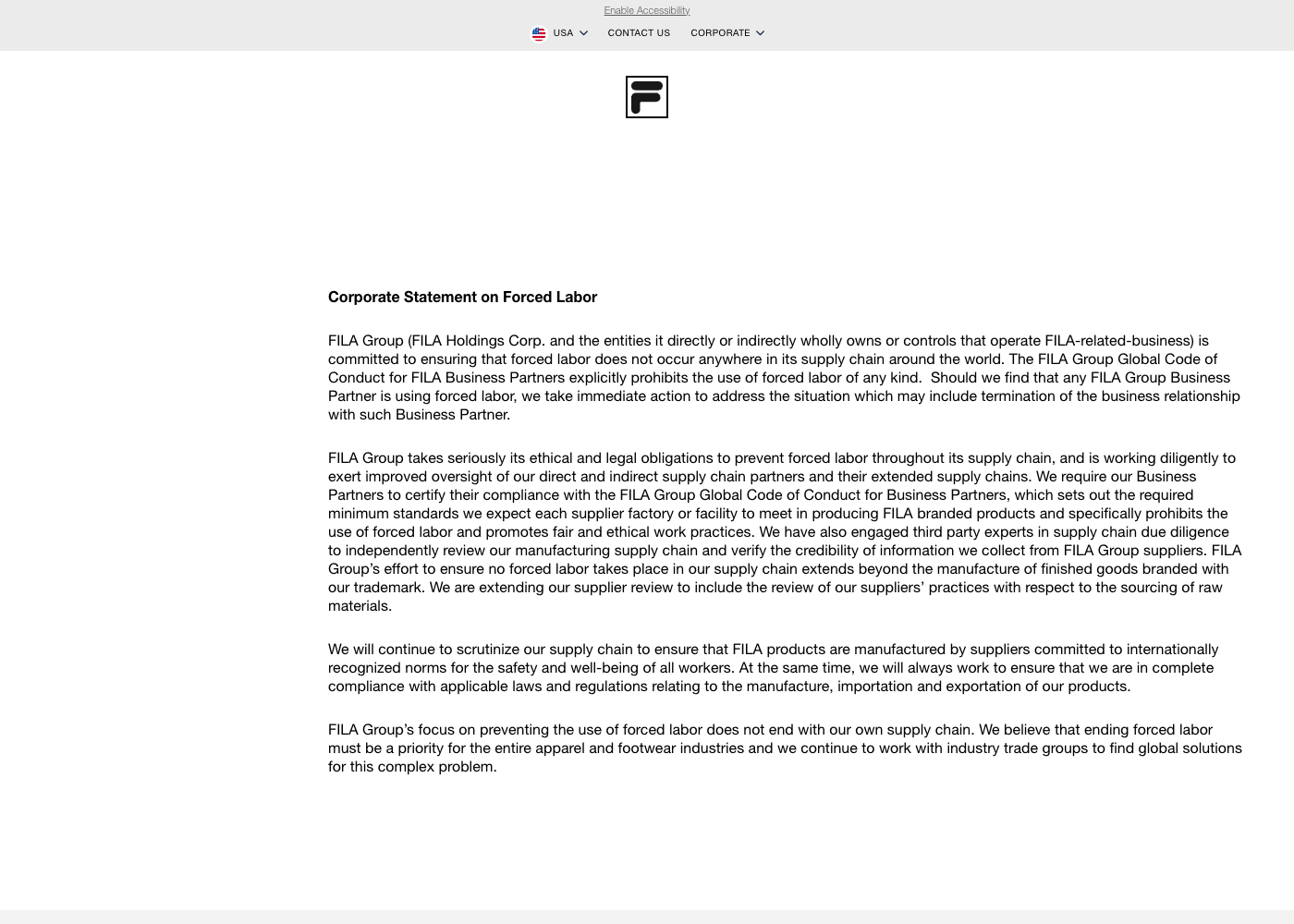
Any US category path, here /mens/shoes: a plain IIS 404, not a branded “coming soon” page.One of the few fila.com pages that still works: a static legal/corporate statement, naming the FILA Holdings Corp parent directly.
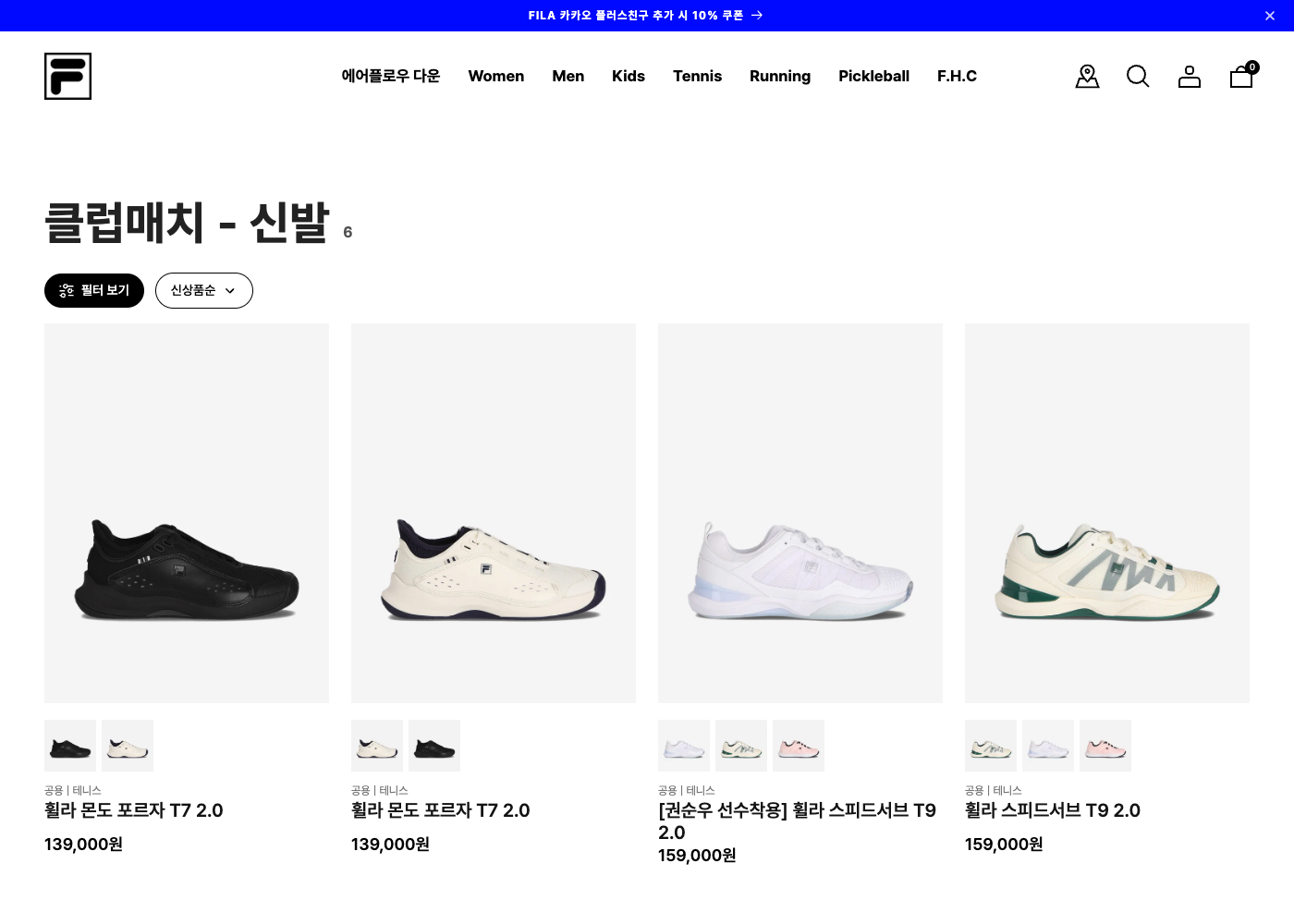
FILA Korea’s Clubmatch shoes category — a fully stocked, fully priced storefront, in the same session where every equivalent US path 404s.
AI citation snapshot: 10 real queries, Google AI Mode
We sent 10 verbatim queries to Google AI Mode (udm=50) and checked direct a[href] links, counting a citation only when either fila.com or fila.co.kr appeared (not other-country FILA storefronts like fila.com.au or fila.de).
Query
FILA domain cited?
Who else showed up
fila disruptor 2 review
❌ No
zappos.com (two separate review pages), reddit.com, fordlafemme.com — a retailer and independent review sources entirely, no FILA-owned domain of any kind
is fila a good brand
❌ No
tennis-warehouse.com, goodonyou.eco, trustpilot.com (a review page specifically about www.fila.com), reddit.com, facebook.com, quora.com, a Medium post literally titled “I Am Done With FILA Sneakers” — a strikingly negative citation set
fila vs adidas
❌ No
quora.com, datahut.co, facebook.com (twice), reddit.com, tennis-warehouse.com — no FILA or Adidas-owned domain of any kind, matching this series’ recurring pattern that brand-vs-brand queries rarely cite either brand
fila return policy
✅ Yes
fila.com.au, fila.com.sg, fila.co.in, filaksa.com, facebook.com — fila.com’s own /customer-service/returns/return-policy.html and fila.co.kr’s FAQ page both cited directly, alongside a cluster of regional FILA storefronts
best fila sneakers for women
❌ No
fila.com.au, fila.de, amazon.com, chefuniforms.com, 90sfashion.com, soleretriever.com — other-country FILA storefronts appear but neither fila.com nor fila.co.kr does, so this doesn’t count under our fixed two-domain rule
who owns fila
❌ No
wikipedia.org, mistoholdings.com, koreawho.com, ir.anta.com, linkedin.com (FILA Korea’s own company page), multiples.vc, mk.co.kr (a Korean financial newspaper) — the ownership-fact query is answered entirely by third-party encyclopedic and Korean financial-press sources, not by fila.com or fila.co.kr explaining their own structure
how to clean fila shoes
❌ No
sneakerjagers.com, on.com (a competitor’s own care guide), wikihow.com, sneakersalt.com, facebook.com, quora.com — no FILA-owned domain
fila sizing guide
❌ No
fila.com.au only — the Australian storefront’s size guide is the sole result returned at all, and it isn’t one of our two audited domains
where are fila shoes made
❌ No
wikipedia.org, english.news.cn, sneakerjagers.com, facebook.com, goldsupplier.com — no FILA-owned domain
is fila shop online closed
✅ Yes
musinsa.com, a Reddit thread literally titled “what is going on with the fila brand their online…”, and a KED Global (Korean business-press) article under a “corporate-restructuring” URL — both fila.co.kr and fila.com were cited together, alongside independent confirmation that the US shutdown is a publicly discussed, recently reported event, not an artifact of our audit
Result: a FILA domain cited in just 2/10 queries (Nike 5/10, Adidas 4/10, Puma 5/10, Under Armour 8/10, New Balance 6/10, ASICS 7/10, Skechers 4/10, Lululemon 8/10, Reebok 7/10, Converse 7/10, On Running 6/10, Hoka 5/10, Vans 8/10, The North Face 9/10, Columbia 7/10) — the lowest rate in the series so far, by a wide margin over the previous low (Adidas and Skechers at 4/10). Both hits were directness-of-answer queries (return policy, “is the shop closed”) where a FILA page was the most literal source available; every brand-opinion, comparison and product-discovery query missed entirely. Note the “who owns fila” result is itself a finding: unlike several earlier brands whose own corporate pages answered ownership questions, here Korean financial press and encyclopedic sources did the explaining instead.
G-score audit: the 8-pillar hygiene checklist
We scored five measurable URLs with the same 8-pillar static-HTML checklist (JSON-LD present, FAQ content, visible date, author byline, concrete data points, table/list structure, 3+ subheadings, a 30-500 character early answer) used in our Week 17 quality-score experiment and on all fifteen prior brands. Three US targets were attempted and excluded: the Men’s Shoes category, any product page and llms.txt all 404 — there is no content left to score on those paths.
Page
Fetch method
G-score
Notable pillars
US homepage (shop-paused notice)
Plain fetch (200 OK)
0.375
List structure, 3+ subheadings, a short early answer; no JSON-LD at all, no FAQ, no date, no author — a static notice page, not a commerce or content page
US Corporate Statement on Forced Labor
Plain fetch (200 OK)
0.375
Same pattern as the homepage — structurally present but zero JSON-LD, zero FAQ or author signal, despite being a real, substantive legal document
KR homepage
Browser-rendered (200 OK)
0.625
3 JSON-LD blocks, visible date, data points, list structure, 3+ subheadings; no FAQ content, no author byline
KR Terrain Crusher reissue PDP
Browser-rendered (200 OK)
0.625
4 JSON-LD blocks including a valid, parseable Product schema with per-size Offers; no aggregateRating/review data anywhere in the block, and no FAQ content on this template
KR Clubmatch shoes category
Browser-rendered (200 OK)
0.625
Same pattern as the PDP — 3 JSON-LD blocks, data points, list/table structure, 3+ subheadings; no FAQ, no author
US Men’s Shoes category / any product page / llms.txt
404 — no content
n/a
Excluded from the average rather than scored as 0 — there is no page to evaluate, not a blocked one
Five-page average: 0.525 (Nike: 0.4375, Puma: 0.354, Under Armour: 0.5208, New Balance: 0.5833, Adidas: 0.6458, ASICS: 0.4583, Reebok: 0.5417, Converse: 0.5208, On Running: 0.4583, Hoka: 0.6, Vans: 0.425, The North Face: 0.525, Columbia: 0.525) — tied for the series average, mid-pack. The number hides the real split: the two static US pages that still exist score low because they’re plain notices with no structured data, while the three Korean commerce pages score markedly better and carry genuinely valid Product JSON-LD — the opposite of Columbia’s pattern last audit, where the Korean PDP’s schema looked complete but didn’t actually parse.
A paused US flagship, a Korean parent running agent-shopping infrastructure, and an ownership story told by outsiders
fila.com’s e-commerce has stopped operating, not merely become hard to crawl — This is the first brand in our series where the block isn’t a captcha, a geofence or a JS-rendering gap: the homepage states outright that “the shop is on pause,” every category and product path we tried 404s, and Google’s own index confirms it — a site search for site:www.fila.com disruptor returns only the paused homepage. Our own AI citation test independently surfaced a Reddit thread and a Korean business-press article discussing the same shutdown, so this isn’t an artifact specific to our session.
The US 404 page’s title is declared in a Korean legacy character set — Every broken fila.com path (categories, llms.txt, sitemap.xml) returns the identical generic IIS error template, and its <meta charset> declares ks_c_5601-1987, an older Korean-language encoding — an infrastructure fingerprint, not a content choice, on a domain nominally serving US shoppers.
fila.co.kr runs the most AI-agent-forward infrastructure in this entire series — Its robots.txt explicitly points AI agents to an agents.md file and a published UCP (Universal Commerce Protocol) discovery endpoint plus an MCP server address (/api/ucp/mcp), with instructions covering agent identification, required buyer authorization and yield-to-buyer rules. Its llms.txt directs agents to Shopify’s own “Shop skill” for personalized discovery and checkout. No other brand we’ve audited — including sites with genuinely substantive llms.txt files like The North Face Korea or Columbia Korea — has published a working MCP endpoint.
The Korean PDP’s Product schema is valid JSON and actually parses — Every size variant carries its own Offer block with price, SKU and availability, and the whole document is syntactically clean json.loads()-parseable JSON — a contrast with Columbia’s Korean PDP from the previous audit, where a real rating was wrapped in a JavaScript comment and broke the parser. FILA Korea’s schema is complete rather than merely present, though it carries no aggregateRating or review data of any kind, parseable or not.
The brand’s own domains don’t explain who owns FILA — outside sources do — Our “who owns fila” AI citation test returned Wikipedia, a Korean business-profile site, a Korean financial newspaper (Maeil Business) and FILA Korea’s own LinkedIn company page — but neither fila.com nor fila.co.kr. The clearest first-party confirmation we found of the Korean ownership structure was buried in fila.com’s static Corporate Statement on Forced Labor, which names “FILA Group (FILA Holdings Corp. and the entities it directly or indirectly wholly owns or controls)” — a compliance document, not anything written to answer a shopper’s or researcher’s ownership question.
What works / What to verify
WHAT WORKS
FILA Korea’s fila.co.kr: valid, fully parseable Product/Offer JSON-LD on every variant, a real llms.txt, an agents.md file, and a published UCP/MCP endpoint — the most complete AI-agent shopping infrastructure documented across sixteen audits in this series, operated by the brand’s own global parent company rather than a licensee.
WHAT TO VERIFY
Whether fila.com’s US shutdown is permanent or a temporary pause as the homepage copy claims; whether US shoppers are meant to be redirected to a retail-partner or marketplace channel instead; and whether the UCP/MCP endpoint on fila.co.kr is reachable and functional for an actual AI shopping agent, which we did not attempt to call in this audit.
Target query check — reported honestly, not inflated
We have not re-measured “fila seo” or “fila geo audit” query volume this session. Per the pattern already confirmed across fifteen earlier subjects in this series on October 20, 2026 (Keyword Planner, US) — the large majority showed no measurable search volume at all for “[brand] SEO/GEO audit” phrasing — we’re not claiming this title drives ranking-based traffic. The distribution case for this series rests on internal links, our own index, and readers already following the GEO Lab arc, not on search demand for “[brand] SEO audit” as a query.
Frequently asked questions
Is fila.com’s US shop permanently closed?
We can’t confirm that from the outside — the homepage frames it as a pause (‘We’re taking a break… for now, the shop is on pause’), not a permanent closure. What we can confirm directly is that, at the time of this audit, no US category or product page resolves, Google’s own index shows no indexed FILA product URLs, and independent discussion of the shutdown (a Reddit thread, a Korean business-press article) surfaced in our own AI citation test — so this is a real, externally-noticed event, not a transient glitch in our single session.
Why does fila.com’s 404 page reference a Korean character encoding?
The error page’s <meta charset> declares ks_c_5601-1987, a legacy Korean-language character set used by older IIS deployments, even though the page content itself displays in English. We can observe this as a fact about the server’s configuration; we can’t confirm from the outside whether it reflects shared hosting infrastructure with FILA’s Korean parent company or is simply a leftover default template setting.
What is the UCP/MCP endpoint on fila.co.kr, and does it mean AI agents can shop there directly?
UCP (Universal Commerce Protocol) and MCP (Model Context Protocol) are mechanisms that let AI agents discover and interact with a storefront programmatically rather than by scraping rendered HTML. fila.co.kr’s robots.txt and llms.txt both point to a published UCP discovery URL and an MCP endpoint, plus an agents.md file with explicit rules (identify as an agent, obtain buyer authorization, yield to the buyer). We did not attempt to call that endpoint in this audit, so we can confirm it’s documented and advertised, not that it’s fully functional end-to-end.
Does FILA Korea’s stronger technical setup mean it gets cited more by AI than other brands in this series?
No — this audit is itself evidence against that assumption, consistent with fifteen prior brands. FILA recorded the lowest AI citation rate we’ve measured in this series (2/10) despite fila.co.kr’s G-score and schema validity both looking stronger than several higher-citation brands’ equivalents. Our Week 17 experiment already found hygiene and technical-structure scores were not a dependable predictor of AI citation; a domain with no functioning US storefront at all to drag down its average is a more plausible explanation for FILA’s low citation count here than any technical shortfall on the Korean side.
Audit evidence, scope and limits
Inspected: November 2026, public logged-out access from a Korea-based IP (real headed-browser session used for screenshots, G-score rendering and citation testing; plain HTTP fetches used urllib/curl with a standard desktop user agent). Screens: the US homepage (static pause notice), a sample category path (/mens/shoes, 404), the Corporate Statement on Forced Labor (one of the few surviving pages), llms.txt (404) and robots.txt/sitemap_index.xml (also 404, despite being named in robots.txt) — plus the FILA Korea homepage, its llms.txt and robots.txt, a Terrain Crusher-lineage product page, a Clubmatch shoes category page, a 10-query Google AI Mode citation snapshot, and an 8-pillar G-score scored on five measurable target pages (three US targets were attempted and excluded as 404).
Not measured: rankings, Search Console performance, analytics, conversion, signed-in/member flows, ChatGPT citations (not attempted, given the composer failures flagged on earlier audits in this series), whether fila.co.kr’s UCP/MCP endpoint actually responds to a live agent request, whether the US shutdown is temporary or permanent, or the complete product/locale catalogue beyond the one product line and seven URLs sampled here. This is a public-signal snapshot, not a performance claim or a full-catalogue crawl.
This is part 16 of a daily series. Every day, GeoParrot runs this same evidence-first method — real screenshots, a 10-query AI citation snapshot, an 8-pillar G-score audit, and an honest target-query check — against one more major sports and athletic-wear brand. Next: Salomon.




Leave a Reply