

Quick answer: Google AI Overviews (AIO) are AI-generated summaries, built on a customized Gemini model wired into Google’s core web ranking systems, that Google shows above the traditional results for queries it judges an AI answer will help with. They launched publicly in May 2024 (after testing as Search Generative Experience), now reach 200+ countries, and are a different, automatic, inline experience from the separate, conversational AI Mode. There’s no special “AI Overviews SEO” — Google’s own position is that the same helpful, well-structured, trustworthy content that ranks organically is what gets pulled in and cited.
Two years after launch, AI Overviews are still one of the most argued-about features in search — partly because Google discloses very little about how they actually work, and partly because the industry’s own measurements of them disagree with each other by as much as 50 percentage points. This piece covers what AI Overviews actually are, how they differ from AI Mode and featured snippets, what Google has and hasn’t confirmed about how they’re built, the real (and conflicting) data on how often they appear and what they cost publishers in clicks, and what you can actually do about it.
What are Google AI Overviews?
AI Overviews are AI-generated summaries that appear above the traditional “ten blue links” for queries where Google decides a synthesized answer will help the user understand or explore a topic faster than a results list alone. They can include text, cited source links, images, follow-up questions, and — as of August 2026 — interactive elements built directly into the answer.
A short timeline
- May 2023 — launched in limited testing as Search Generative Experience (SGE), waitlist-only.
- May 2024 — rebranded AI Overviews, rolled out to all US users at Google I/O.
- October 2024 — expanded to 100+ countries.
- March 2025 — Gemini 2.0 integrated; trigger frequency roughly doubled over 2025 by industry estimates.
- May 2025 — reached 200+ countries and 40+ languages; the separate, conversational AI Mode launched in the US.
- January 2026 — Google began merging the AI Overviews and AI Mode experience at the UX level (more on this below).
- June 2026 — Search Console added a dedicated generative-AI performance report.
- August 19, 2026 — Generative UI — interactive tools, calculators, and simulations built directly inside the answer — started rolling from AI Mode into AI Overviews.
Google itself doesn’t publish an official active-user number for AI Overviews specifically; the widely repeated “2.5 billion+ users a month, 200+ countries, 40+ languages” figure traces back to industry reporting rather than a Google disclosure, so treat it as directional rather than confirmed.
AI Overviews vs. AI Mode vs. featured snippets — what’s actually different
These three get confused constantly, and the confusion matters because the optimization playbook isn’t identical for each.
| Feature | What it is | Sources used | Where it lives |
|---|---|---|---|
| Featured snippet | One extracted passage, verbatim, from a single ranking page | One source | Pinned above results, “position zero” |
| AI Overview | An AI-synthesized answer blending multiple sources, automatic and inline | Typically 5–15 cited sources | Above or inside the regular results page |
| AI Mode | A separate, conversational, multi-turn search experience you opt into | Can issue many sub-queries per turn (“query fan-out”) | Its own tab/experience, no ranked blue links shown |
As of January 2026 the line between the first two and the third has started to blur: finishing an AI Overview and tapping “Show more” or asking a follow-up question can hand you directly into an AI Mode conversation on the same query. Google’s own framing is that the AI Overview is the quick snapshot and AI Mode is where the deeper, multi-turn research happens on the same topic. We’ve tracked this merge from the optimization side in Google’s AI Mode link redesign and what the click data actually shows — Google announced five changes meant to make AI Mode links “more clickable,” but the only number it shared was adoption of a sidebar feature, not an actual click or traffic metric.
How does Google actually build an AI Overview?
Here’s what’s genuinely confirmed by Google, versus what the SEO industry has inferred by observing the output — these get blurred together constantly, so we’re keeping them separate.
Google-confirmed: Google’s VP of Search, Liz Reid, stated on the record in May 2024 (responding to the early hallucination controversy): “While AI Overviews are powered by a customized language model, the model is integrated with our core web ranking systems and designed to carry out traditional ‘search’ tasks, like identifying relevant, high-quality results from our index.” In short: a customized Gemini model, wired into the existing ranking pipeline — not a separate index, not separate ranking criteria.
Third-party inferred (not Google-confirmed): SEO researchers who’ve reverse-engineered AIO behavior describe a retrieval-augmented generation (RAG) pattern — Google retrieves a set of already-indexed candidate pages, filters by relevance and trust signals, and has a model draft a grounded answer with inline citations from that set, sometimes decomposing the original query into sub-queries first (“fan-out,” confirmed by Google for AI Mode specifically, assumed but not confirmed for AI Overviews). Treat any claim more specific than that — exact candidate-pool sizes, a fixed number of ranking stages — as an estimate, not a disclosed mechanism.
How common are AI Overviews, really? The numbers don’t agree — and that’s the story
Ask “what percentage of searches show an AI Overview in 2026” and you’ll get a different answer depending on who’s measuring and how. This is exactly the kind of counted-vs-inferred measurement gap we keep finding across AI search metrics, and it’s worth showing the spread rather than picking one number and presenting it as settled:
| Source | Reported trigger rate | Method / date |
|---|---|---|
| Semrush | 12.95% of US queries | SERP sampling, Aug 2026 |
| Pew Research | 18% of all searches | Actual browsing panel, 900 US adults / 68,879 real searches, published May 2025 |
| SparkToro (citing Ahrefs) | “20%+” | June 2026 |
| Ahrefs | 48% of queries (up from 34.5% in Dec 2025) | Rank-tracker SERP sampling, March 2026 |
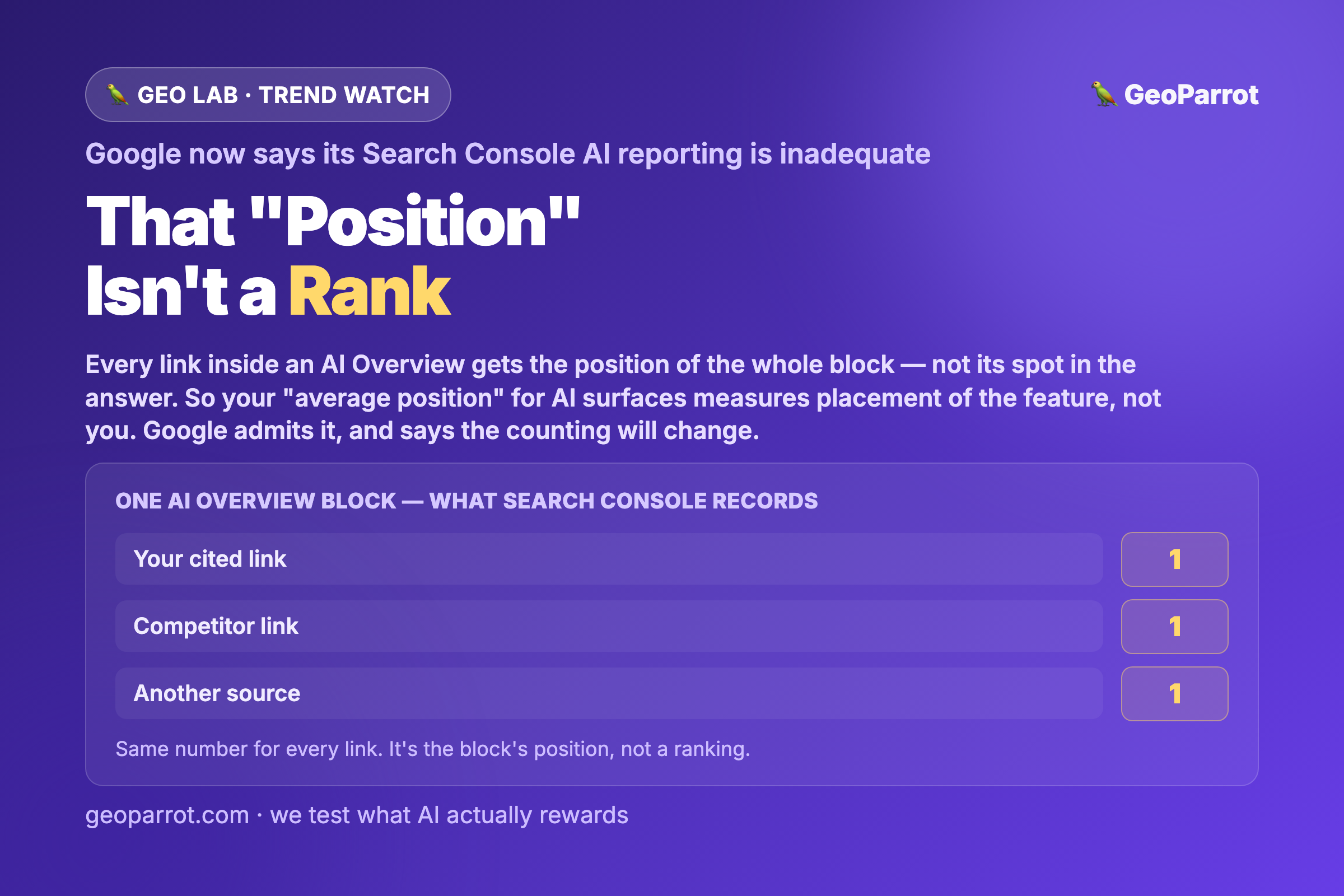
That’s a roughly four-to-one spread between the lowest and highest published figures for the same underlying question. The Pew Research number is the one we’d anchor to if you need a single reference point — it’s the only one built from an actual panel of real people’s browsing sessions rather than automated SERP-scraping, which is exactly the kind of methodology gap we flagged in why Search Console’s own AI Overview tracking can’t be trusted at face value either.
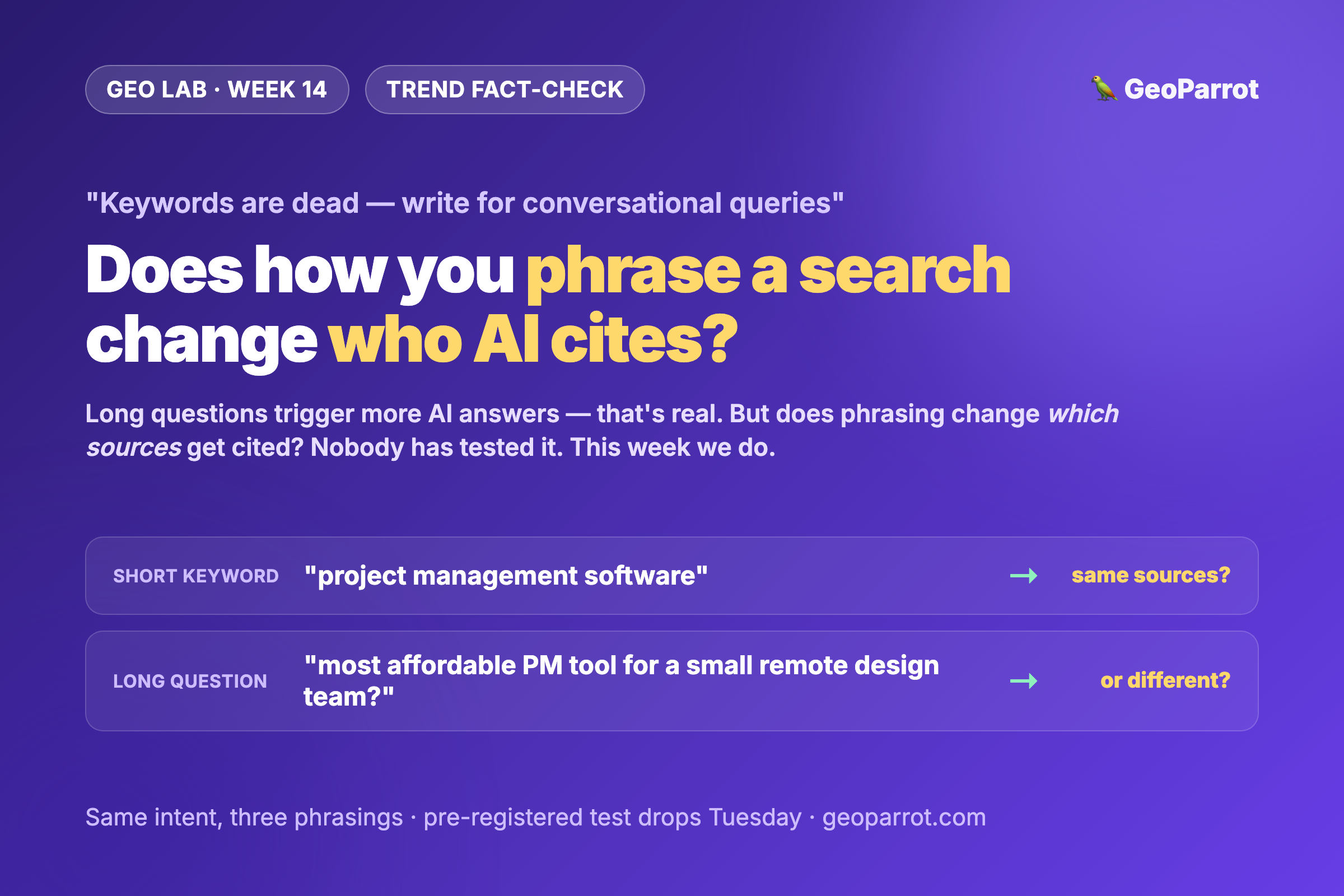
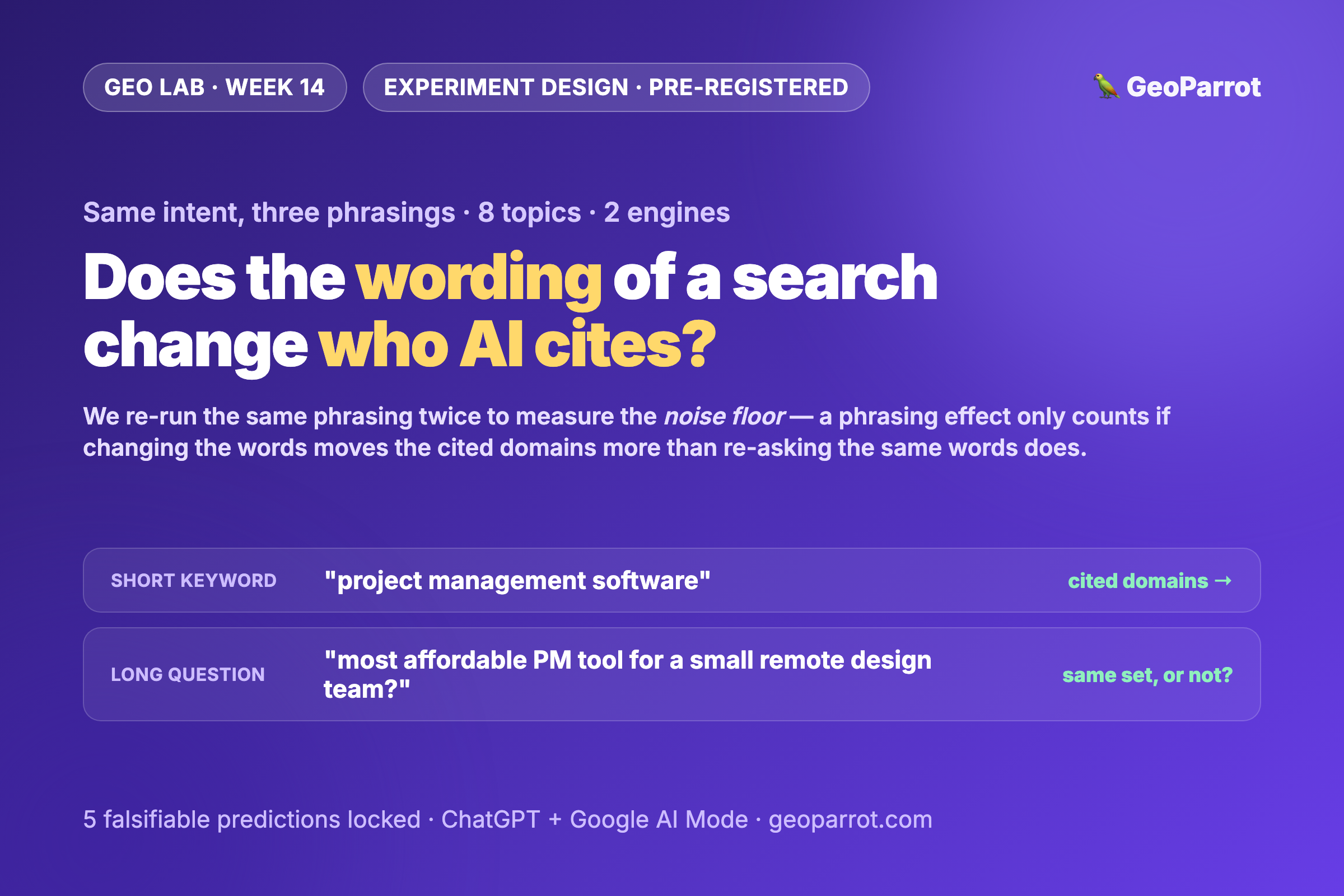
What every source does agree on directionally: AI Overviews trigger far more often on long, question-style, informational queries than on short or transactional ones. Ahrefs reports 47% of informational queries trigger an AIO versus 8% of transactional ones; Pew’s panel data shows 53% of 10+-word searches trigger one versus 8% of one-to-two-word searches — different absolute numbers, same shape.
What AI Overviews actually cost publishers in clicks
This is the part publishers care about most, and here the independent studies converge directionally even though the exact magnitude varies:
- Pew Research (panel data): users clicked an organic link in 8% of visits when an AI Overview was present, versus 15% when it wasn’t. Only about 1% of visits ended in a click on a link inside the AI Overview itself. 26% of AIO-present search sessions ended with no further click at all, versus 16% for non-AIO sessions.
- Seer Interactive (53 brands, 5.47M tracked queries, 2.43B impressions, Jan 2025–Feb 2026): organic CTR of 0.61% on AIO-present queries versus 1.62% without — though it’s been recovering off its floor (1.3% to 2.4% between December 2025 and February 2026), not back to the non-AIO baseline.
- Search Engine Land (citing a separate aggregate dataset): a 58–61% average drop in organic CTR when an AI Overview appears, and a steeper 68% drop on paid clicks.
There’s a genuine silver lining buried in that data, though: being one of the sources actually cited inside the AI Overview correlates with meaningfully more clicks and impressions than ranking for the same query without being cited — being invisible to the AI Overview appears to cost you more than being cited in one helps, but being cited is still clearly better than not.
What correlates with being cited (and what we don’t actually know)
Google has not published a ranking formula for AI Overview citation. Its only official statement is that the same helpful-content and E-E-A-T signals that drive organic ranking are what feed AI Overviews — no separate scoring system, no special schema requirement. Everything more specific than that is a third-party correlational finding, and some of those findings disagree with each other too:
- One widely cited Ahrefs study found only 38% of AI Overview citations come from pages that rank in the top 10 organically for that query — a different study, from Originality.ai, puts the same figure at 52%. We haven’t found a way to reconcile those two numbers, and we’re not going to average them into a false-precision figure. Read both as “a majority-to-near-half of citations come from outside the usual top 10,” not as a settled statistic.
- Multiple 2026 studies point directionally toward structured data (schema markup), clear question-shaped headings, and demonstrated topical authority as correlating with citation — but we were not able to trace a specific multiplier (e.g. “schema gets you cited X times more often”) back to a transparent, verifiable methodology, so we’re deliberately not repeating one here. If you see a precise multiplier like that elsewhere, ask what the underlying sample and control group were before trusting it — that’s the exact kind of claim our own quality-score verdict found couldn’t survive a real control-group check.
How to optimize for AI Overviews (what’s actually actionable)
- Rank for the query first. If you’re nowhere on page one, you’re unlikely to feed the Overview — classic SEO is still the entry ticket, even if it’s no longer the whole game.
- Answer directly, early. Put a complete, self-contained answer near the top of the relevant section so it can be lifted and summarized cleanly.
- Structure for extraction. Descriptive, question-shaped headings, short paragraphs, lists, and tables make your content easy to parse and quote — see Answer-First Writing for AI Citations.
- Add structured data. Article, FAQ, and HowTo schema clarify what’s an answer, even though Google hasn’t published a precise lift figure for it — walkthrough in How to Add Schema Markup for GEO.
- Show real E-E-A-T. Named authors, first-hand experience, specific numbers, and citations to your own primary sources are the trust signals Google says it rewards.
- Watch where you can still win on clicks. AI Overviews trigger far less on short, transactional, navigational queries — comparisons, pricing, availability, and “which one should I buy” content keeps more of its click-through than pure definitional content does.
Controversies: hallucinations, lawsuits, and opting out
The May 2024 launch was immediately followed by a wave of viral bad answers — the “glue on pizza” and “eat a rock a day” examples were the most widely shared. Google disputed some circulating examples as fabricated but acknowledged that “odd, inaccurate or unhelpful” Overviews did occur, generally on rare or novel queries; Google CEO Sundar Pichai later called hallucination an “inherent feature” of current LLMs and “still an unsolved problem.”
On the legal side, Penske Media Corp. (September 2025) and Chegg both sued Google alleging AI Overviews unfairly reduce publisher traffic while forcing them to allow their content to be used to keep organic visibility — Chegg reported a roughly 49% non-subscriber traffic decline over the prior year. A US district judge dismissed both suits on September 30, 2026, ruling that real traffic losses don’t by themselves violate antitrust law and that publishers’ recourse is licensing negotiation or legislation, not a traffic-expectation claim. A separate, still-pending complaint is in front of EU antitrust regulators via the European Publishers Council.
On opting out: the long-standing nosnippet tag blocks AI Overviews (and AI Mode, Discover, and image snippets) — but it also kills your normal search snippet, which is reportedly costly enough on its own that it isn’t a real solution for most sites. The useful development is new for 2026: Search Console added a granular toggle letting site owners exclude specifically from AI Overviews and AI Mode without losing normal snippet visibility, reportedly following pressure from the UK’s Competition and Markets Authority. That’s the first opt-out mechanism that doesn’t cost you your regular listing.
What’s changing next: Generative UI, and why it matters more than it sounds
The most consequential 2026 change isn’t a ranking-signal tweak — it’s Generative UI, which started rolling from AI Mode into AI Overviews on August 19, 2026. Instead of just summarizing and linking to a calculator or comparison tool on your site, Google can now build a working interactive tool directly inside the answer. If that trend continues, it’s a direct structural threat to any site (including this one) that relies on utility pages — calculators, converters, comparison widgets — as a traffic and citation strategy, since the AI Overview can increasingly just be the tool instead of linking to one. We haven’t published dedicated coverage of this yet; it’s on our list as its own follow-up piece.
Separately, Google formally extended its spam policy to generative surfaces on May 15, 2026, explicitly naming “manipulating generative AI responses in Search” as a violation, and the August 2026 spam update enforced against pages built to be pulled into an AI Overview with no reason for a human to actually read them — directly relevant if your GEO strategy leans on thin, AI-summarization-bait content rather than genuinely useful pages.
The GEO Lab take
The honest summary of two years of AI Overviews: Google has confirmed almost nothing specific about how citation decisions are made, the industry’s own measurements of basic facts like trigger rate disagree by a factor of four, and several of the precise-sounding “do X and get cited Y times more” statistics circulating don’t trace back to a methodology we’d trust. What’s actually solid: AI Overviews reduce organic clicks on informational queries, being cited beats not being cited, and nothing in the confirmed Google guidance asks you to do anything different from writing genuinely clear, well-structured, trustworthy content — it just raises the cost of not doing that well. Rank first, answer directly, structure for extraction, and treat any number you can’t trace to a named source and date — including the ones in this article — with appropriate suspicion.
Frequently asked questions
What’s the difference between AI Overviews and AI Mode?
AI Overviews are automatic, single-shot summaries shown inline above regular search results. AI Mode is a separate, opt-in, conversational experience with no ranked blue links, built for multi-turn research on a topic. Since January 2026 they’re linked at the UX level — continuing an AI Overview with a follow-up question can hand you into an AI Mode conversation on the same query.
How often do AI Overviews actually show up?
Published figures for 2026 range from about 13% to 48% of queries depending on the source and methodology, with the most methodologically solid study (Pew Research’s actual browsing-panel data) at 18%. Treat any single number you see elsewhere as one measurement among several that disagree, not a settled fact.
Do I need special schema or markup just for AI Overviews?
No — Google has not published a separate AI Overviews ranking system or required markup. The same helpful-content, E-E-A-T, and structured-data practices that support regular organic ranking are what Google says feeds AI Overviews.
Can I opt out of AI Overviews without losing my regular search listing?
As of 2026, yes — Search Console added a dedicated toggle to exclude your site from AI Overviews and AI Mode specifically. Before this, the only lever was the nosnippet tag, which also removes your normal search snippet and isn’t a realistic option for most sites.
How do I track whether I’m being cited in AI Overviews?
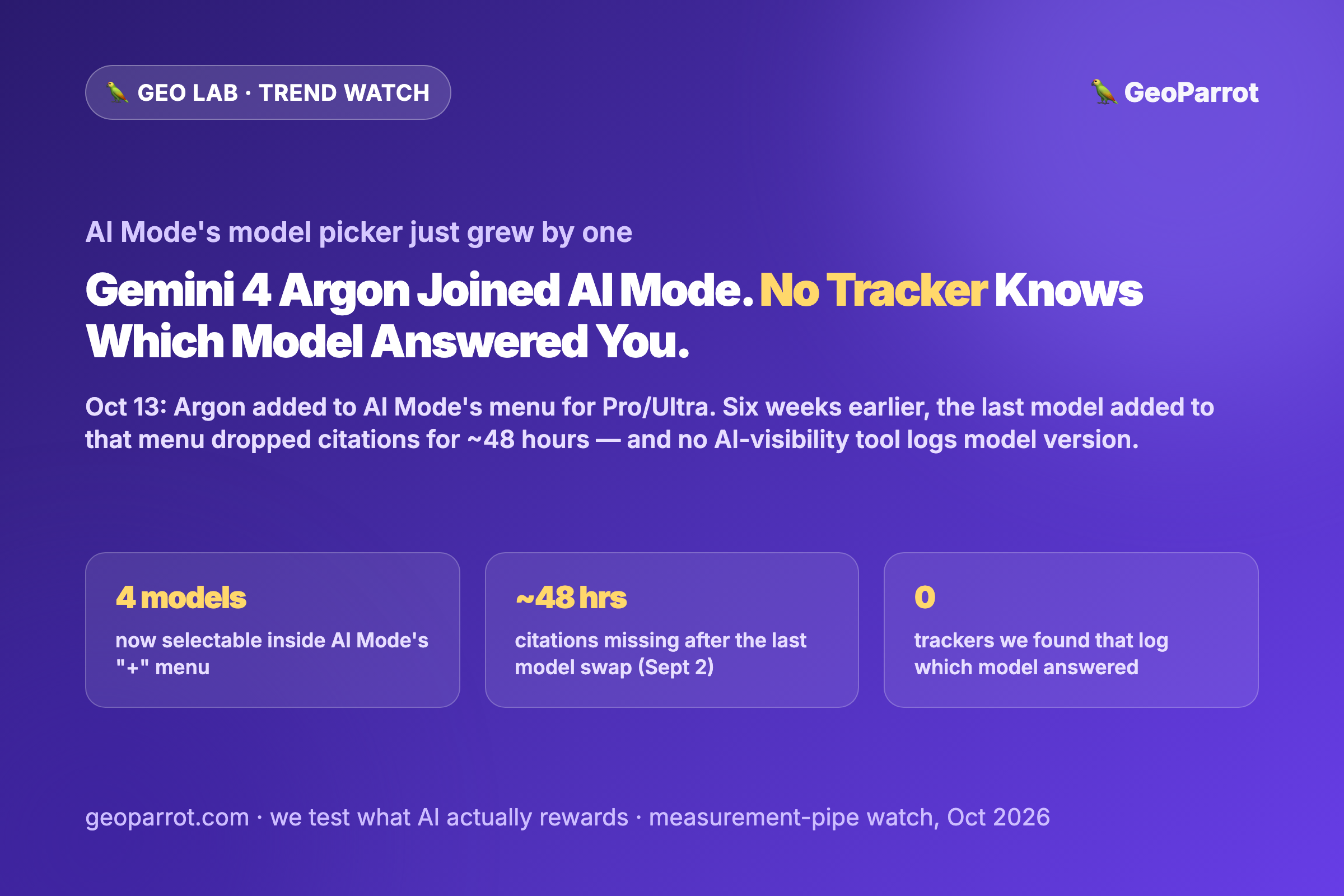
Search Console’s generative-AI performance report (added June 2026) is the first-party source, but we’ve found its data pipeline can lag by two or three days during periods of heavy load — see our writeup on GSC’s AI Overview tracking delay before trusting a day-over-day comparison. Third-party rank trackers fill some of the gap but can’t see which underlying Gemini model variant generated a given answer, which makes individual citation results hard to reproduce.
Will AI Overviews eventually replace my traffic entirely?
Not based on current data — AI Overviews clearly reduce clicks on simple informational queries, but transactional, comparison, and “which one should I pick” queries still send meaningfully more traffic through. The defensive strategy is owning the content types where a summary genuinely isn’t enough, rather than trying to win back clicks on queries a one-paragraph answer already satisfies.
Sources & further reading
- Google Developers — AI features and your website
- Google — AI Overviews
- AI Overviews — background and timeline (Wikipedia, cross-referenced against primary reporting)
- Ahrefs — Google AI Overviews: trigger rates and citation data
- Pew Research findings on AI Overview click-through rates, via Sistrix
- Search Engine Land — AI Overviews and organic/paid CTR impact
- Search Engine Journal — AI Overview citations and top-10 ranking overlap
- Press Gazette — Penske AI Overviews antitrust suit dismissed
- GeoParrot — Google’s AI Mode link redesign vs. the actual click data
- GeoParrot — Why Search Console’s AI Overview tracking can lag
- GeoParrot — The untrackable model-version blind spot in AI Mode citations
- GeoParrot — Why the “4.2x more citations” quality-score claim doesn’t hold up
- GeoParrot — What Is Generative Engine Optimization (GEO)?
- GeoParrot — What Is Answer Engine Optimization (AEO)?
Leave a Reply