
Quick answer: New research suggests the honeymoon with AI search is cooling. According to data from Fractl reported via Search Engine Land, the share of people who find AI search more useful than traditional search fell from about 82% in 2025 to 54% in 2026 — a 28-point drop. Consumers now cross-check an average of 2.4 platforms before buying, and they still trust Google roughly three times more than AI tools. For GEO, the lesson isn’t “AI search doesn’t matter” — it’s that trust and corroboration are becoming the whole game.
AI search exploded on a wave of optimism. A year later, that optimism is being tempered by reality — hallucinations, inconsistent answers, and a healthy dose of consumer skepticism. Here’s what the latest data shows and what it means for getting your brand cited.
Why this still matters (2026): AI answers keep gaining usage even as trust in them lags behind classic search for high-stakes queries. The winning move isn’t picking a side — it’s being citable across both AI answers and Google Search. The first step is measuring how much traffic AI already sends you: track AI search traffic in GA4.
The trust drop, by the numbers
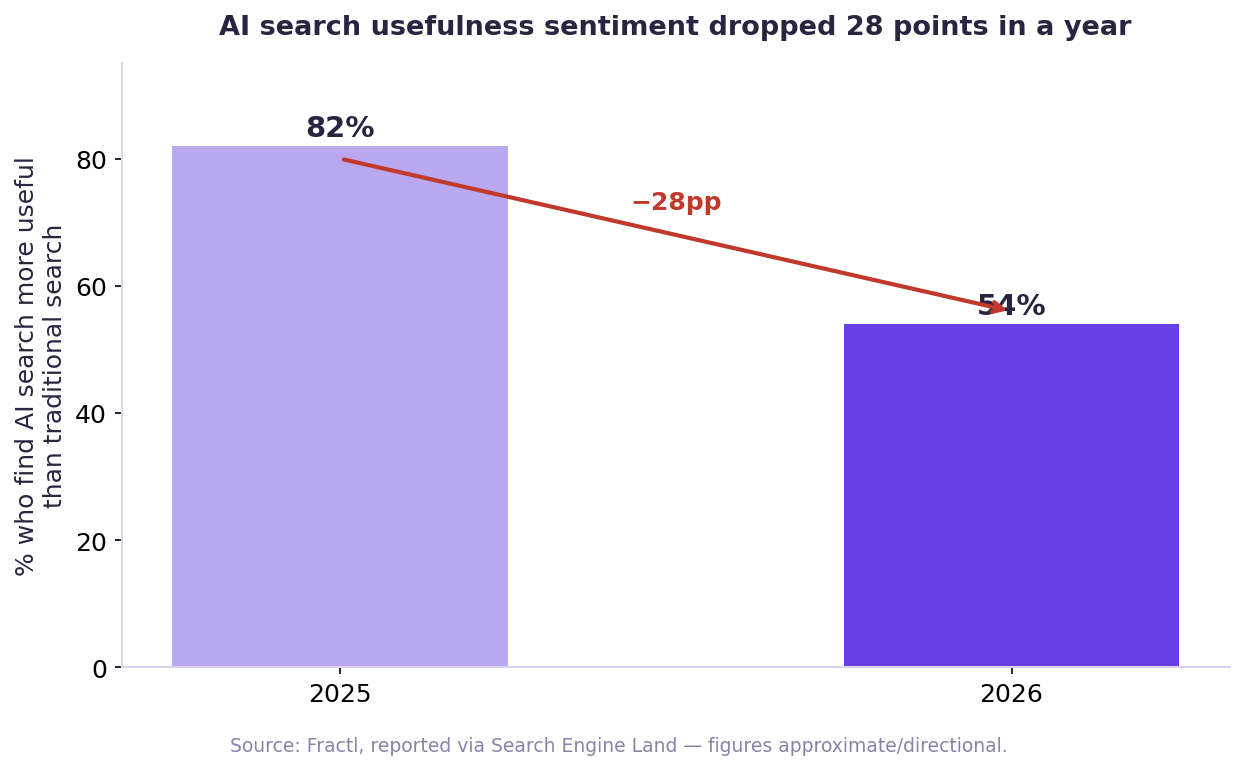
The reported figures are striking:
- Usefulness sentiment fell from ~82% (2025) to ~54% (2026) — a 28-percentage-point decline in a single year.
- Consumers cross-check an average of 2.4 platforms before making a purchase decision.
- Skepticism is highest exactly where it matters most: high-stakes, money-on-the-line decisions.
These numbers come from the cited research; we’re reporting and interpreting them, not presenting them as our own. Treat single-study figures as directional.
Google still wins on trust
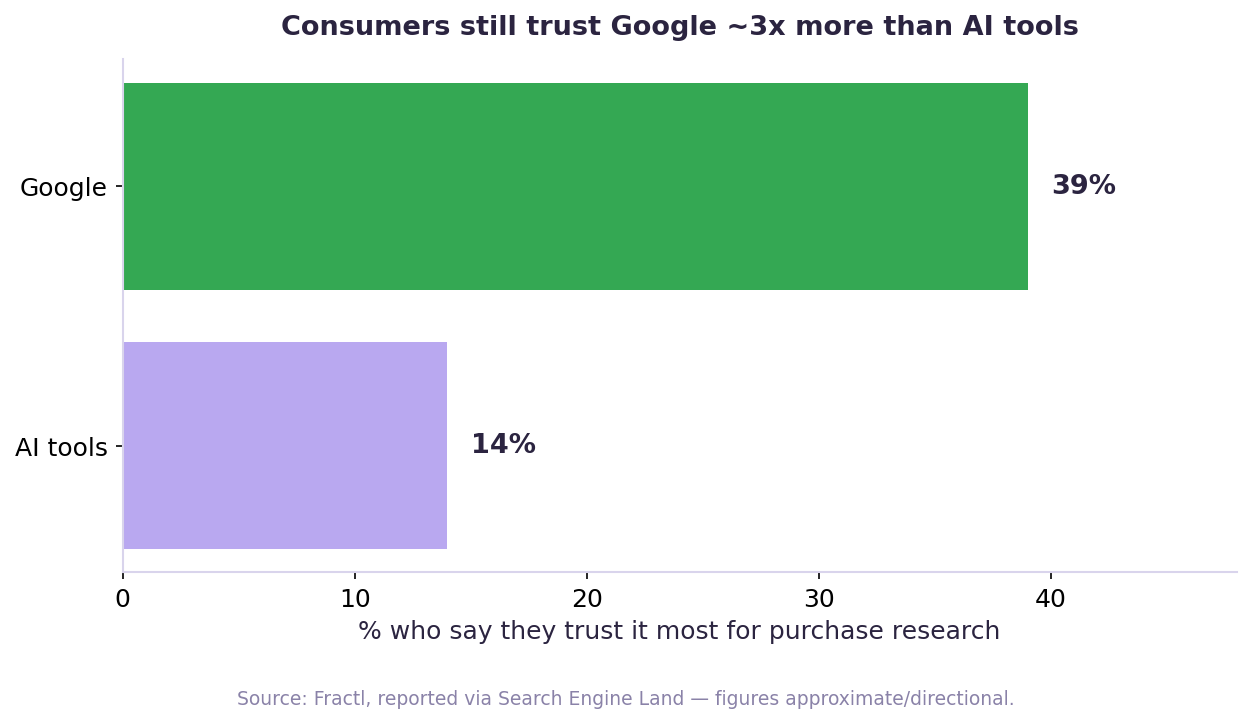
When asked who they trust most for purchase research, consumers favored Google over AI tools by roughly three to one (about 39% vs. 14%). That gap is a reminder that AI answers are increasingly a starting point, not the final word — people verify before they buy.
Why is trust slipping?
- Confident-but-wrong answers. Every hallucination a user catches chips away at trust.
- Inconsistency. Ask the same question twice and you may get different sources.
- Maturing expectations. The novelty has worn off; users now judge AI search on accuracy, not magic.
What it means for GEO
Falling trust doesn’t make AI visibility less important — it raises the bar. If users cross-check 2.4 platforms, your brand needs to show up credibly across more than one: AI answers, Google results, and the third-party places people verify (reviews, Reddit, YouTube). The brands that win citations will be the ones that are consistent and corroborated everywhere a skeptical buyer looks.
How to respond
- Be accurate and specific. Verifiable facts are what survive a fact-check — and what AI engines prefer to cite.
- Build cross-platform consistency. Make sure your brand story lines up across your site, reviews, and social.
- Don’t abandon Google. It still carries the most trust; strong Google presence reinforces your AI credibility.
- Earn corroboration. Mentions and references from third parties are trust multipliers.
A credibility note
This is one study’s snapshot, not settled fact. Sentiment surveys swing, and “trust” is hard to measure. The directional story — cooling enthusiasm, more cross-checking, Google still ahead — is consistent with what many marketers are seeing, but treat the exact percentages as approximate.
Frequently asked questions
Does this mean AI search is a fad?
No. Usage is still high and growing; what’s changing is that users trust it conditionally and verify more. That makes credible visibility more valuable, not less.
Should I shift budget back to Google?
Don’t shift — stack. Strong Google presence and AI visibility reinforce each other, especially since buyers cross-check.
The bottom line
The AI-search hype is normalizing into healthy skepticism. That rewards exactly what good GEO has always been about: being accurate, consistent, and corroborated enough that both a machine and a wary human will trust your brand.
Source
Data from Fractl, reported via Search Engine Land. Figures are paraphrased and approximate; charts above visualize the reported numbers.
Leave a Reply